As the war in Ukraine entered another week of intense fighting, the situation on the ground continued to be shaped by two parallel dynamics: Russia’s ongoing attempts to push forward along key sectors of the eastern and northeastern front, and Ukraine’s expanding campaign against military logistics, fuel infrastructure, and strategic sites deep inside Russian territory. While Moscow kept up pressure along several axes, Ukrainian commanders say Russian momentum has slowed compared to earlier months, with Kyiv reporting localized gains and growing disruption of Russian supply lines.
The heaviest fighting remained concentrated in the Donetsk region, particularly around Pokrovsk and nearby sectors, where Russian forces continued efforts to improve their tactical positions. Clashes also intensified in parts of Zaporizhzhia and southern Ukraine, while Russian troops remained active in the Sumy region near the border, where they are trying to establish what Moscow describes as a “buffer zone” inside Ukrainian territory. Ukrainian Commander-in-Chief Oleksandr Syrskyi said this week that Ukrainian forces have recaptured more than 600 square kilometers since the start of 2026 and, notably, took more ground in May than Russia managed to seize over the same period. Independent assessments suggest Russian advances have slowed markedly since the beginning of the spring-summer campaign, with Ukrainian defensive operations and strikes on rear logistics increasingly affecting Russia’s ability to sustain offensives.
A defining feature of the week was Ukraine’s continued expansion of long-range drone and missile strikes against targets far beyond the frontline. Ukrainian forces struck military-industrial sites, oil depots, fuel facilities, ports, and transport infrastructure across Russia and occupied territories. President Volodymyr Zelensky pointed to hits on a military electronics plant in Cheboksary, a refinery in Samara region, and other energy infrastructure in Vladimir Oblast. Ukrainian officials say these strikes are intended to raise the cost of the war for Moscow and gradually erode Russia’s ability to maintain frontline operations.
Particularly important were efforts to disrupt Russian logistics routes linking southern Russia, occupied territories, and Crimea. Ukrainian strikes hit bridges, rail links, ports, and fuel depots supporting Russian forces. Analysts note that attacks on the so-called “Novorossiya corridor,” the supply route running from Rostov-on-Don through occupied territory toward Crimea, have increasingly complicated Russian logistics and forced a redistribution of air defense and repair resources.
Crimea has felt these effects directly. Russian-installed authorities in Sevastopol reported fuel delivery disruptions and temporary restrictions following strikes on supply infrastructure. Ukrainian attacks also targeted the occupied port of Mariupol and transport links between occupied Kherson and Crimea, adding to broader logistical strain across southern occupied areas. Ukrainian officials describe this as part of a wider effort to isolate Crimea and weaken Russia’s resupply capacity there.
One of the most notable developments inside Russia was the reported killing of Damir Davydov, head of the Russian Defense Ministry’s missile and artillery ammunition directorate. Russian media said he died in a car explosion in Balashikha, near Moscow. A second explosive device was later found and safely detonated in another vehicle in southwestern Moscow. No official link has been confirmed, but the incident resembles previous attacks on senior Russian military and security officials since the start of the war. The Kremlin confirmed the explosion but gave no further details, citing an ongoing investigation.
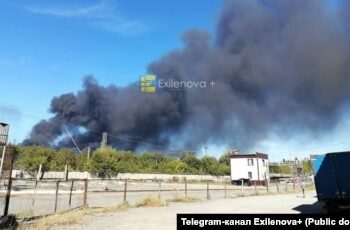
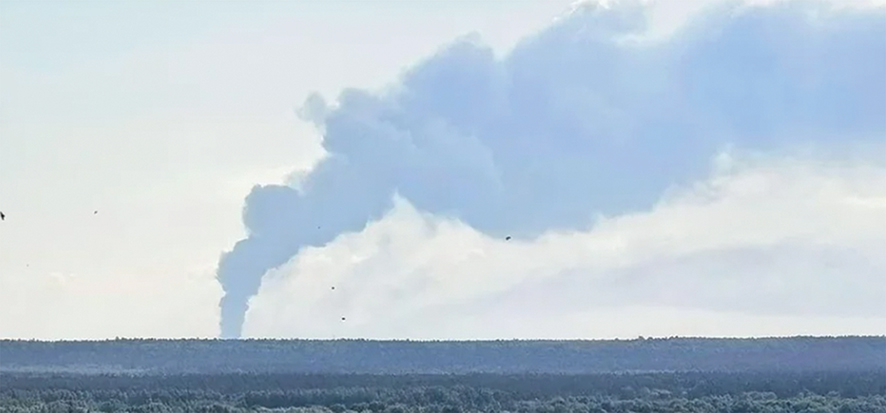
Ukraine’s strikes on Russian energy infrastructure also began to show wider economic effects. In Krasnodar Krai, authorities reported fuel shortages and panic buying after a fire at an oil depot in Ust-Labinsk. Additional strikes hit fuel storage sites in Rostov region, while drone activity near Novokuibyshevsk in Samara Oblast disrupted operations around a major refining hub. In Dagestan, reports of explosions and fires at gas facilities further highlighted the vulnerability of Russia’s energy network to sustained long-range attacks.
Russia continued its own large-scale aerial campaign against Ukraine. Missile and drone strikes hit several regions, including Kharkiv, Odesa, and Zaporizhzhia. Ukrainian officials reported civilian casualties and injuries throughout the week, while air defense systems remained under heavy strain. In one of the larger recent waves, Russian officials said they intercepted hundreds of Ukrainian drones across multiple regions, including Saint Petersburg, Crimea, and southern Russia, while Ukraine reported sustained Russian drone launches in return.
The week also highlighted how central drone warfare has become to both sides. Zelensky formally designated June 11 as Ukraine’s annual Day of the Unmanned Systems Forces, underlining the role of drones in Ukrainian operations. Officials say drone systems now account for the majority of strikes against Russian military targets and infrastructure. The development continues to reshape the battlefield, extending reach far beyond traditional front lines and accelerating the pace of adaptation on both sides.
Diplomatic efforts, meanwhile, showed little progress. The Kremlin said no phone call is planned between President Vladimir Putin and U.S. President Donald Trump, while spokesman Dmitry Peskov dismissed the idea that the European Union could act as a mediator, arguing that meaningful talks cannot begin under current conditions. Despite periodic discussion of negotiations, fundamental positions in Moscow and Kyiv remain unchanged.
International support for Ukraine continued. The European Commission proposed a 21st sanctions package targeting Russian banks, cryptocurrency firms, oil traders, and vessels involved in transporting Russian oil. It also suggested tightening the oil price cap and introducing restrictions on Russian fish imports. European Commission President Ursula von der Leyen said Ukraine and Moldova are expected to move forward in EU accession talks, calling Ukraine’s reform progress “extraordinary.”
Zelensky also visited Estonia during the week for meetings with Nordic and Baltic leaders focused on regional security, military cooperation, and countering drone threats. He emphasized Ukraine’s intention to share its experience in developing low-cost air defense systems. Western discussions on further military aid continued, as Kyiv seeks additional air-defense systems and interceptor missiles to counter ongoing Russian strikes.
Compiled by Ana Dumbadze