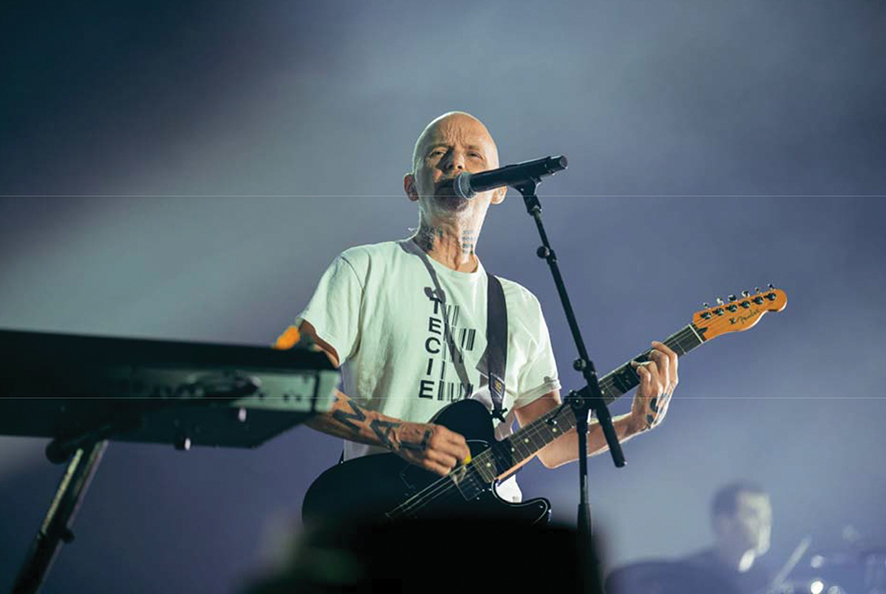
When Moby finally took the stage at Rustavi International Motorpark, the concert quickly became one of the most discussed cultural events in Georgia this summer. Social media filled with videos, reviews, and debates, not only about the music itself, but about what the evening revealed about the country’s growing concert industry.
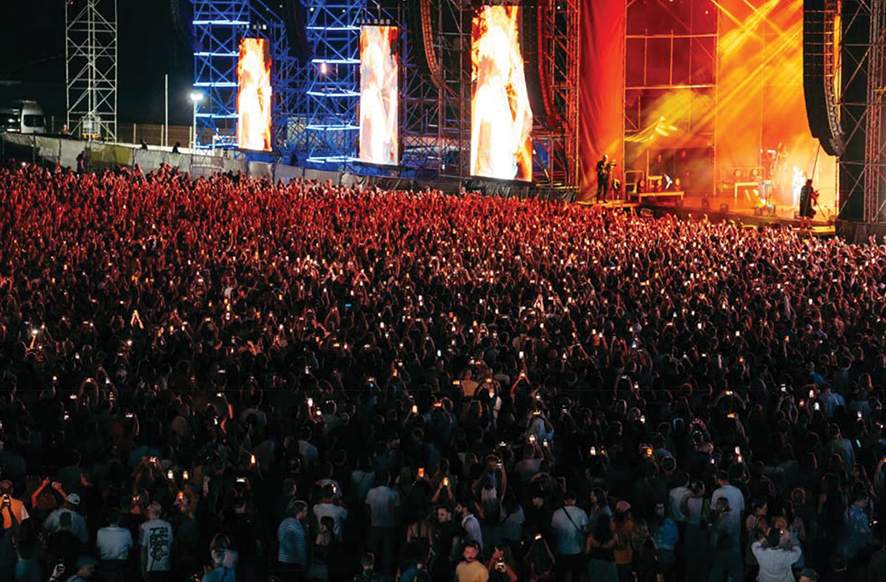
For most attendees, the verdict was overwhelmingly positive. Hundreds of posts praised the sound quality, the production, and the atmosphere. Those who arrived according to the published schedule had little trouble enjoying a performance packed with the songs that made Moby one of the defining artists of electronic music in the late 1990s and early 2000s. Classics such as Porcelain, Natural Blues, and Why Does My Heart Feel So Bad? reminded audiences why his music has remained part of popular culture for more than two decades.
At the same time, the event exposed the logistical challenges that inevitably accompany concerts of this scale. Heavy traffic approaching the venue forced many visitors to leave their cars and walk uphill to the entrance, while the journey home reportedly took some concertgoers up to ninety minutes before traffic began moving again. These are familiar growing pains for countries developing new large-scale event infrastructure, and Georgia is no exception.
The choice of venue is perhaps the most important part of the story. Rather than using an established city arena, organizers transformed the Rustavi International Motorpark into a concert space capable of hosting an international headliner. If refined, such venues could significantly expand Georgia’s ability to attract artists whose productions require far larger capacities than traditional concert halls can offer.
The evening also reflected Moby’s personal values. A committed vegan since the 1980s and one of the world’s best-known advocates for animal rights, he requested that food sold at the venue be entirely free of meat. It was a small but visible reminder that contemporary concerts increasingly communicate ideas and lifestyles alongside music.
Ultimately, Moby’s first performance in Georgia mattered for reasons that extend beyond nostalgia or a single successful show. International artists choose tour destinations based on economics, infrastructure, and audience demand. A sold-out concert sends a signal to promoters that Georgia is becoming a viable stop on major European tours. Every successful event makes it easier to persuade the next global artist to include Tbilisi, or its surrounding venues, on their itinerary.
For Georgia’s cultural sector, that may be the concert’s most lasting encore.
By Ivan Nechaev