Russia’s war in Ukraine entered another week with Moscow making only limited advances on the ground but increasing the intensity of its missile and drone campaign against Ukrainian cities, infrastructure and supply networks.
While Russian forces continued their push in eastern Ukraine, particularly in Donetsk region, their territorial gains remained small compared with the scale of the fighting. At the same time, Ukraine stepped up attacks on Russian energy and logistics facilities, extending the conflict deeper into Russian territory and increasing pressure on Black Sea trade routes.
According to assessments based on Ukraine’s DeepState mapping project and the Institute for the Study of War, Russian forces captured around nine to 10 square miles of Ukrainian territory between July 28 and August 4. The gains represented an increase from the previous week but remained modest along a front line stretching hundreds of miles.
Russia currently controls around one-fifth of Ukraine, including Crimea and parts of the Donbas seized before the full-scale invasion began in February 2022.
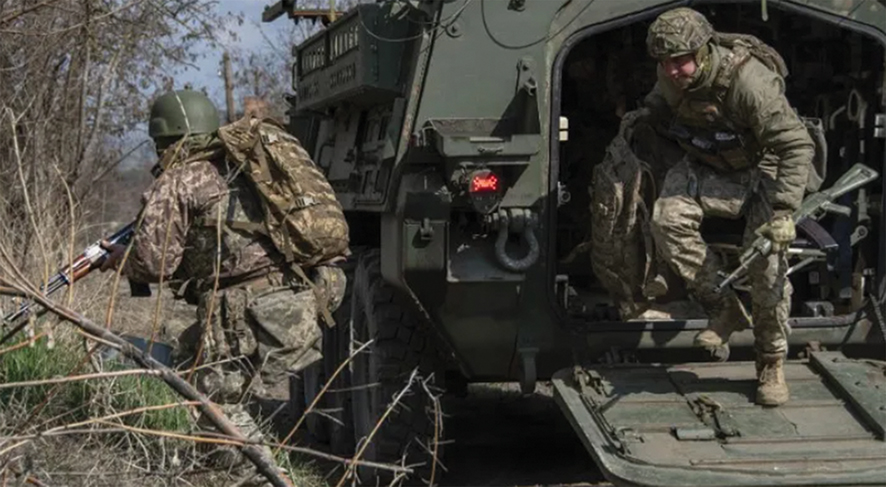
The heaviest fighting continued in Donetsk region, where Russian forces are attempting to move closer to Ukraine’s remaining major defensive positions around Sloviansk and Kramatorsk. Instead of large armoured offensives, Russia has increasingly relied on small infantry assaults supported by drones, artillery and glide bombs designed to weaken Ukrainian positions before advances.
Military analysts say Moscow’s strategy remains focused on applying constant pressure, forcing Ukraine to spread its forces across several threatened areas while attempting to exhaust its defensive capabilities.
Fighting also continued near Ukraine’s northern border, particularly in Sumy region, where Russia has sought to establish a buffer zone. The area requires Kyiv to maintain troops away from the main battles in the east and complicates efforts to reinforce the most heavily contested sectors.
However, Russia’s slow progress on land has been accompanied by a far more intense aerial campaign.
On July 31, Russia launched 35 missiles and 185 drones against Kyiv and surrounding areas. Ukrainian officials said the attack included 27 ballistic missiles, but only one was intercepted because of shortages of the missiles needed for Patriot air defence systems. At least 10 people were killed and dozens injured, including children. Residential buildings, a school, infrastructure and diplomatic facilities were damaged.
A larger attack followed on August 4, when Russia launched 24 ballistic missiles, four Zircon cruise missiles and 115 drones. Ukrainian authorities said most of the drones were destroyed, but the country’s air defences were unable to stop the majority of the missiles. At least 17 people were killed in Kyiv and surrounding areas, while more than 40 people were injured.
The strikes highlighted one of Ukraine’s most urgent military challenges: a shortage of air defence interceptors capable of stopping ballistic missiles.
President Volodymyr Zelensky raised the issue during a conversation with NATO Secretary General Mark Rutte on August 5, calling for faster decisions from Ukraine’s partners.
“It is important to cut through all red tape and make the necessary political decisions. Literally every day, people’s lives here in Ukraine depend on the resolve of our partners in Europe and the United States,” Zelensky said, according to Reuters.
Ukraine has repeatedly warned that shortages of air defense missiles are leaving cities vulnerable to Russian strikes, while Kyiv’s allies have acknowledged the difficulty of increasing production and deliveries quickly.
Russia has also continued using missiles supplied by North Korea, according to Ukrainian officials. Kyiv said a North Korean ballistic missile was likely used in an attack on the village of Radushne near Kryvyi Rih, where five members of one family were killed. Ukraine said radar data suggested the weapon was a KN-23 or KN-24 missile, although the claim could not be independently verified.
Ukraine has responded with its own long-range strikes against Russian infrastructure.
A Ukrainian drone attack on July 31 caused a fire at an energy facility and warehouses in Russia’s Volgograd region, according to local authorities. Five people sought medical assistance after the attack. Volgograd is home to a major oil refinery, although Russian officials did not specify which facility was damaged.
Ukrainian drones also reportedly struck the Saratov refinery as part of Kyiv’s broader effort to disrupt Russia’s fuel production and military supply chains. Ukrainian officials argue that refineries, oil depots and export facilities are legitimate targets because oil revenues help finance Russia’s war effort and fuel supplies support its armed forces.
Beyond energy infrastructure, Ukraine has increasingly targeted logistics networks that it says contribute to Russia’s military capacity. Ukrainian forces reported strikes on facilities linked to the Wildberries retail and distribution network, alleging that some warehouses were being used to support military supply operations. Russia has not confirmed these claims.
The Black Sea has become another area of growing tension.
A Turkish-owned cargo vessel was struck near the Russian port of Novorossiysk, seriously injuring three crew members. All 22 people aboard were evacuated as the ship caught fire. Turkey called on both Russia and Ukraine to protect civilian shipping routes and warned that attacks on commercial vessels posed a serious risk.
The disruption of Black Sea shipping threatens both Ukrainian and Russian exports. Ukraine depends heavily on ports in the Odesa region for agricultural shipments, while Russia uses Black Sea terminals for grain and energy exports. Damage to ports, vessels and infrastructure has increased risks for shipping companies and raised insurance costs.
Diplomatic efforts continued alongside the fighting, but no breakthrough was reported.
Moscow said it remained open to discussing proposals from the United States while insisting it would continue military operations until its objectives were achieved. Kyiv continued calling for a ceasefire backed by security guarantees and rejected any agreement that could allow Russia to rebuild its forces and restart the war.
The immediate focus for Ukraine’s allies remained air defense. Zelensky and NATO officials discussed accelerating deliveries of interceptors, while US and European officials continued talks on expanding production capacity, including possible Ukrainian involvement in manufacturing Patriot interceptor components.
Such cooperation could strengthen Ukraine’s long-term defense capabilities, but officials acknowledge that increasing production would take time. For now, Ukraine faces the immediate challenge of protecting its cities and infrastructure from an intensifying Russian missile campaign while holding its defensive lines on the battlefield.
Compiled by Ana Dumbadze