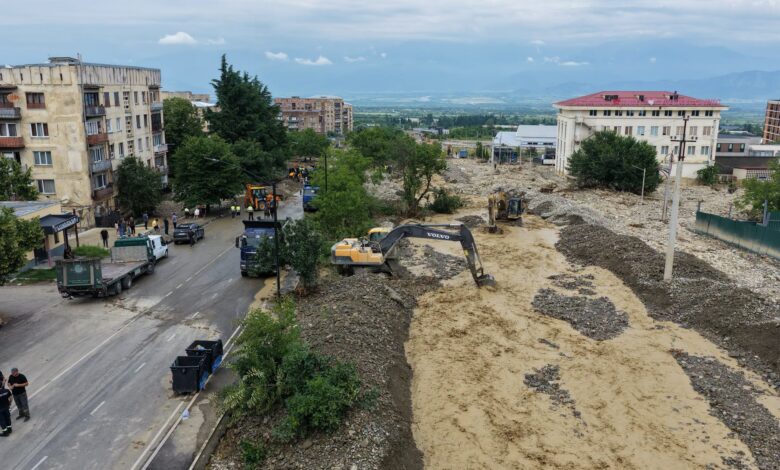
The eastern Georgian city of Telavi is dealing with extensive flood damage after the Telaviskhevi River burst its banks following heavy overnight rainfall on July 12, inundating streets, homes and commercial properties. No fatalities or injuries have been reported.
Floodwaters swept through several parts of the city, submerging roads, businesses and the ground floors and basements of residential buildings. Videos shared on social media showed fast-moving, mud-filled water carrying debris through urban areas.
Authorities have launched an emergency response operation to assess the damage and coordinate recovery efforts. Around 100 pieces of heavy equipment have been deployed, while crews continue clearing flooded areas and restoring damaged infrastructure. Power and natural gas outages were also reported in parts of the city.
Infrastructure Minister Revaz Sokhadze said the government would work to remove the consequences of the disaster as quickly as possible and would also develop preventive measures aimed at reducing the risk of similar flooding in the future.
Ruling Georgian Dream MP Irakli Kadagishvili, who visited the affected area, described the flooding as unprecedented and said the city’s infrastructure had suffered significant damage. He suggested that a small bridge spanning the Telaviskhevi River may have obstructed the flow of water, contributing to the flooding, and argued that the riverbed would need to be comprehensively redesigned.
Residents described the flood as unlike anything they had previously witnessed. One local told TV Pirveli that the torrent carried trees, rocks and large amounts of soil through the city, calling the experience terrifying.
The disaster has also reignited debate over flood prevention measures. Critics pointed to earlier warnings from hydrologists that highlighted potential risks linked to the condition of debris-control dams, the narrowing of the river channel and development along the riverbed.
Government officials rejected accusations that the flooding could have been prevented, arguing that natural disasters occur worldwide. Sokhadze said the protective dams had been rehabilitated in 2022 and had performed their intended role during the flooding, while adding that authorities would investigate whether any unsafe or illegal construction near the river had contributed to the damage.
Flooded Telavi. Photo: Ministry of Infrastructure