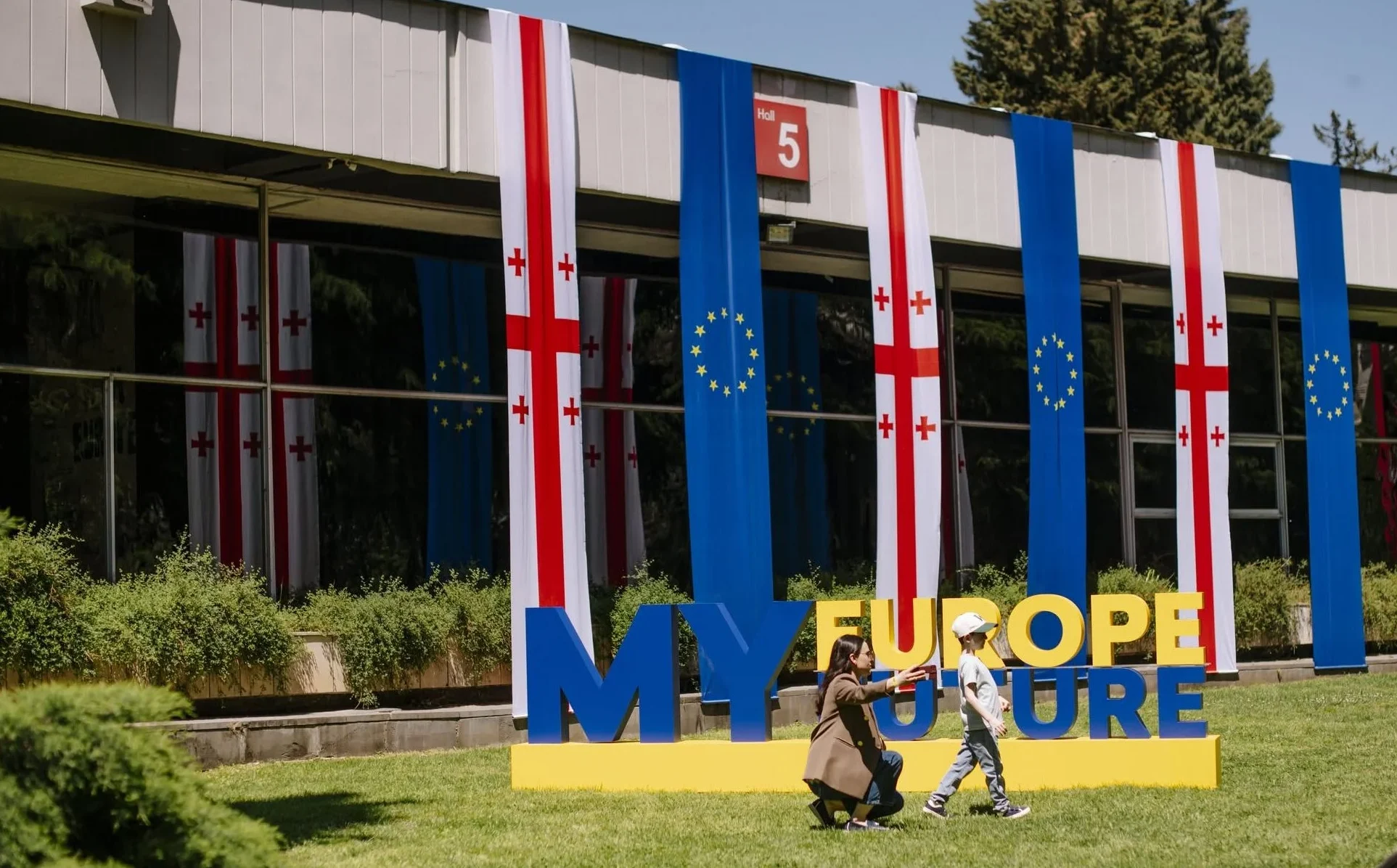
More than seven in ten Georgians support the country’s accession to the European Union, while nearly four in five believe membership would benefit Georgia, a new annual public opinion survey conducted under the EU-funded EU Neighbours East program shows.
The survey found that 71% of respondents back Georgia’s EU aspirations, while 79% believe joining the bloc would bring more advantages than disadvantages.
Despite the strong support for integration, many Georgians are skeptical about the country’s current progress toward membership. Nearly half of respondents (49%) said Georgia is not moving in the right direction on its European path, and 56% believe recently adopted laws affecting civil society organizations and media outlets have had a negative impact on accession prospects.
At the same time, an overwhelming 87% said Georgia needs to do more to advance its EU ambitions.
The European Union remains the most trusted international actor among Georgians, with 67% expressing trust in the bloc. However, perceptions of Georgia-EU relations have weakened slightly, with 60% saying relations are good, down from 63% a year earlier.
Awareness of EU assistance also remains high. Seven in ten respondents said they were aware of EU financial support to Georgia, and nearly half viewed that support as effective. Those surveyed most often identified education, economic development, trade, and healthcare as areas where they would like to see greater EU involvement.
While positive perceptions of EU membership remain dominant, the survey also revealed lingering concerns. Three-quarters of respondents said EU integration would strengthen Georgia’s security and create new opportunities, yet 51% believe the bloc pursues hidden interests and 43% feel it seeks to impose its values.
The survey additionally pointed to growing concerns about disinformation. A total of 86% of respondents described disinformation as a threat to national security, while exposure to EU-related information has declined significantly compared to last year.
The survey was conducted in January and February 2026 through face-to-face interviews with more than 1,000 respondents across Georgia.