In recent years, the South Caucasus has increasingly become visible on Europe’s cultural map. Yet visibility alone rarely produces meaningful artistic exchange. Festivals often celebrate diversity as a slogan while reproducing the same hierarchies of cultural circulation: artists travel, perform, disappear, and leave behind little more than a poster and a social media archive. The Maiklang Festival, presented by Goethe-Institut Georgia in Tbilisi between 28 and 31 May, proposed a different model. Emerging from the collaborative framework of Sonic Crossings, a program developed through the Berlin-based Pop-Kultur Festival, Maiklang functioned less as a showcase than as a temporary ecosystem for listening.
Its central theme, songwriting, may initially sound modest in an era dominated by discussions of artificial intelligence, immersive media, algorithmic recommendation systems, and experimental sound art. Yet this apparent simplicity reveals the festival’s intellectual strength. Songwriting today occupies a unique position within contemporary music culture. It remains one of the few artistic practices where personal narrative, social reality, linguistic identity, and sonic experimentation can coexist within a highly accessible form.
The festival’s curatorial premise recognized a crucial cultural fact: throughout the South Caucasus and beyond, independent songwriting has become one of the most important spaces for articulating contemporary experience. In societies undergoing rapid political, economic, and technological transformation, the song has re-emerged as a flexible cultural instrument capable of carrying intimacy, dissent, memory, and collective imagination simultaneously.
What distinguished Maiklang from many international music events was its refusal to concentrate activity within a single venue. Instead, performances unfolded across a network of radically different urban spaces.
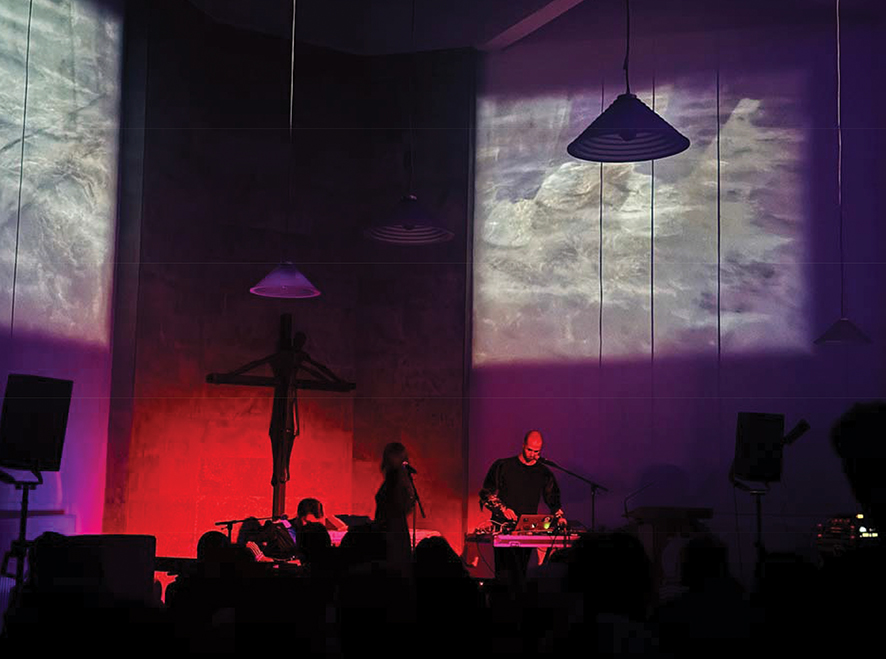
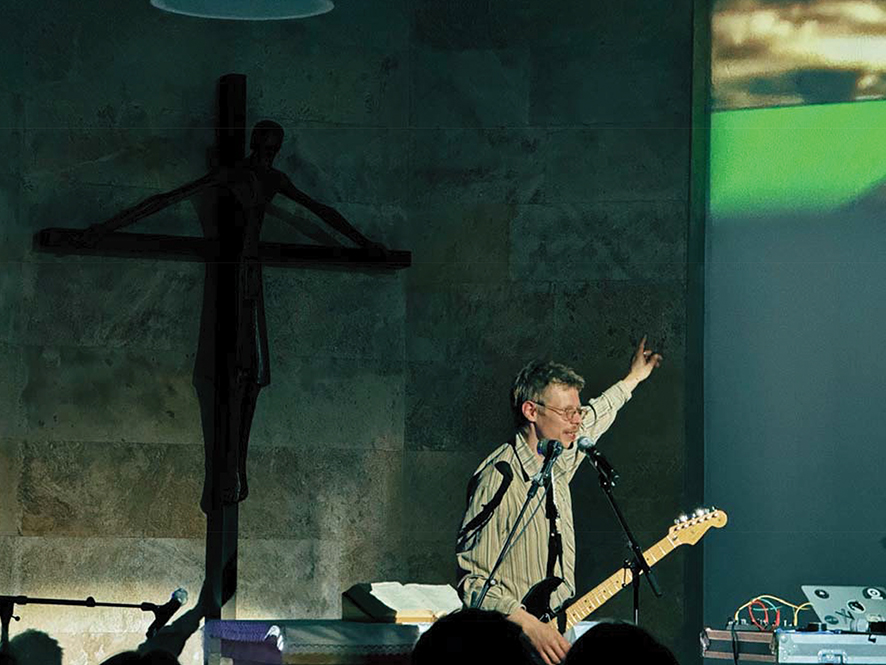
The industrial atmosphere of Fabrika and its House of Camora stage framed the opening night. The second day moved between the sacred acoustics of the Evangelical Lutheran Church in Tbilisi and the nocturnal intimacy of Thelema Bar. The third evening unfolded in the open environment of Mushtaidi Garden, while the closing program returned audiences to the premises of the Goethe-Institut itself.
This geographical dispersal transformed listening into a form of urban exploration. Audiences were invited to move through different social environments, acoustic conditions, and symbolic contexts. The city itself became part of the curatorial framework.
Such an approach reflects broader tendencies within contemporary European festival culture, where location increasingly functions as an active component of artistic meaning. Sound is never independent from space. A song performed in a church acquires different resonances than the same song presented in a club or public park. Maiklang demonstrated an acute awareness of this relationship between music and environment.
The most significant aspect of Maiklang may have been its insistence on songwriting as a cultural technology rather than a commercial genre. For decades, discussions of songwriting were largely dominated by Anglo-American traditions. Today, however, independent songwriting scenes have become important laboratories for local identity across Europe, the Caucasus, and the Global South. Artists increasingly work between languages, between folk traditions and electronic production, between intimate confession and social commentary.
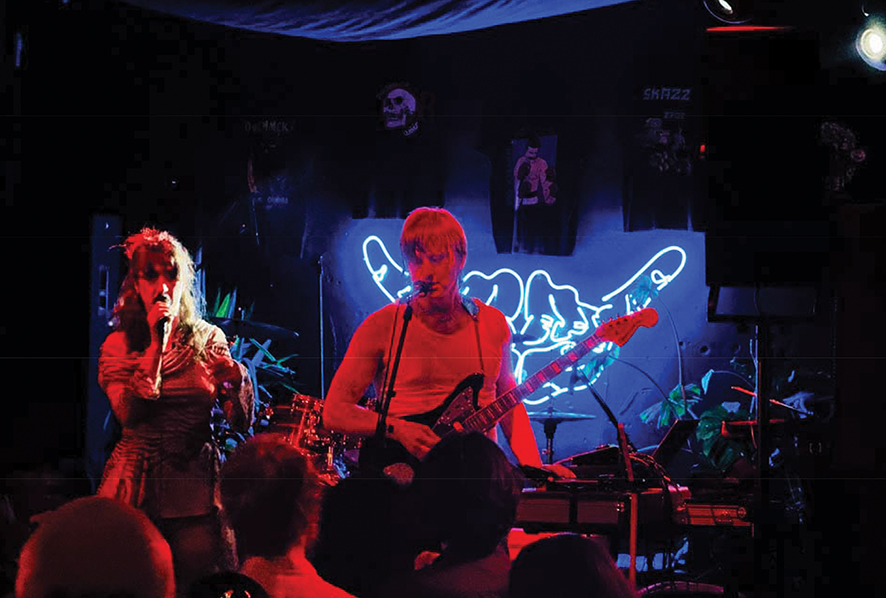
The lineup reflected precisely this multiplicity. German artists such as Jesper Munk and Das Beat arrived from a musical culture shaped by decades of experimentation between indie, electronic music, and contemporary songwriting traditions. Armenian performers including Symptom Error brought perspectives emerging from one of the region’s most dynamic independent scenes, where electronic textures increasingly intersect with local cultural memory. The participation of Azerbaijani artist Inherroom expanded the festival’s dialogue further, creating rare opportunities for cultural encounters that often remain difficult within the political realities of the South Caucasus.
Georgian artists formed the festival’s largest contingent. Projects such as Araushavs, Komma, Vaqo, Louie, Tape Visitors, and Izmir illustrated the remarkable stylistic diversity that has emerged within Georgia’s independent music scene over the past decade. Taken together, these artists revealed songwriting as a highly adaptable framework capable of absorbing influences from folk music, ambient electronics, indie rock, dream pop, experimental composition, and club culture.
One of the most interesting developments in contemporary cultural policy involves the growing shift away from traditional center-periphery models. Historically, cultural exchange programs often operated according to a one-directional logic: artists from smaller cultural markets sought visibility in European capitals. Berlin, London, Paris, and Amsterdam functioned as gateways through which recognition could be obtained.
The Sonic Crossings initiative, and consequently Maiklang, suggests a more horizontal approach. Berlin remains important as a meeting point, yet the ultimate objective appears different. The emphasis is increasingly placed on building long-term networks between artists themselves. The movement from Berlin to Tbilisi is therefore symbolically significant. Instead of treating the South Caucasus merely as a source of cultural material to be presented elsewhere, the project relocates attention back to the region.
This shift reflects broader changes occurring across contemporary arts ecosystems. Sustainable cultural development depends less on isolated moments of international exposure and more on the creation of durable relationships, shared infrastructures, and recurring encounters. Maiklang represented precisely such an encounter.
The festival’s greatest achievement may ultimately lie in its understanding of listening itself. Contemporary digital culture encourages acceleration. Music circulates through playlists, short-form video platforms, recommendation algorithms, and endless streams of content. Discovery has become automated. Attention has become fragmented. Against this backdrop, the act of gathering in a room to hear songs written and performed by living musicians acquires renewed significance.
The Maiklang Festival proposed listening as a social practice rather than an act of consumption. Its modest scale became an advantage. Without the spectacle of mega-festival branding, audiences encountered artists at close range, within spaces where musical communication remained direct and human. That intimacy is increasingly rare.
Artists from Georgia, Armenia, Azerbaijan, and Germany were brought together through a framework that privileges dialogue over visibility and process over spectacle. The festival’s value therefore extends beyond the concerts themselves. Its real legacy may emerge through future collaborations, recordings, tours, and artistic partnerships that develop from these encounters.
At a moment when cultural institutions across Europe are rethinking their social function, the Goethe-Institut’s work in Tbilisi offers a compelling example of how international cultural policy can operate as infrastructure rather than branding. The most meaningful outcomes of such initiatives are often invisible at first. They appear later, in the form of artistic communities that become stronger, more connected, and more capable of imagining new cultural geographies.
Review by Ivan Nechaev