Berlin Fashion Week would not be half as enticing were it not for the locations the labels choose for their runway shows. They are not only revelatory of each brand’s identity but also an invitation to discover Berlin behind its façades, opening doors to spaces one would rarely expect to exist.
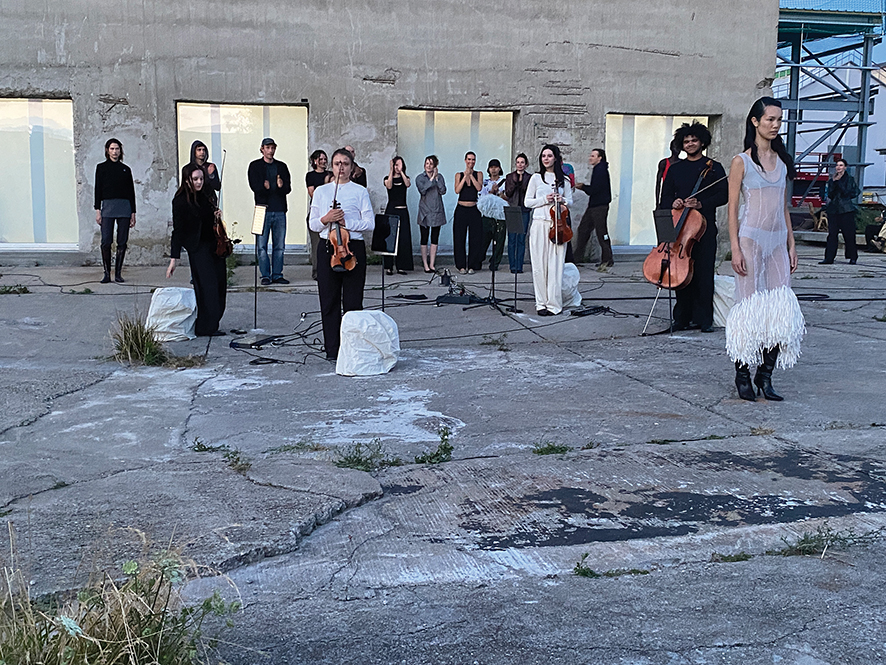
This was the case from the very beginning with Netzwerk, which staged its runway show at San Gimignano Lichtenberg. Once a former DDR factory left to decay after the fall of the Berlin Wall, the site was later restructured and repurposed by the architects at bplus.xyz / Brandlhuber+ into a safe space for a variety of workshops. In Berlin, where architecture has historically reflected the political regimes that have come and gone, this factory stands as a remarkable exception. Its towers were rescued and sustainably repurposed, preserving their concrete structure and simple forms.
Likewise, sustainability is essential to the creative process of the Netzwerk designers, who work with Beglarian’s deadstock haute couture fabrics, offering exclusive selections from more than 5,000 deadstock textiles. Driven by a commitment to sustainability, transparency, and community, the company strives to transform the textile industry into a responsible circular economy.

Much like the location itself, saturated with the severe urban poetry of concrete, stone, and thin grass, the collection felt singular. Gender-neutral outfits and a delicate use of fabrics accentuated the human silhouette. Sheer textiles for womenswear created poetic looks, while unusual yet tasteful combinations of bluish tones, black and grey, and red and crimson settled into flowing lines that gave the collection a bold signature charm. It appealed equally to those seeking unconventional color combinations and fluid forms in casual wear, as well as glamorous evening looks.
Ecology and environmental consciousness were equally central to SELVA HUYGENS, a label that consciously incorporates discarded automotive parts into its high-end glamorous creations. Here too, Beglarian fabrics added considerably to the polished finish of the garments. Dresses in lustrous blues, whites, and browns offered a new definition of sexy: sharp, witty, and executed with cutting precision. These were outfits that celebrated female power while embracing coquette aesthetics through exaggerated sculptural details in shoes, headpieces, shoulders, and hips. The dramatic silhouettes echoed the architecture of the HKW (Haus der Kulturen der Welt), where the show took place, an iconic building affectionately nicknamed the “Pregnant Oyster” by Berliners because of its distinctive bulging suspension roof floating above a reflective pool.
Speaking of architecture serving as fashion’s stage, one cannot ignore West Berlin’s most controversial landmark, the ICC International Congress Center. Widely acclaimed as an exemplary example of futuristic Brutalist architecture, the 1979 building has stood largely empty for almost a decade. Sombre, dark, and reminiscent of a dysfunctional, deserted spaceship, it provided the perfect contrast for Orange Culture’s Spring/Summer 27 runway.
Designer Adebayo Oke-Lawal presented fluid textures enriched with elements of African ornamentation, fringed dresses, carefully layered lightweight fabrics, and intricate detailing across both menswear and womenswear. Irregular cuts made every look dreamlike and emotionally charged, creating a singular atmosphere throughout the collection.

Marie-Louise Müller transported guests into her Escapist Garden, presented in a truly hidden oasis on the rooftop terrace of the Lobe Block in the heart of Berlin-Wedding. Surrounded by concrete architecture yet overflowing with greenery in the garden below, the location perfectly complemented a collection filled with floral motifs, pastel colors, and soft hues. Celebrating craftsmanship and elaborate tailoring, the designer paired meticulous construction with witty accessories, including watering cans transformed into handbags and carefully matched footwear.
For those drawn to romantic summer dressing, the collection was a dream come true, resembling Babylonian gardens in Brutalist form, as the architects themselves describe the site, complete with breathtaking views over Berlin. Straw hats, woven bags, crocheted dresses, and flowing fringes became symbols of innocence, joy, and effortless lightness.
Laura Gerte’s Spring/Summer 27 collection embraced sensuality through cut-out silhouettes, long white dresses, and garments that revealed more than they concealed. Presented inside the late nineteenth-century Berliner Ensemble theatre, the historical setting added further intensity to the collection. Made entirely from upcycled materials, Lost to Virtue explored a feminist interpretation of femininity. Transparent fabrics, cords, and sheer layers contributed to a constant dialogue between revealing and concealing, resulting in a sensual yet thoughtful aesthetic.
Designer Jana Heinemann of Impari concluded her runway presentation with a live rap performance by Darell Marley, transforming the show into an authentic encounter between fashion, music, and spoken word. Presented under the glass roof of MOA Berlin, the collection Anima featured richly textured unisex garments combining draping, exceptional craftsmanship, and carefully constructed details across tops and trousers. Flowing sleeves and softly sculpted silhouettes gave the body freedom of movement, almost resembling shamanic garments that allow the skin to breathe. The venue itself, lined with exotic plants and trees, reinforced the designer’s vision of reconnecting nature, culture, and the soul.
Last but certainly not least, Neo.Fashion once again provided an important platform for Germany’s newest generation of designers, showcasing graduate collections from national and international fashion universities. The Best Graduate Award was judged by renowned experts, including representatives of the iconic Villa Noailles museum in Hyères, France.
Among the graduates, several collections stood out as true highlights.
Vivien Vetterkind redefined tailoring as a layered expression of identity and disruption through deliberately raw and rebellious streetwear. Punk references, patchwork details, combinations of raw and flowing fabrics, and heavy embroidery merged into a disruptive aesthetic full of daring new visions of style.
Lilian Brade’s collection revolved around monsters, witches, and bitches, an exploration of aggressive femininity that was biting, provocative, and unapologetically on edge. The garments challenged conventional ideas of beauty, while jewelry became an equally important narrative device. Protruding metal mouthpieces, exaggerated claw-like accessories, and towering platform heels evoked the atmosphere of travesty drag performance, combining wit with grotesque theatricality.
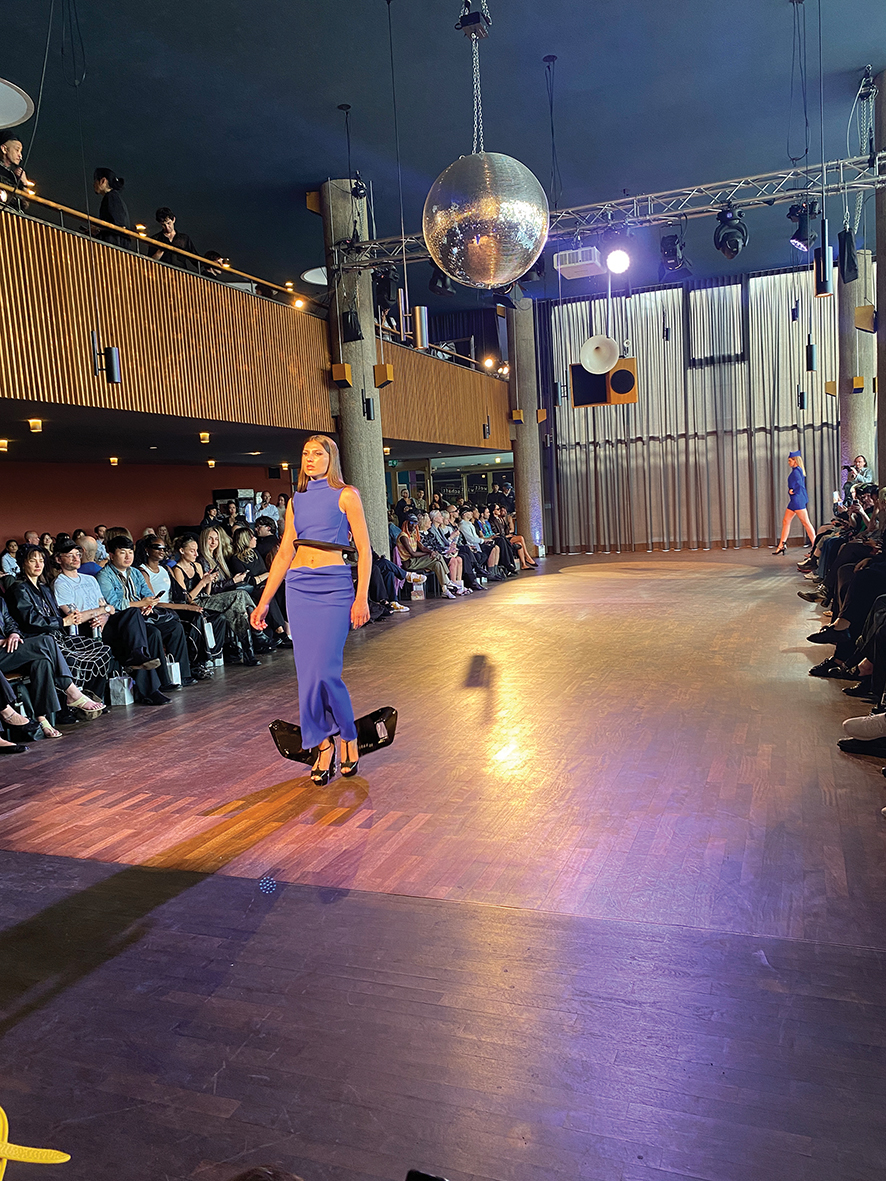
Samet Akkus, meanwhile, explored identity through traditional costume elements. Turban-like hats, some with fringes concealing the face, striped gender-neutral garments, and immediately recognizable folkloric references, including oversized beads replacing handbags, created a deeply personal narrative. Beautifully tailored white shirts cinched at the waist with broad belts, combined with traditional music, made the presentation feel authentic, nostalgic, and deeply moving. It portrayed the experience of negotiating one’s identity through cultural heritage and collective memory.
Clothing is skin deep, our second skin. It is therefore no wonder that Georgian designer Lado Bokuchava, whose eponymous label was presented during Berlin Fashion Week at RAUM Berlin, chose black leather as the defining material of his collection. It served as a spectacular medium to accentuate the sensuality of the body while conveying an aesthetic of opulence, confidence, and immediacy. His experimental creations fuse traditional elements with contemporary aesthetics. Lado Bokuchava’s work is distinguished by profound artistic expression and a bold willingness to challenge the conventional boundaries of the fashion industry. Established in 2017, the brand embodies an underground style infused with a contemporary twist. Each collection seamlessly blends classic and urban influences with futuristic details, creating a harmonious convergence of different stylistic directions. The designer’s meticulous attention to pattern-cutting is evident in the complexity of the looks, featuring detachable details that enhance versatility and comfort for various body types and occasions. The use of refined, minimal materials is a hallmark of the brand.
Across Berlin Fashion Week Spring/Summer 27, several major themes emerged repeatedly: sustainability, not merely as a production method but as a creative philosophy; gender-neutral dressing; flowing silhouettes; sculptural tailoring; transparency and layering; experimental color combinations; craftsmanship rooted in tradition yet directed toward the future; and, above all, an intimate dialogue between architecture and fashion.
Ultimately, we are, to a great extent, what we wear. Through clothing we express our longings and belongings, whether we choose to reveal them openly or quietly disguise them beneath carefully constructed layers.
Review by Dr. Lily Fürstenow