The Russia-Ukraine war entered another destructive week, with neither side achieving a decisive breakthrough on the battlefield, but both expanding long-range attacks against military, industrial, logistical and energy targets. Russia kept up pressure along several eastern and southern fronts, particularly around Kostiantynivka and the wider Donetsk region, while Ukraine reported a limited advance in the south and continued its deep-strike campaign against oil refineries and logistics facilities more than 1,000 kilometers inside Russia.
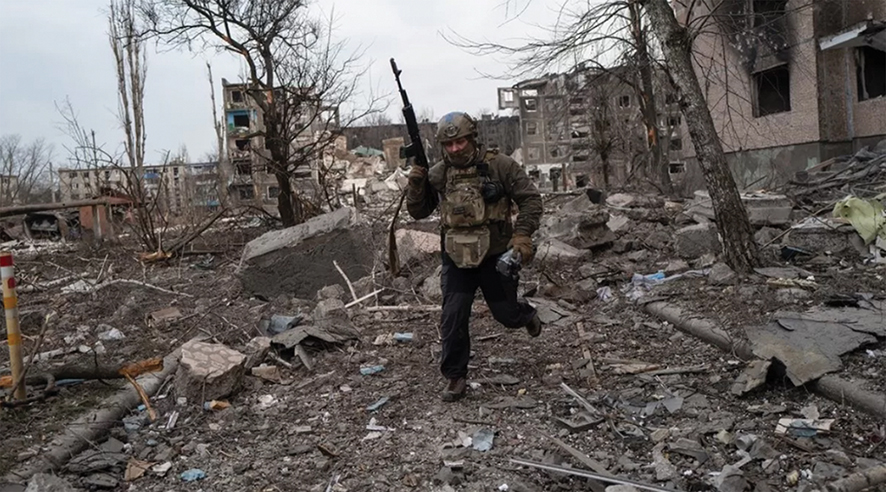
The fiercest fighting remained concentrated in Donetsk Region. Russian forces continued trying to improve their positions around Kostiantynivka, a key Ukrainian-held city within the fortified urban belt that also includes Druzhkivka, Kramatorsk and Sloviansk. Russian aviation played an increasingly important role, using glide bombs to soften Ukrainian positions before small infantry groups advanced through heavily damaged urban and semi-urban areas. Independent battlefield assessments suggested Russian troops made modest gains in the Kostiantynivka-Druzhkivka area later in the week, although Ukrainian forces continued to hold the city and its main approaches.
Russia also recorded small advances near Lyman, west and northwest of the former Pokrovsk front, in the Novopavlivka area and near Hulyaipole. These gains amounted to little more than fields, tree lines and isolated positions rather than major settlements. Ukraine, meanwhile, was assessed to have made a limited advance near Hulyaipole earlier in the week, underlining that the front remains contested and that Russian forces are not advancing everywhere. On July 26 and 27, neither side was confirmed to have made further progress, highlighting the slow and costly nature of current offensive operations.
Fighting also continued along the northern front in the border areas of Sumy and Kharkiv regions. Russian forces launched assaults backed by artillery and drones but failed to achieve any significant new breakthrough. Near Kupiansk, Russian units attempted to maneuver around Podoly and Kurylivka, while operations farther north appeared aimed at tying down Ukrainian reserves and preventing Kyiv from reinforcing the Donetsk front.
The human cost remained severe. On July 27, Russian attacks on settlements in eastern Ukraine killed seven people and injured more than 20. Three of those killed died near Kostiantynivka, where civilians continue to face artillery fire, drone attacks and aerial bombardment as the front edges closer to populated areas.
Russia also carried out repeated nationwide missile and drone attacks. Overnight on July 24-25, it launched ballistic missiles and 136 drones at Ukraine. Kyiv was hit, with fires reported in a residential building and several people injured. In Chernihiv, a drone struck a supermarket, killing two people, including a child, and injuring 25 others. Separate attacks killed one person and wounded at least 16 in Kharkiv, while a glide bomb strike in Zaporizhzhia claimed another civilian life and injured six more.
One of the week’s deadliest attacks came on July 24, when a Russian ballistic missile struck the site of a defense industry event in Kyiv Region. Ten people were killed and nearly 100 injured. President Volodymyr Zelensky said the gathering should not have been held under the circumstances, raising questions about wartime security procedures and the risks of concentrating personnel at known events.
The largest Russian assault came overnight on July 29-30, only hours after Zelensky returned from Washington. Missiles and drones struck targets from Kyiv and central Ukraine to Lviv near the Polish border, killing at least 13 people. One person died in Kyiv, while six others, including two children, were killed in Dnipropetrovsk and Poltava regions. In Kryvyi Rih, an Iskander-M ballistic missile hit a family home, killing six people, including girls aged five and 12, and injuring eight. In Lviv, two apartment buildings were damaged and at least 26 people were injured. Poland scrambled fighter jets to safeguard its airspace, and authorities later reported finding a crater and debris from an unidentified object in a field near the Ukrainian border.
The attacks once again highlighted Ukraine’s shortage of systems capable of intercepting ballistic missiles. While Ukrainian forces continue to shoot down large numbers of Russian drones using mobile air-defense teams, electronic warfare and lower-cost interceptors, Patriot remains the country’s principal defense against ballistic missiles such as the Iskander. Russia increasingly appears to be exploiting this vulnerability by combining mass drone attacks with ballistic and cruise missiles, forcing Ukraine to spread its air defenses across multiple cities and strategic sites.
Ukraine responded by expanding its campaign against Russia’s oil, industrial and logistics infrastructure. On July 29, Ukrainian drones struck oil refineries and other facilities in Perm, Ryazan and Taganrog, as well as targets in occupied Crimea. Zelensky said the operation hit refineries in Perm and Ryazan, a logistics center, an export terminal, a military plant in Rostov Region and a naval base in Crimea. Russian officials confirmed attacks on industrial sites but disclosed few details about the extent of the damage.
Ukraine also continued targeting warehouses owned by Wildberries, Russia’s largest online retailer. A warehouse in Ryazan caught fire and was evacuated, while later strikes caused fires at facilities in Penza and Sarapul. Nearly a dozen Wildberries warehouses have reportedly been damaged in recent attacks, destroying about 10% of the company’s storage capacity. Although these are civilian commercial facilities, Ukraine appears to regard parts of Russia’s logistics and distribution network as supporting the broader war economy and military supply system. The campaign has affected thousands of small businesses and forced Wildberries to seek additional storage capacity outside Russia.
The Ukrainian strikes also caused casualties. In Taganrog, debris hit an apartment building, killing one woman and injuring a man. Russian-installed authorities in Crimea said two people were killed and five injured in drone attacks. Earlier in the week, Russian-installed officials claimed a Ukrainian strike on a holiday camp in occupied Zaporizhzhia Region killed 12 people, including four children, and injured 19 others. Ukraine has not confirmed deliberately targeting civilians, and claims from occupied territory could not be independently verified.
Military activity also intensified in the Black Sea and Sea of Azov. Ukraine stepped up attacks on Russian vessels, ports and maritime logistics around Crimea, while Russia increased strikes on Ukrainian ports and shipping. Ukrainian drone units say they have targeted more than 180 vessels and maritime facilities in recent weeks in an effort to isolate Crimea and weaken Russia’s ability to supply its forces by sea. Russia, meanwhile, claimed it struck two ships carrying weapons east of Odesa. The growing threat to commercial shipping has already disrupted regional oil and grain movements.
Diplomatically, the week’s main event was Zelensky’s July 28 meeting with US President Donald Trump in Washington. The two leaders discussed reviving stalled negotiations with Russia and a proposal that would allow Ukraine to manufacture Patriot missile interceptors under US license. Zelensky said Trump had agreed in principle, although the timetable, financing and industrial arrangements remain unresolved. Ukrainian officials are already in talks with Lockheed Martin on possible co-production.
The meeting produced neither a ceasefire nor a formal peace initiative, but it marked a further improvement in relations between Trump and Zelensky following earlier tensions. US envoys Steve Witkoff and Jared Kushner are expected to visit Ukraine as part of efforts to revive mediation with Moscow. Russia said it would await new proposals from Trump while insisting it would continue military operations until its objectives are achieved.
Zelensky also met US senators and welcomed progress on new sanctions targeting Russian energy revenues. However, uncertainty remains over existing US military assistance, with the Pentagon planning to delay spending $400 million in previously authorized aid until 2029. While the Patriot production agreement was politically significant, it does little to address Ukraine’s immediate shortage of interceptors or delays in future deliveries.
Compiled by Ana Dumbadze