Diplomatic efforts to ease the US-Iran conflict have faced new obstacles this week, as Tehran and Washington traded competing demands over the Strait of Hormuz while both sides kept open the possibility of renewed military escalation.
The developments mark a relative shift from the intense exchanges of strikes seen earlier in the conflict. Between August 5 and 11, there was no comparable new large-scale US bombing campaign against Iran, with attention instead turning to negotiations over the strategically vital Strait of Hormuz, economic pressure and attempts by regional countries to prevent another escalation.
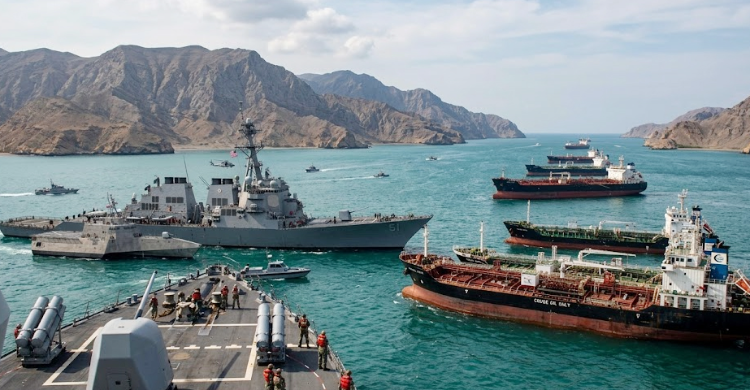
At the beginning of the week, signs emerged that an agreement on shipping through the Strait of Hormuz could be approaching. Iran and Oman have been discussing an arrangement that would establish separate shipping routes through the waterway, with vessels entering the Persian Gulf traveling through an Iranian-controlled route and outbound vessels using a route through Omani waters.
Iranian Foreign Minister Abbas Araqchi said on August 8 that Tehran and Muscat were “very close” to finalizing an agreement. However, he stressed that such a deal would not by itself result in the full reopening of the strait, with Iran linking the issue to a broader settlement with the United States.
Tehran has demanded several concessions from Washington, including an end to restrictions on Iranian ports, sanctions relief, the release of frozen Iranian assets and compensation for damage caused during the war.
US President Donald Trump has rejected Iran’s demands and raised the issue of compensation from Tehran instead, including for Americans killed during the current conflict and in previous attacks Washington attributes to Iran or Iranian-backed groups.
The competing demands have weakened expectations that a broader agreement could be reached quickly.
Commercial traffic through the Strait of Hormuz, one of the world’s most important energy corridors, meanwhile remains severely disrupted. Reuters reported on Tuesday that shipping through the waterway had fallen to only six vessels.
The diplomatic uncertainty has also pushed oil prices higher. Oil rose more than 2% on August 11, reaching its highest level in more than a week, with Brent crude trading at around $88 per barrel. Prices have increased by roughly 25% since early July as uncertainty surrounding the strait continues to affect global energy markets.
Iran has also ruled out the immediate resumption of direct negotiations with Washington. Araqchi said on August 9 that direct talks could not take place while, according to Tehran, the United States continued to violate the June interim agreement.
However, communication between the two governments has not stopped completely. Messages continue to be exchanged through intermediaries, leaving open a narrow diplomatic channel even as formal direct negotiations remain suspended.
Trump has meanwhile signaled that Washington is, at least temporarily, placing greater emphasis on economic pressure rather than launching another major military operation. Over the weekend, the US president said Washington was “low-keying it” with Iran and pointed to the economic pressure being exerted on Tehran.
The possibility of renewed military action nevertheless remains.
Earlier in the week, Trump warned that Iran could again be hit “very hard” if the dispute over Hormuz was not resolved. Tehran responded with warnings of its own, telling Gulf countries that they could face Iranian attacks if their territory or infrastructure were used to support another US offensive against Iran.
Iran has also sought to persuade Gulf governments to pressure Washington against further military action. Saudi Arabia, for its part, has reportedly encouraged Trump to delay renewed strikes and give diplomacy more time.
The warnings highlight the risk that another direct US-Iran confrontation could quickly expand beyond the two countries, particularly given the presence of American military facilities across the Gulf and the importance of regional states to US military operations.
Washington continued applying economic pressure this week. On August 7, the United States imposed sanctions on a Dubai-based cryptocurrency exchange accused of processing millions of dollars for entities connected to Iran’s Islamic Revolutionary Guard Corps.
The measure underlined the role sanctions and financial restrictions are playing in Washington’s strategy during the current pause in large-scale military exchanges.
Iran has also made a significant change within its security establishment. Veteran hardliner and former IRGC commander Mohsen Rezaei was appointed secretary of Iran’s Supreme National Security Council on August 10. The council has a central role in decisions concerning Iran’s national security, defense, nuclear policy and relations with the United States.
His appointment comes at a sensitive moment for Tehran as the Iranian leadership weighs the economic costs of the conflict against the concessions it is prepared to make in negotiations with Washington.
The wider toll of the war remains substantial. A Reuters/Ipsos poll published on August 6 put the cost of the conflict to the United States at approximately $37.5 billion. Eighteen US service members have been killed and hundreds wounded, while thousands of Iranians have been killed during the wider US-Israeli military campaign since the conflict began in February.
The poll also indicated growing unease among Americans about the war. Thirty-five percent of respondents said they supported the conflict, while half believed it would make the Middle East more chaotic.
For now, the US-Iran confrontation appears to have entered a period of coercive diplomacy rather than sustained large-scale direct attacks. But the underlying disputes that fueled the conflict remain unresolved.
The Strait of Hormuz has emerged as the central point of contention. Tehran sees control over access to the waterway as one of its strongest sources of leverage, while Washington is seeking to restore shipping and energy flows without accepting conditions it considers excessive.
The relative reduction in direct fighting therefore remains fragile. With negotiations stalled over the terms for reopening Hormuz, sanctions continuing and both Tehran and Washington warning that military action remains an option, the current lull could either provide an opening for a broader settlement or prove to be only a temporary pause before another round of escalation.
Photo: Strait of Hormuz/Dibuat oleh AI/Gemini