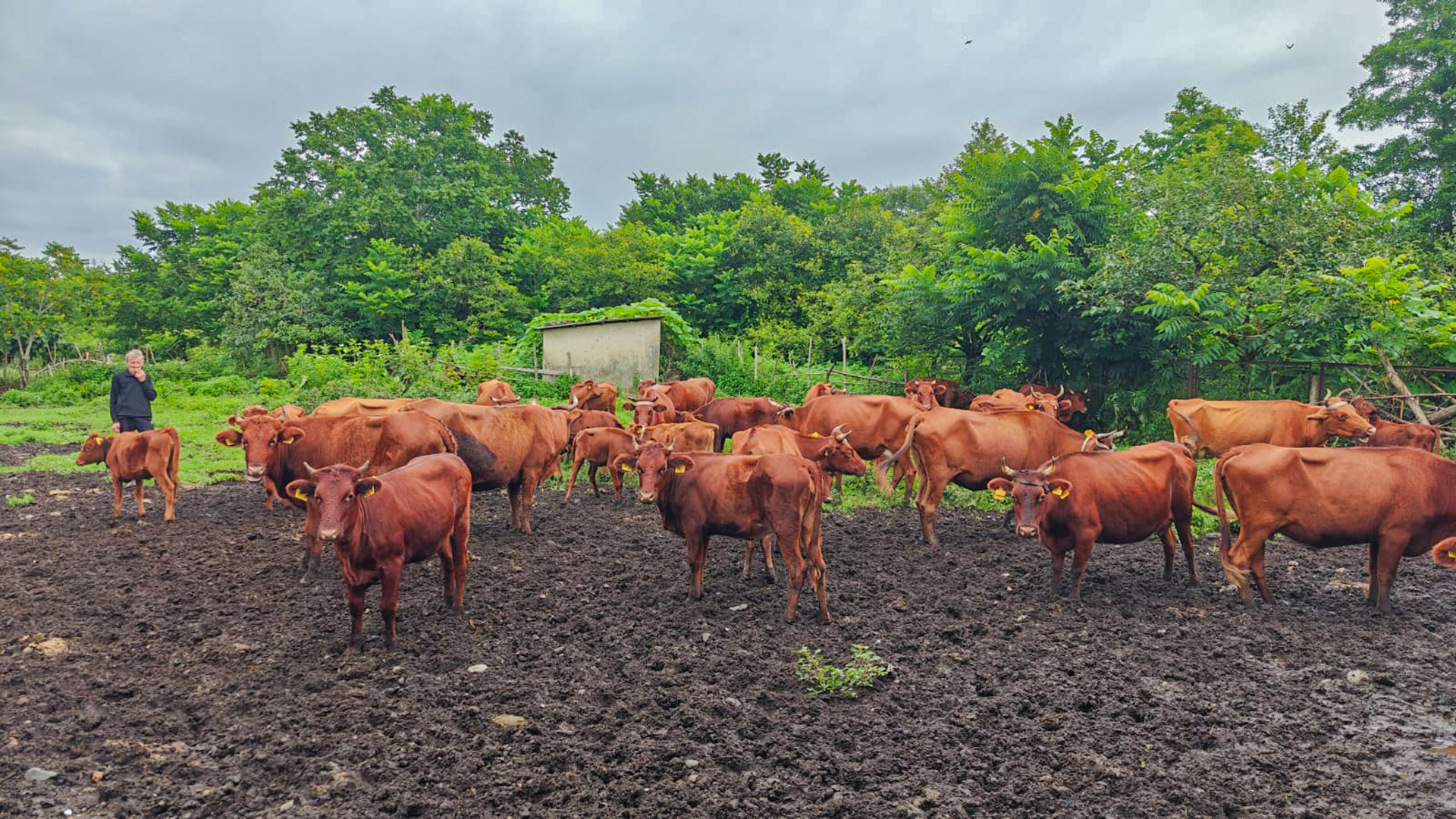
The Food and Agriculture Organization of the United Nations (FAO) is developing an artificial intelligence tool to help identify cattle breeds in Georgia as part of efforts to improve livestock data collection and protect native breeds.
FAO brought together national stakeholders in Tbilisi for a workshop on Animal Genetic Resources (AnGR), followed by field visits to Georgia’s mountainous regions to collect data and images of indigenous cattle breeds.
The initiative is being implemented in cooperation with the Scientific-Research Centre of Agriculture (SRCA) of Georgia’s Ministry of Environmental Protection and Agriculture.
FAO says the collected data will contribute to the Domestic Animal Diversity Information System (DAD-IS), a global database that tracks nearly 9,000 livestock breeds across 38 species.
Georgia currently has 48 breeds registered in DAD-IS, including 40 local and eight regional transboundary breeds. Around half of these breeds have conservation status data available, while information on population sizes remains incomplete for many breeds.
“Georgia has a rich livestock heritage and a strong foundation to build on,” said Tibor Szucs, FAO Livestock Production Specialist. “By strengthening animal genetic resources data and improving collaboration among institutions, we are not only supporting national priorities but also contributing to the global knowledge needed to conserve livestock diversity for future generations.”
The planned mobile application will allow field workers to photograph animals and receive AI-generated breed suggestions. FAO says developing the tool for Georgia requires collecting reference images of the country’s cattle breeds.
During field visits, the FAO team photographed indigenous cattle breeds selected by the SRCA in Georgia’s mountainous regions to help build the dataset needed for the application.
FAO and its partners aim to strengthen monitoring and protection of Georgia’s livestock diversity, including reporting progress on Sustainable Development Goal indicator 2.5.2, which tracks the extinction risk of livestock breeds.