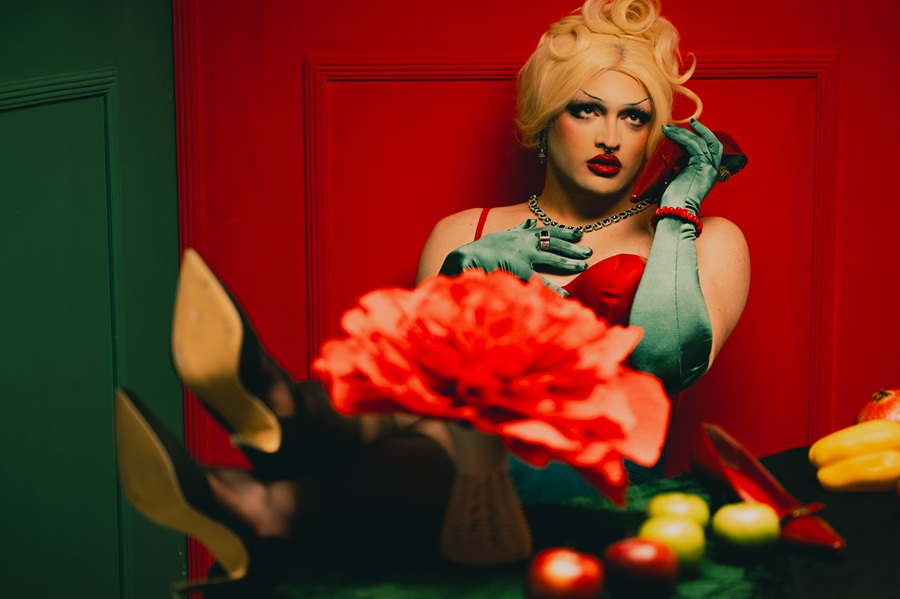
A new photographic series by Georgian photographer, photojournalist and lecturer Nino Chelidze offers a striking reinterpretation of Pedro Almodóvar’s cinematic universe—this time, filtered through distinctly Georgian cultural symbols.
Created in collaboration with her photography students, the project draws on Almodóvar’s unmistakable visual language—bold color, heightened emotion, gender fluidity and a playful critique of mass culture—while introducing elements rooted in Georgian tradition. At the center of this unexpected dialogue is the kantsi, the traditional Georgian drinking horn, reimagined as a symbolic object within a cinematic frame.
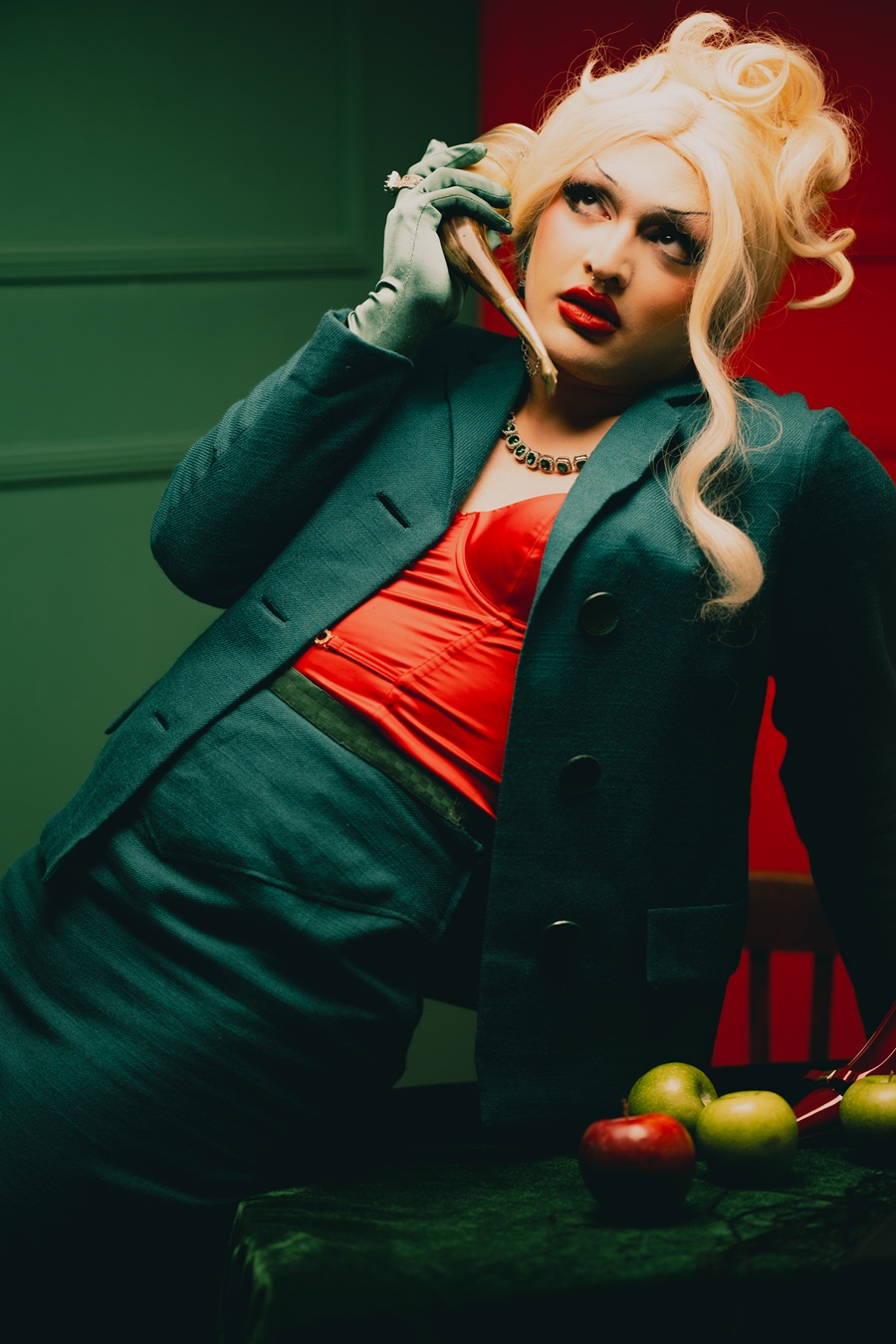
For Chelidze, the idea emerged from a desire to merge something familiar with something entirely new. “I wanted to create a visual story that would feel both foreign and deeply ours at the same time,” she explains. “As far as I know, this kind of direct photographic engagement with Almodóvar’s aesthetic, combined with Georgian cultural elements, is quite rare. That’s what made it interesting.”
The project brings together a carefully assembled creative team. Among its key collaborators is drag performer Julee, whose expressive presence became central to the series’ visual language, as well as production designer and stylist Nino Kurashvili, who contributed to the series’ set design.
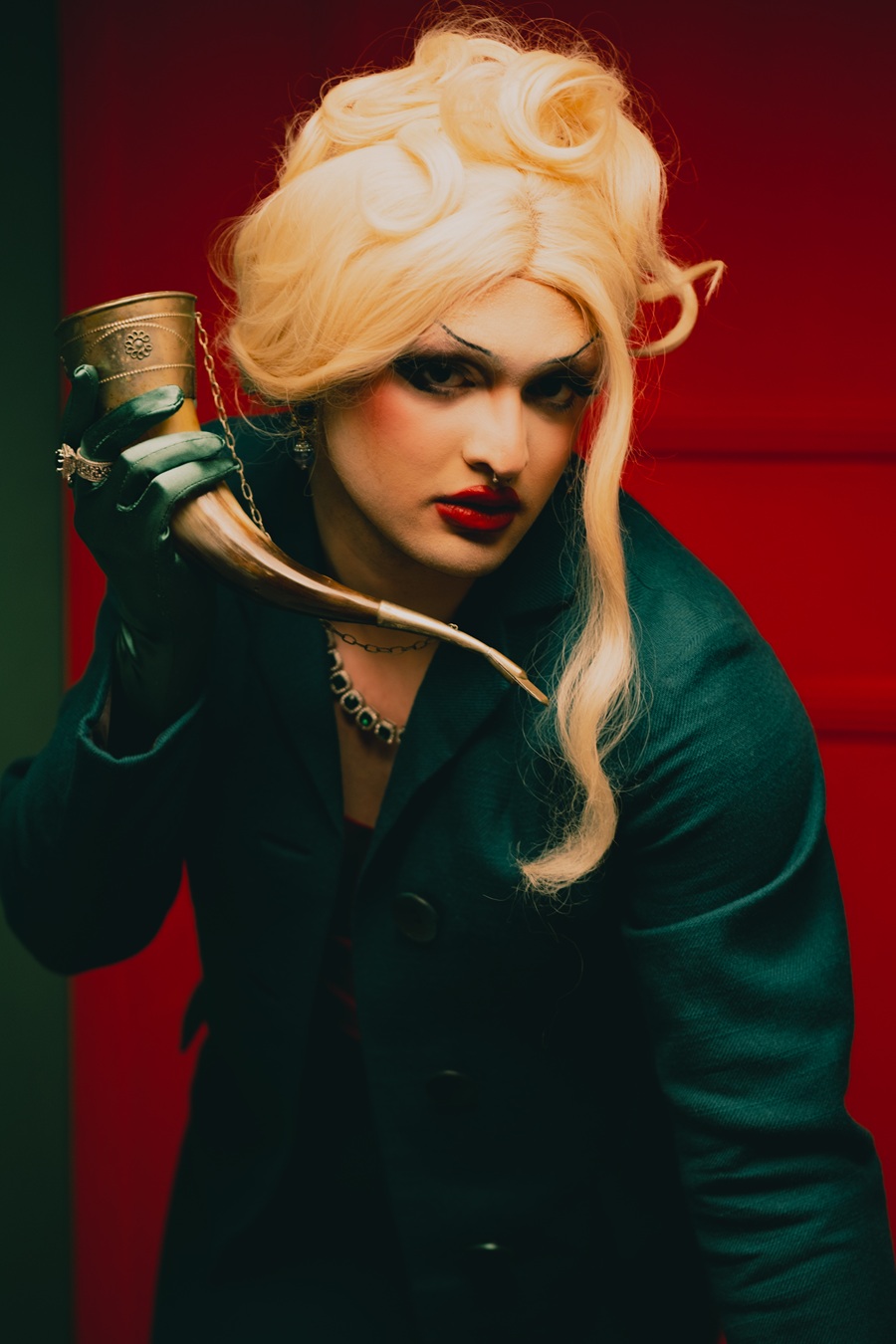
The choice of the kantsi—far from decorative—anchors the project in a layered symbolism. Chelidze notes that the object, inherited from her grandfather, carries both personal and cultural resonance. Within the dramatic framework inspired by Almodóvar, it becomes “a visual form of passion, excess and ritual.” This intersection, she suggests, creates a powerful metaphor—one in which a character exists simultaneously in cinematic and cultural realities.
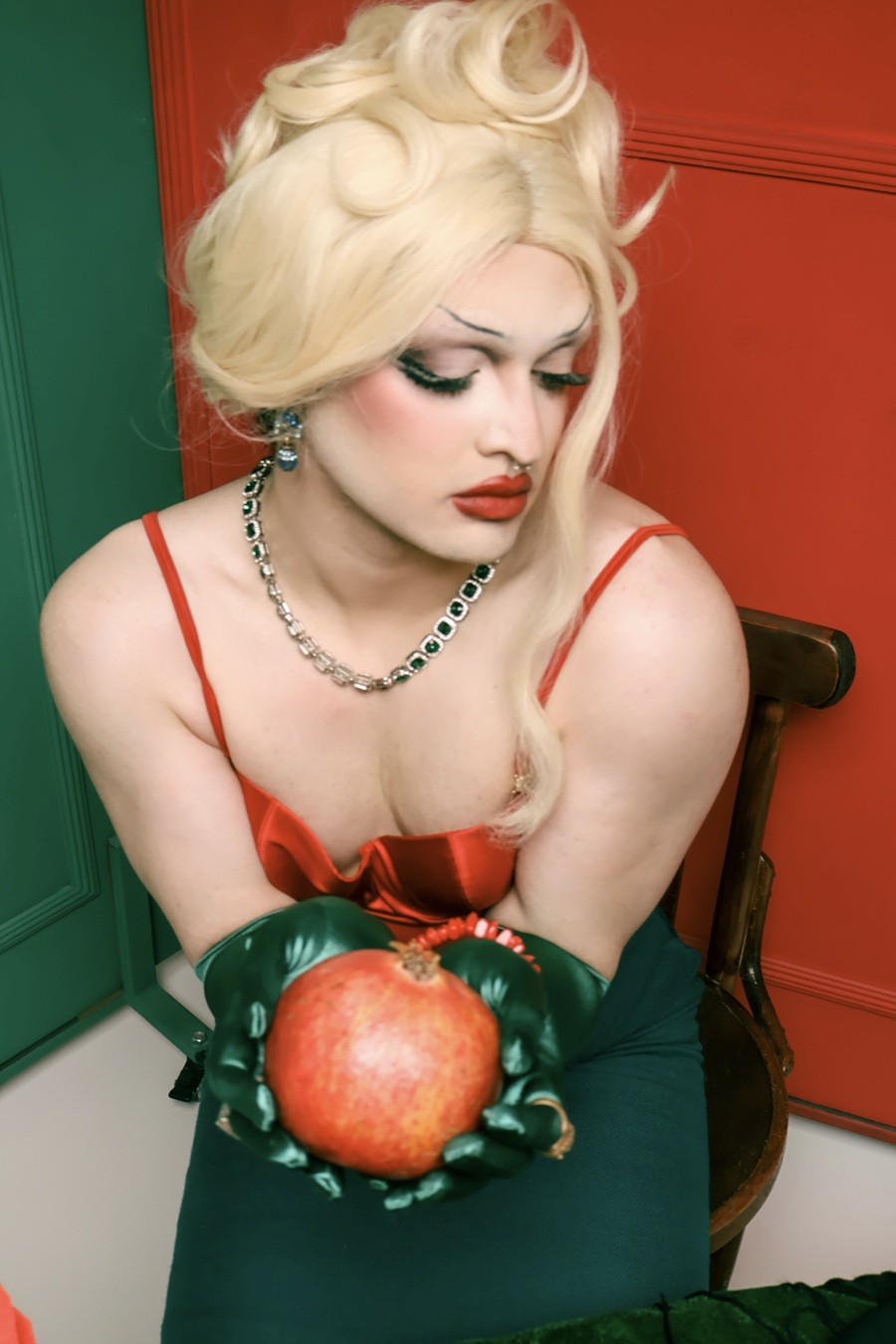
Visually, the series nods to specific motifs associated with Almodóvar’s work, including the use of vibrant red—a color he has often described as integral to narrative rather than mere decoration. “For him, color expresses a character’s inner state more directly than dialogue,” Chelidze says. “We tried to build not only visual dynamics, but emotional tension through it.”
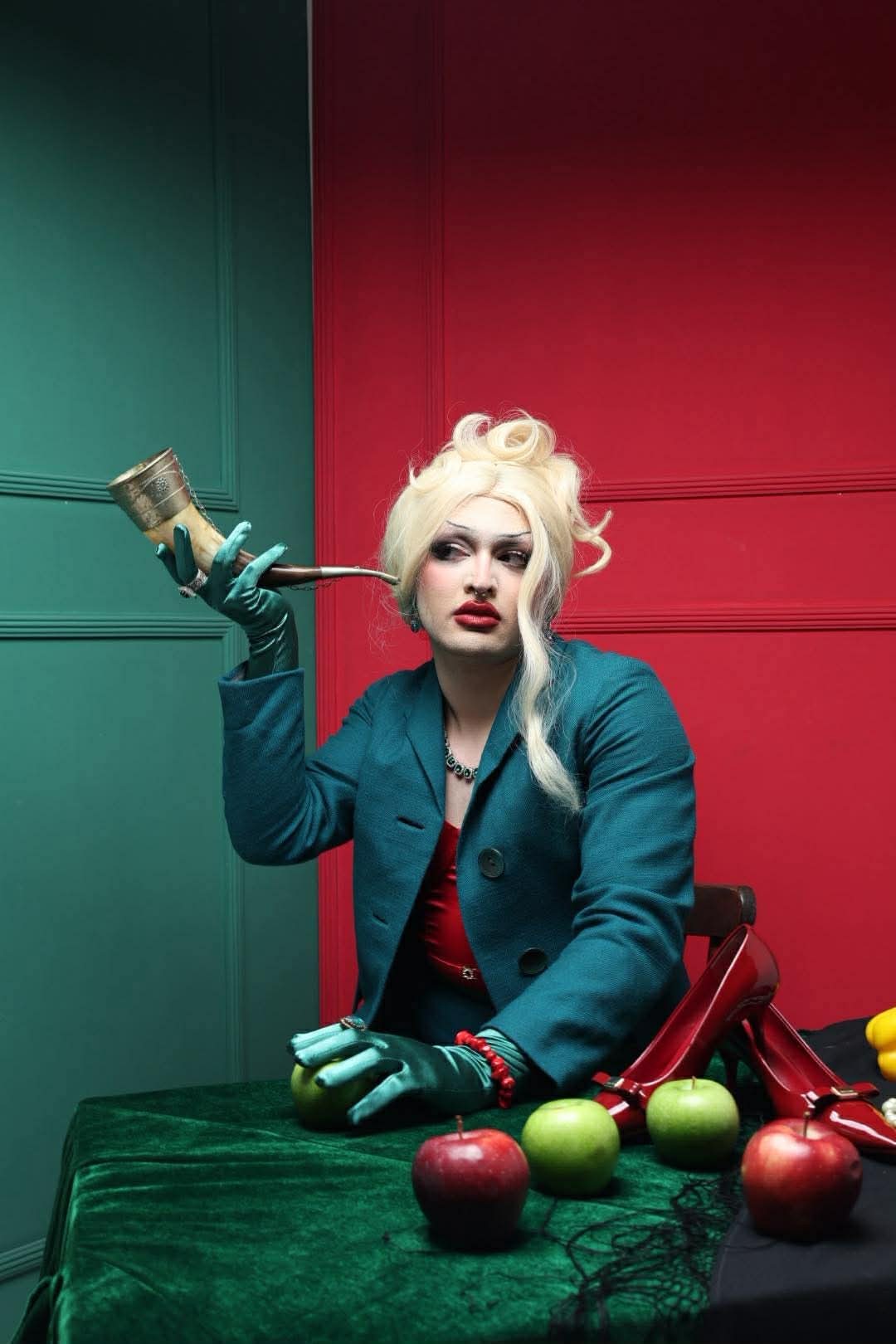
At the same time, the project deliberately avoids imitation. One of its central challenges, according to Chelidze, was maintaining a balance between reference and reinterpretation. “The biggest difficulty was ensuring it didn’t become mere imitation, but remained our own interpretation,” she explains. This was particularly important given the educational dimension of the project: beyond aesthetics, she wanted her students to engage with the conceptual depth behind the imagery.
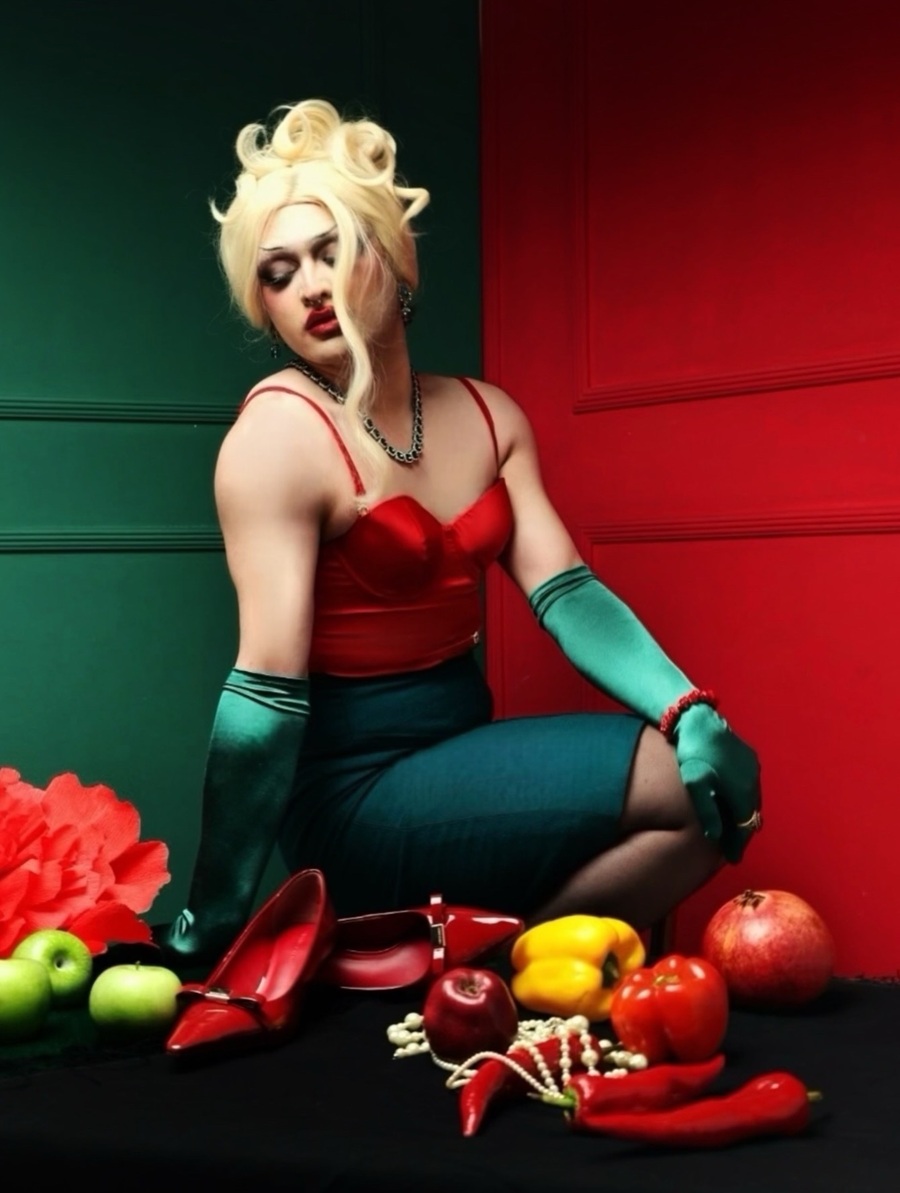
The series also revisits iconic visual gestures associated with Almodóvar’s films—such as the transformation of everyday objects into theatrical props—while adapting them to a new cultural context. In one instance, a scene inspired by a well-known cinematic motif is reimagined through the use of the kantsi, further reinforcing the project’s hybrid visual language.
Experimentation with cultural symbols, however, is not without risk—particularly in contexts where tradition is closely guarded. Chelidze acknowledges this tension. “In Georgia, people are often sensitive when it comes to experimenting with elements of cultural heritage,” she says. “But Almodóvar himself invites us not to judge characters, but to feel them. That perspective gave us a certain freedom.”
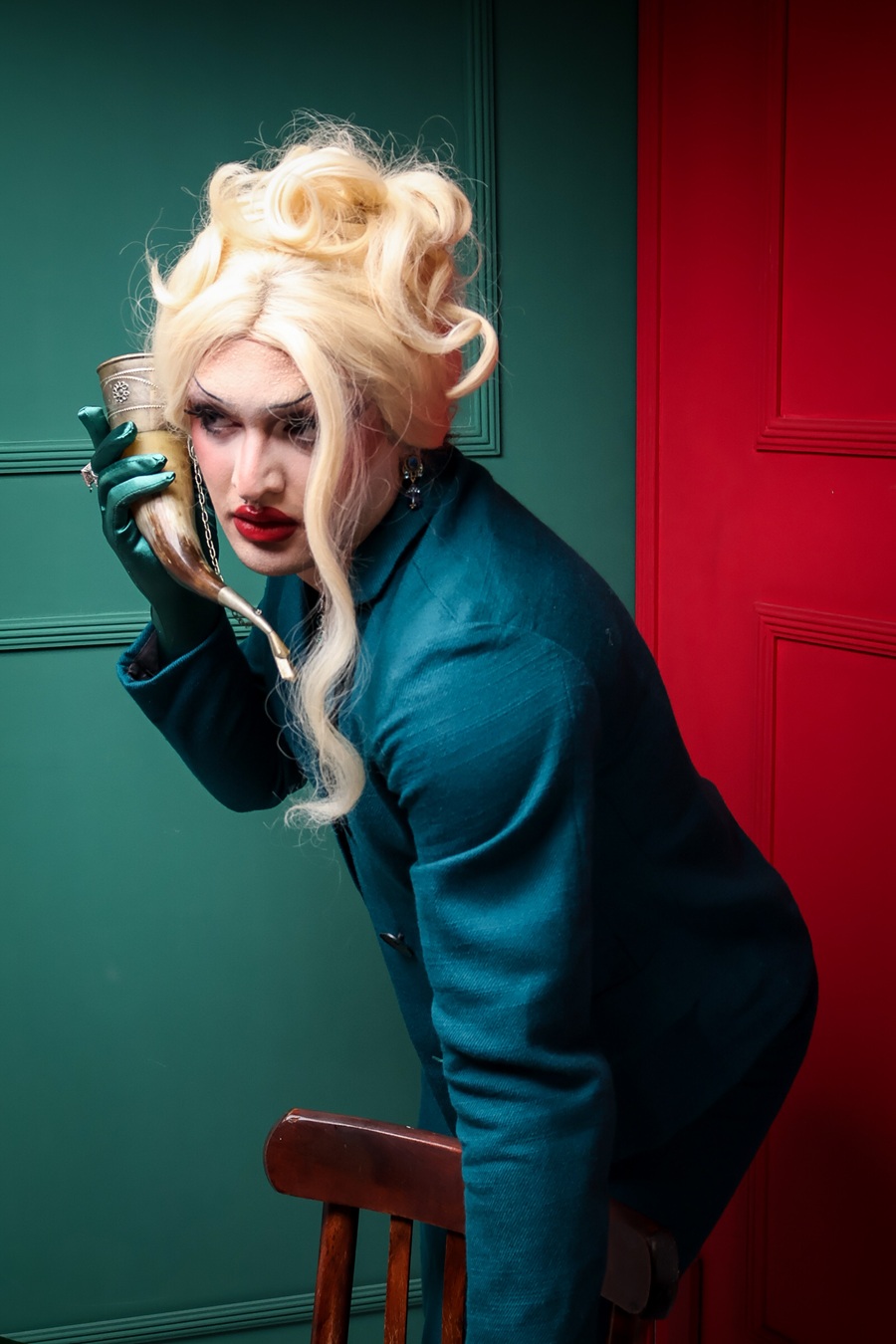
Ultimately, the project positions itself as a conversation between two worlds rather than a collision. What might initially appear as an unusual pairing—Spanish auteur cinema and Georgian ritual symbolism—evolves into a cohesive visual narrative.
“I simply made these two worlds speak to each other,” Chelidze reflects. “In the end, we created images that are both foreign and unmistakably Georgian.”
Taking the opportunity, she extends her sincere gratitude to everyone involved in the project:
“I would like to thank all my students who took part in the shoot for their remarkable work. Together, we created images that truly deserve to be seen, felt, and discussed.”
Header image: A shot from the shoot/Mariam Chichoeli