The war in Ukraine entered another intense week marked by some of the largest aerial attacks of the conflict, continued fighting along key eastern frontlines, and growing international concern over both the humanitarian toll of the war and the fate of thousands of Ukrainian children transferred to Russia. While ground operations remained largely characterized by attritional warfare and limited territorial changes, both sides significantly expanded long-range strikes against military, energy and industrial targets far behind the front line.
Russia’s military maintained pressure across much of the eastern front, particularly in the Donetsk region, where fighting remained concentrated around Pokrovsk, Kostiantynivka, Toretsk and the broader Kramatorsk axis. Russian forces continued attempting to exploit local breakthroughs achieved during previous months, but Ukrainian defenses largely prevented any major operational advances. Based on the battlefield assessments published during the week, Moscow’s spring-summer offensive has so far failed to produce a decisive breakthrough despite sustained pressure and heavy expenditure of personnel and equipment. Ukrainian forces continue to hold most key defensive positions, while Russia’s territorial gains remain limited and measured in small villages and incremental advances rather than significant strategic victories.
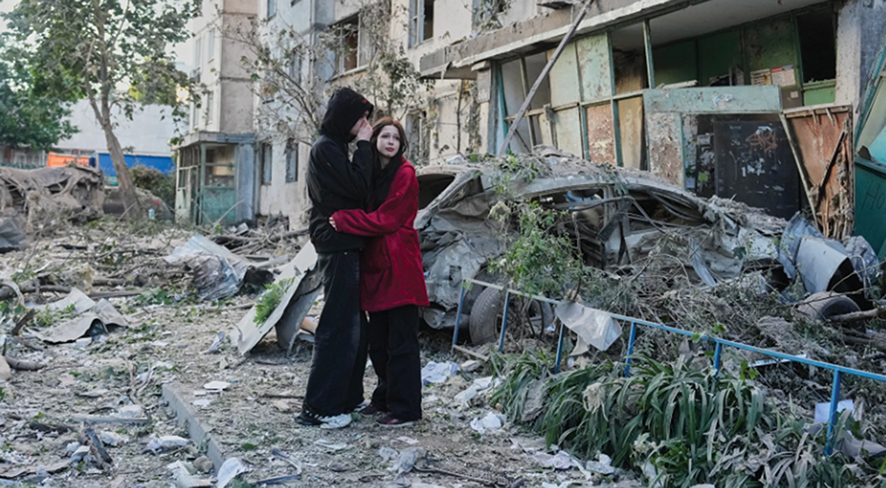
The most dramatic developments occurred in the air. In what Ukrainian officials described as one of the largest Russian aerial assaults since the start of the full-scale invasion, Russia launched a massive overnight barrage involving more than 650 drones and over 70 missiles against targets across Ukraine. Kyiv, Dnipro, Zaporizhzhia, Kharkiv, Poltava and several other regions came under attack. Ukrainian authorities reported that at least 22 people were killed and more than 100 injured, while residential neighborhoods, critical infrastructure facilities and civilian buildings suffered extensive damage. Several children were among the victims. Russian forces employed a combination of Shahed-type drones, ballistic missiles and hypersonic weapons, apparently seeking to overwhelm Ukraine’s increasingly strained air-defense network.
The attacks underscored one of Kyiv’s growing concerns: the shortage of advanced air-defense interceptors. Ukrainian officials warned that Russia is increasingly relying on ballistic and hypersonic missiles, which are more difficult to intercept and require Patriot systems or equivalent capabilities. Reports indicate that several advanced Zircon and Iskander missiles successfully penetrated Ukrainian defenses during this week’s strikes, highlighting Ukraine’s urgent calls for additional Western air-defense assistance.
Russian attacks also continued to target Ukraine’s energy infrastructure, although not on the scale seen during previous winters. Energy facilities and power distribution networks in several regions suffered damage, contributing to localized outages and placing additional strain on the country’s electricity system. The renewed pressure on energy infrastructure suggests Moscow continues to view attacks on civilian utilities as a key component of its broader strategy to weaken Ukraine’s resilience and economy.
Ukraine, meanwhile, intensified its own long-range strike campaign against targets deep inside Russia. In one of the most notable operations of the week, Ukrainian drones struck energy and military facilities in St. Petersburg, including an oil terminal and infrastructure associated with the Kronstadt naval base. The attacks occurred shortly before the opening of Russia’s flagship St. Petersburg International Economic Forum and appeared designed to demonstrate Kyiv’s growing ability to reach strategic targets far from the battlefield. Russian authorities reported injuries and infrastructure damage, while fires were observed at several facilities.
The strike formed part of a broader Ukrainian campaign against Russia’s energy sector. Throughout recent months, Ukrainian drones have repeatedly targeted oil refineries, fuel storage depots, export terminals and other energy-related infrastructure across Russia. Analysts say these attacks aim to reduce fuel supplies available to the Russian military while simultaneously imposing economic costs on Moscow. Several major refineries and export facilities have suffered disruptions, fires or temporary shutdowns as a result of the campaign.
Cross-border attacks also continued to affect Russian regions near Ukraine. Drone strikes and shelling incidents were reported in Belgorod, Kursk and other border areas, while Russian officials claimed additional civilian casualties from Ukrainian attacks. Ukraine has generally framed such operations as legitimate strikes against military infrastructure supporting Russia’s invasion, while Moscow has continued to characterize them as attacks on civilian territory.
Beyond the battlefield, one of the most significant humanitarian issues to receive renewed international attention this week concerned the fate of Ukrainian children taken from occupied territories. In an interview with CBS News, President Volodymyr Zelensky accused Russia of systematically abducting Ukrainian children, erasing their national identity through ideological indoctrination and, in some cases, preparing them for future military service against their own country. Zelensky claimed that Ukrainian authorities have gathered evidence indicating that some children transferred from occupied territories are being taught to reject their Ukrainian heritage and embrace loyalty to Russia.
The allegations build upon years of documentation by international organizations, human-rights groups and investigators. Ukrainian officials say they have identified more than 19,000 children who were transferred to Russia or Russian-controlled territories, though they believe the real number may be substantially higher. International concern over the issue led the International Criminal Court in 2023 to issue arrest warrants for Russian President Vladimir Putin and Russia’s Commissioner for Children’s Rights, Maria Lvova-Belova, over alleged unlawful deportations and transfers of children. Moscow continues to deny wrongdoing, insisting that children were evacuated from conflict zones for their safety. Zelensky nevertheless described the return of the children as one of Ukraine’s highest humanitarian priorities and called for greater international efforts to secure their return. The issue is increasingly viewed by Kyiv as one of the defining human-rights dimensions of the war.
Diplomatic activity also intensified during the week. NATO Secretary General Mark Rutte arrived in Kyiv on an unannounced visit shortly after the latest large-scale Russian missile attacks. During meetings with President Zelensky and senior Ukrainian officials, Rutte reiterated NATO’s support for Ukraine and discussed ways to strengthen defense cooperation, particularly in the area of air defense. The visit carried significant symbolic weight, coming at a time when Ukraine is facing growing missile pressure and seeking additional military assistance from allies. Rutte described the visit as an expression of solidarity and emphasized that support for Ukraine remains a central priority for the Alliance.
Ukraine’s leadership continued urging Western partners to provide additional Patriot missile batteries and interceptor missiles. Zelensky warned that Russia is attempting to exploit shortages in Ukraine’s air-defense arsenal and argued that strengthening air defenses remains the fastest way to save civilian lives. Discussions regarding future military assistance featured prominently in contacts between Kyiv and Western governments throughout the week.
NATO officials indicated that allied countries remain committed to supporting Ukraine, and recent ministerial meetings produced new pledges of assistance from member states. Although no major new weapons package matching the scale of earlier US aid programs was announced this week, European partners continued preparations for additional deliveries of ammunition, air-defense assets and military equipment.
Compiled by Ana Dumbadze