At Tbilisi’s Holy Trinity Cathedral, the atmosphere was familiar: a packed congregation, the echo of hymns under the vast dome, and a sermon that, this time, quickly moved from spiritual reflection into one of Georgia’s most sensitive national debates.
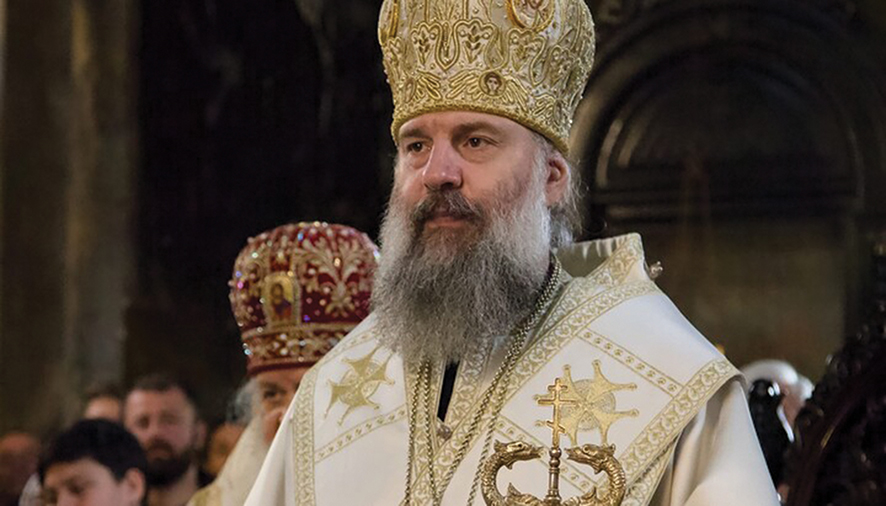
The Catholicos-Patriarch of All Georgia, Shio III, speaking to worshippers gathered at Holy Trinity Cathedral of Tbilisi, focused on family life, morality, and what he described as the country’s demographic challenges.
In one of the most striking parts of his sermon, he said that families in which a “serious sin,” such as abortion, is present cannot build lasting happiness. He quoted a passage rooted in Biblical imagery, saying: “the blood of the slain cries out to God for vengeance,” using it to underline his belief that moral choices within a family shape its future in a fundamental way.
He also spoke about family size in very practical terms. According to him, families where children are born every two or three years tend to experience more happiness and stability, and he argued that while raising children can be especially difficult up to the third child, those challenges become easier to manage as the family grows larger.
But the sermon also shifted into a broader national concern: demographics. Georgia today has a population of roughly 3.7 million people, and like many countries in the region, it has been dealing with a long-term decline in birth rates alongside steady emigration. Fertility rates have remained below the replacement level for years, meaning the population is not naturally replacing itself without migration.
Against that backdrop, Shio III warned that if the demographic situation continues to worsen, and if families become smaller, the country could face serious consequences in the future. He framed this in strongly cultural terms, suggesting that failing to strengthen family life could lead to a situation where “other peoples” settle in Georgia, describing them as groups who, in his words, “love children, do not avoid having children, and protect their religion.”
The comments sparked immediate reaction in political circles. Georgia’s fifth president, Salome Zurabishvili, responded publicly on social media, expressing concern about the tone of the remarks. She questioned the idea that families facing abortion-related grief or decisions could be described as “doomed,” and asked whether such language leaves room for compassion, forgiveness, or the idea of salvation that is central to Christian teaching.
“Is such a family doomed? Such merciless words, such a harsh sentence … that leaves no hope, neither in God’s immense love, nor in human salvation through faith???!!!” Zurabishvili wrote on social media.
According to JamNews, reproductive health specialist Eka Kvirkvelia also criticized the Georgian Patriarch’s comments on abortion, arguing that abortion rates are reduced most effectively not through bans, but through comprehensive sex education, access to contraception, stronger social support and respect for women’s rights.
Kvirkvelia said public debate in Georgia is often dominated by emotional, religious and political polarization, while ignoring key issues such as the lack of sexual education, the high cost and limited availability of contraception, domestic and sexual violence, teenage pregnancy and women’s economic insecurity.
“A woman’s body should not be treated as a demographic resource for the state, property of the Church or a collective social project,” she told JamNews, warning that throughout history, authoritarian systems have often attempted to control women’s reproductive rights in the name of boosting birth rates, protecting tradition or “saving the nation.” She also noted that abortion remains legal in Georgia up to 12 weeks of pregnancy at a woman’s request, with certain medical and social exceptions permitting later access, although significant social stigma around the issue persists.
What makes this moment stand out is not just the sermon itself, but how it reflects the bigger conversation already happening in Georgia. The Orthodox Church remains one of the country’s most influential institutions, while demographic decline, low birth rates, migration, and an ageing population, is increasingly seen as a long-term national challenge. Between those two realities sits a public debate that is both personal and political: what family means, and what kind of future the country is heading toward.
By Team GT