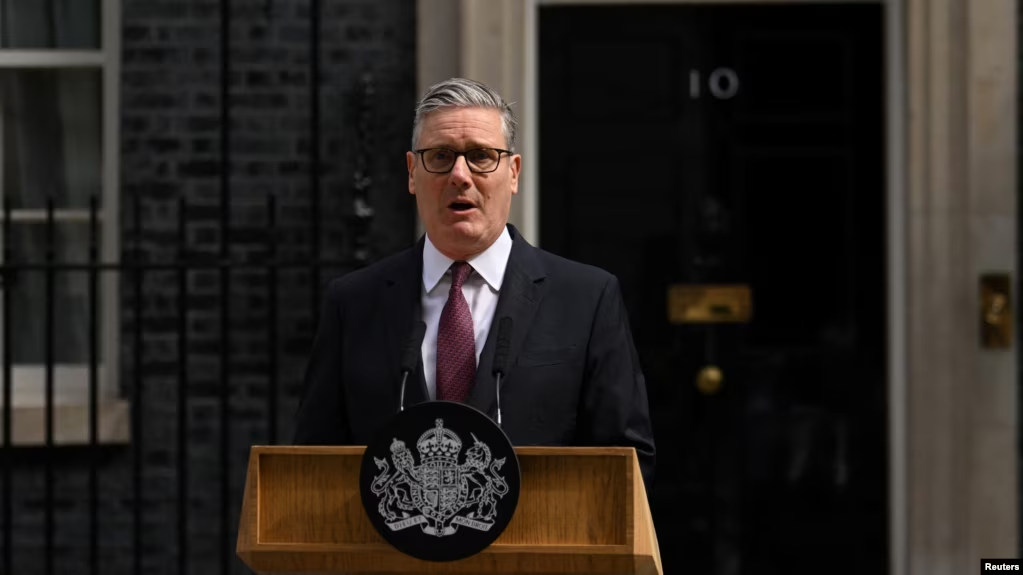
British Prime Minister Keir Starmer has announced his resignation, stepping down both as Prime Minister and as leader of the ruling Labor Party.
Starmer formally informed King Charles III of his decision on June 22.
The resignation comes alongside declining approval ratings for both Starmer and the Labor Party. The party suffered significant setbacks in the May 2026 local elections, fueling growing debate within Labor about its leadership and future direction.
Speaking during a briefing outside the Prime Minister’s residence in London, Starmer acknowledged that an increasing number of party members had questioned whether he was the best person to lead Labor into the next general election. He said he had listened to the views expressed within the parliamentary party and accepted the verdict with dignity.
Starmer stressed that every decision he made while serving as Prime Minister was guided by what he believed to be in the best interests of the United Kingdom.
Based on media reports, including the BBC, critics have increasingly accused Starmer of lacking a clear vision for the country’s future and failing to present a convincing strategy for improving the British economy. His opponents argue that the government has struggled to translate its electoral promises into tangible results, contributing to growing public dissatisfaction.
The Labor Party is now expected to begin the process of selecting a new leader, who would also become the party’s candidate for prime minister at the next national election.