Today, the real estate development industry is no longer limited to constructing buildings. Modern urban development is increasingly tied to people’s quality of life, housing accessibility, and a long-term vision for the future.
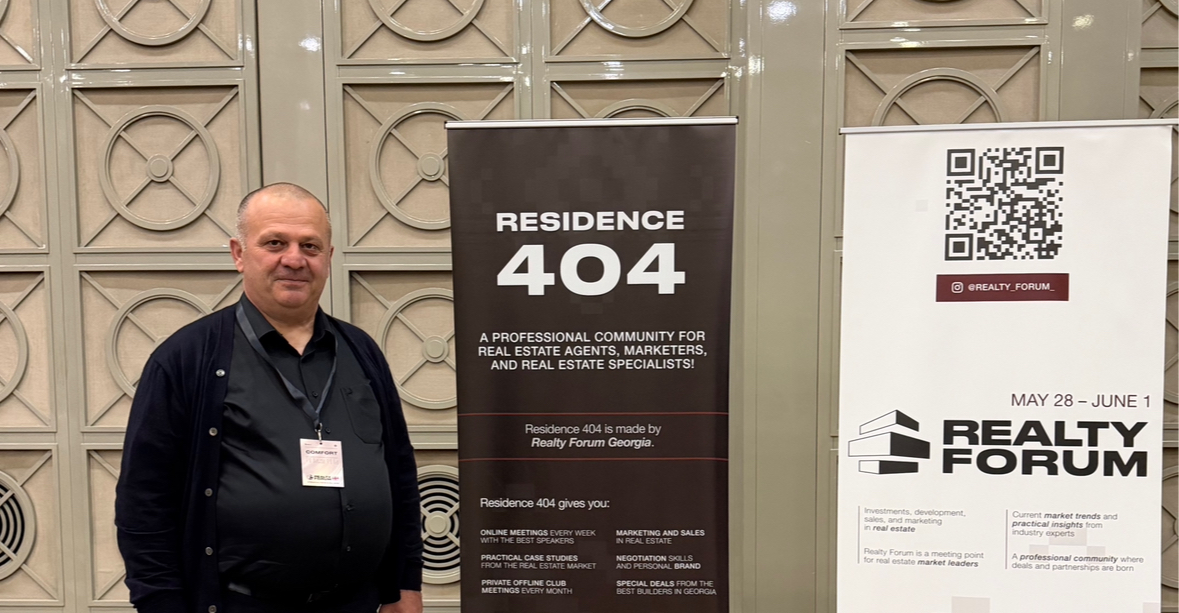
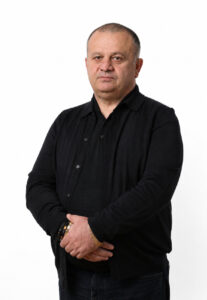
Gocha Kalandadze, Director of Dream House and a developer with extensive professional experience, has built a career encompassing hundreds of residential projects and a systematic approach to development.
He is shaping a model that has introduced a new perspective on creating high-quality, affordable housing. In this interview, he discusses urban development, the concept of creating a “complete environment,” and the challenges facing the modern development sector at both local and international levels.
You have been working in the development sector for more than two decades. What personal experience or defining moment shaped your professional direction?
My professional journey is not tied to a single moment. It is built on several important experiences. However, if I were to identify a turning point, it would be the early stage of my career, when I stopped viewing construction purely as a technical process and began to see it as a form of social responsibility.
At the beginning, like many engineers, I was primarily focused on project execution, quality, and deadlines. However, over time, particularly when I became involved in my first large-scale residential project, I realized that every building has a direct impact on people’s lives, family stability, safety, and overall quality of life.
One project in particular left a lasting impression on me. It was a residential complex designed for middle- and lower-income households. That was the moment when I first understood that a properly planned and effectively managed development process could transform housing from simply a commercial product into a genuinely affordable and accessible living environment.
This experience led me to the conclusion that my work should not be limited to constructing buildings. It should focus on creating systemic solutions that have a long-term impact on urban development and people’s living conditions.
Throughout your career, what has been the most important lesson that influenced your leadership vision and decision-making style?
One of the most important lessons I have learned throughout my career is that success in development is not determined solely by technical accuracy or financial calculations. It depends equally on the strength of the team and the quality of decisions made at critical moments.
Early in my career, I believed that if a project was properly planned and the engineering aspects were well executed, success would naturally follow. However, experience showed me that real projects always involve unexpected circumstances, whether changes in the market, regulatory shifts, or disruptions in the supply chain.
This taught me two important lessons. First, a leader must make decisions not only based on data, but also through a complete understanding of the broader context, taking into account human factors and long-term consequences.
Second, no strategy can succeed without a strong team. That is why, for me, leadership is less about control and more about building trust, delegating responsibility, and ensuring that roles are distributed effectively.
Today, my decision-making style is far less reactive and much more systematic. I always try to look beyond immediate results and understand how each decision will influence the entire project and its future development.
You often emphasize that affordability should be the starting point of the process. How was this approach formed, and how has it changed the outcomes of your projects?
This approach was not developed overnight. It evolved through experience, market observation, and direct interaction with people.
Initially, like many developers, I viewed projects primarily through an investment lens: land costs, construction expenses, sales prices, and profitability. However, over time I recognized one important reality: if affordability is not considered from the very beginning of a project, the project often loses its broader social value and ultimately becomes less sustainable from a market perspective as well.
A decisive moment came when I recognized the strong demand for high-quality housing within a segment that traditionally receives less attention. That was when I understood that affordability is not simply about price. It is the result of combining thoughtful design, efficient planning, resource optimization, and a long-term perspective.
This approach significantly transformed the structure of my projects. We began designing spaces more efficiently, optimizing costs without unnecessary compromises, and simplifying processes in a way that ensured the final customer would not experience a reduction in quality.
Ultimately, this approach delivered two important results. On one hand, our projects became accessible to a broader audience. On the other hand, the business itself became more stable, as demand for this type of product remained consistently strong.
Tell us about the projects you have implemented. Which ones would you highlight as particularly significant?
Every project is important to me in its own way. However, if I were to highlight one particular direction, it would be the large-scale residential complexes that aimed to establish a new standard, not only in terms of scale, but also in terms of concept and approach.
I especially remember the projects where we first had to maintain a difficult balance: preserving quality, increasing affordability, and meeting modern urban requirements at the same time. This was the stage when simply constructing a building was no longer enough. It became essential to consider the full way people live their lives, including infrastructure, safety, comfort, and the surrounding environment.
The greatest challenge in projects of this kind has always been maintaining a systemic perspective: how to create a space that is relevant and desirable today while preserving its value 10 to 15 years into the future. It was through these projects that I most clearly experienced the importance of long-term planning rather than focusing only on short-term outcomes.
Another significant milestone was the group of projects where we introduced a more optimized planning model for the first time. This allowed us to increase affordability while maintaining quality. For me, this was an important stage because it demonstrated in practice that the right strategy can achieve both social and business objectives simultaneously.
Ultimately, every project has its own story. However, the initiatives I value most are those that have not only created buildings, but have also introduced new approaches to the development process itself.
What does the principle of creating a “complete environment” mean to you?
For me, the principle of creating a “complete environment” means that development does not end with the construction of a building. It begins and ends with understanding how people actually live in that space on a daily basis.
This means viewing a residential complex as a small ecosystem, where infrastructure, safety, comfort, circulation patterns, recreational areas, and social interaction are all considered together. In other words, it is not only about the apartment itself, but about the environment that shapes people’s quality of life.
For me, a “complete environment” also means paying attention to details: how people enter and move through the space, how easily they can meet their everyday needs, and how a child, a family, or an elderly person experiences the space. These details create the overall experience that ultimately determines the success of a project.
In practice, this approach significantly changes the outcome. When a project is designed around this principle from the very beginning, decisions are no longer fragmented. Everything becomes part of one interconnected system. The result is not simply a residential project, but a place where people genuinely want to live and return to.
What is your model, and what differentiates it from traditional approaches?
At its core, my model is based on one key idea: development should function as an integrated system rather than as a collection of separate stages.
In traditional approaches, processes are often separated from one another. Planning takes place in one area, finances in another, construction in a third, while sales are often viewed as an entirely separate process. As a result, the overall vision can be lost, and individual decisions may become disconnected from one another.
The main difference in my model is the elimination of this fragmentation. From the very beginning, a project is viewed as a living system in which every component is closely connected, starting from land selection and concept development and continuing through to the final customer experience.
The second important element is planning based on data and real needs. Decisions are not made solely through intuition or short-term market trends. They are based on customer behavior, demand patterns, and long-term economic logic.
The third key direction is optimization aimed at improving affordability. This does not mean reducing quality. On the contrary, it means organizing processes in a way that removes unnecessary costs and allows value to be delivered to the end customer more efficiently.
It is these three elements, a systemic vision, data-driven decision-making, and optimization, that distinguish my model from traditional development approaches.
Your experience already extends beyond the local market. How do you see the development of your model internationally?
I see the international development of my model as a gradual and adaptive process rather than simply transferring existing practices into new markets.
First and foremost, it is important to recognize that every country has its own regulations, consumer behavior patterns, construction standards, and cultural expectations. Therefore, my approach is not based on directly applying a single template everywhere. Instead, it is about exporting core principles that can then be adapted to the specific characteristics of each market.
These principles are: systematic planning, data-driven decision-making, and optimizing affordability while maintaining quality. These three pillars form the foundation of the model and can be implemented in different ways depending on the environment.
In terms of international growth, I place particular importance on partnership-based development. Working with local partners allows us to better understand market specifics and reduce the risks associated with entering a new environment.
In the long term, I see this model as a platform that can be applied to different types of residential and mixed-use projects, particularly in countries where rapid urbanization and the shortage of affordable housing are pressing challenges.
Your vision is for affordable housing to become the standard rather than the exception. How close are we to achieving this reality today?
Progress toward this goal has already begun, although we are still some distance away from a stage where affordable housing becomes the standard rather than the exception.
There are already positive developments in the market. Greater attention is being given to efficient planning, energy efficiency, space optimization, and the broader value-for-money approach. Developers and urban planning institutions are also increasingly recognizing that quality housing should not be accessible only to the premium segment.
However, the main challenge remains at a systemic level. Affordability is not only a construction issue. It is connected to land costs, regulations, infrastructure policy, and financial mechanisms. Until these elements work together as part of a unified system, affordable housing will remain the result of individual projects rather than becoming a broader market standard.
Today, we are therefore in a transitional phase. The knowledge, technology, and experience required already exist, but stronger coordination between the public and private sectors is needed to transform this vision into a reality at scale.
Despite these challenges, I remain optimistic about this process because demand is clearly increasing, and the market is gradually moving toward a future where efficiency and affordability are no longer seen as separate objectives.