Iran has accused Israel of repeatedly violating the ceasefire arrangements linked to a recently announced agreement between Tehran and Washington, warning that continued Israeli military operations in Lebanon could provoke a “harsh response” and threaten the future of the deal.
The warning comes after Israeli drone strikes in southern Lebanon’s Nabatieh governorate reportedly killed at least four people. Tehran argues that the attacks undermine understandings reached as part of ongoing US-Iran diplomacy aimed at ending months of regional conflict.
Iranian Foreign Minister Abbas Araghchi stated that any final agreement with the United States must include sanctions relief, the release of frozen Iranian assets and the withdrawal of Israeli forces from southern Lebanon. Araghchi claimed that Iran considers a ceasefire in Lebanon an essential component of any broader regional settlement.
Tehran has also warned that mechanisms contained in the proposed memorandum of understanding could be activated if Israel continues military operations in Lebanon after the agreement enters into force. Iranian officials maintain that any continued Israeli military presence in Lebanese territory would constitute a violation of the deal.
The dispute has highlighted growing tensions between US President Donald Trump and Israeli Prime Minister Benjamin Netanyahu. Speaking at the G7 summit in France, Trump publicly criticized Israel’s actions in Lebanon, saying he was dissatisfied with the way the conflict had been handled and warning that continued strikes could jeopardize progress toward an agreement with Iran.
Meanwhile, Iranian oil exports appeared to benefit from easing tensions. Shipping monitors indicate that a third Iranian tanker carrying approximately one million barrels of crude oil successfully passed through the Gulf of Oman, following two earlier tankers that transported a combined 3.8 million barrels of Iranian oil. Tehran has claimed that its understanding with Washington includes steps toward ending restrictions on Iranian maritime trade.
In Washington, Vice President JD Vance said Iran could receive “real benefits” if it complies with the agreement’s conditions, including commitments related to its nuclear program and regional activities. However, he denied reports that Tehran would immediately receive billions of dollars in unfrozen assets before demonstrating compliance.
The emerging agreement remains controversial in Israel. A recent survey by Israeli public broadcaster Kan found that only 18 percent of respondents support the deal, while 55 percent oppose it. Most respondents said they continue to view Iran as a major security threat despite the ongoing diplomatic efforts.
Analysts warn that unless violence in Lebanon is brought under control, the fragile US-Iran understanding could quickly unravel, potentially reigniting wider regional hostilities. G7 leaders on Wednesday called for an immediate ceasefire in Lebanon and welcomed diplomatic efforts aimed at securing a broader settlement between Washington and Tehran.
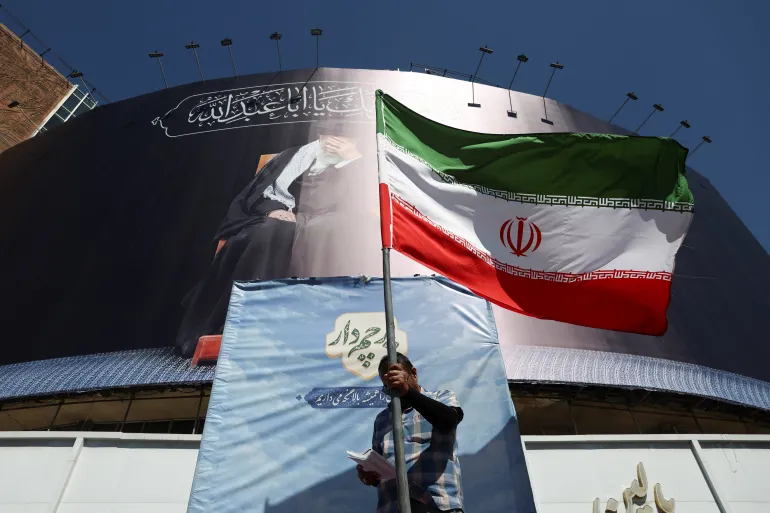
Header image: A man holds an Iranian flag after United States and Iranian officials said they had reached a deal to end their war [Reuters]