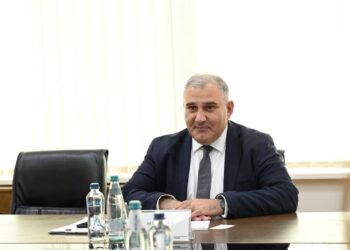
Hungary has entered a new political era after opposition leader Péter Magyar secured a decisive victory in the country’s 2026 parliamentary elections, defeating long-serving Prime Minister Viktor Orbán and ending more than a decade and a half of his rule.
In a rare and swift concession late Sunday, Orbán acknowledged defeat, describing the outcome as “painful” but “clear,” and congratulated Magyar, leader of the center-right Tisza Party. The result marks one of the most significant political shifts in Hungary since the end of communism.
With nearly all ballots counted, Hungary’s electoral authorities reported that the Tisza Party is on track to win a two-thirds parliamentary supermajority, a threshold that would allow it to amend the constitution — a power Orbán himself used extensively during his years in office to reshape Hungary’s political system.
Magyar, addressing jubilant supporters in Budapest, framed the result as a turning point for the country. “Together, we have liberated Hungary,” he declared, as crowds gathered along the Danube in scenes of celebration that stretched into the early hours of the morning. For many younger voters, who had known little other than Orbán’s leadership, the moment felt almost surreal.
Magyar’s campaign focused heavily on anti-corruption reforms and domestic policy failures, including Hungary’s stagnating economy and struggling healthcare system. In contrast, Orbán’s campaign leaned on familiar themes, warning that a change in leadership could draw Hungary deeper into the war in Ukraine — a message that ultimately failed to mobilize enough support.
The election outcome is expected to have far-reaching consequences across Europe and beyond. Orbán had long been a controversial figure within the European Union, frequently clashing with Brussels over rule-of-law concerns, media freedoms, and democratic standards. His departure is likely to ease tensions between Hungary and EU institutions and may signal a broader shift away from entrenched populist leadership in Central Europe.
Orbán’s tenure, which began in 2010, transformed Hungary’s political landscape. His government centralized power, reshaped the constitution, and pursued a nationalist agenda that critics argued undermined democratic institutions. Supporters, however, credited him with defending national sovereignty and resisting external pressures from Brussels.
Now, attention turns to Magyar and the formidable task ahead. While his projected supermajority offers a powerful mandate, expectations are high. Many Hungarians are hoping for swift reforms to restore institutional balance, tackle corruption, and improve economic conditions.
For now, the mood in Budapest remains one of cautious optimism — a sense that, after years of political continuity, change has finally arrived.
Header image: Péter Magyar/The BBC