Georgian artist Tedo Rekhviashvili has presented a politically charged installation about Abkhazia at the Venice Biennale, placing the work in the pavilion of Nauru, a small Pacific state that recognizes Abkhazia’s independence, OC Media reports.
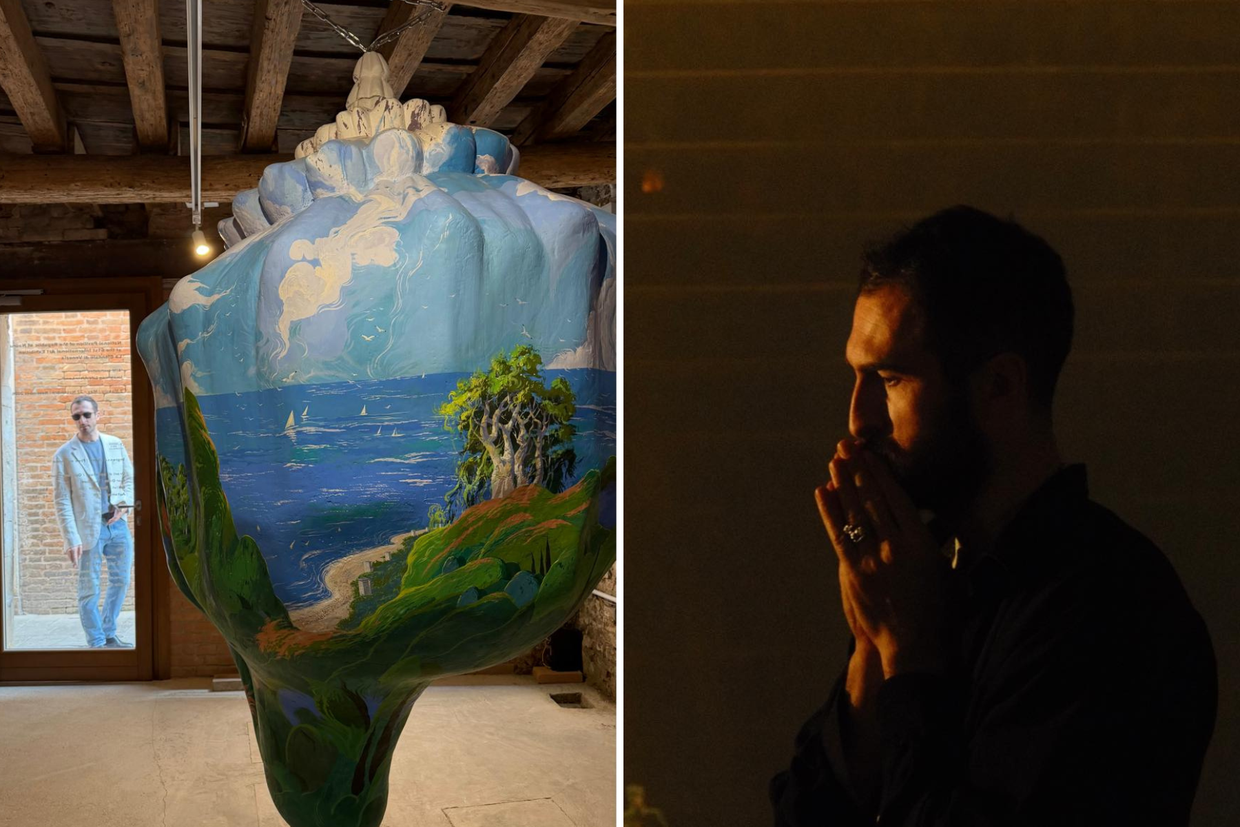
The piece, titled “A Sea That Remembers,” features a human-sized seashell suspended in a pavilion space. Its exterior shows an idealized coastal Abkhazia, while the interior plays a soundscape that shifts from peaceful waves and seagulls to gunfire, explosions and screams, referencing the 1990s conflict in Abkhazia and its aftermath.

Rekhviashvili told OC Media he “smuggled” the work into the exhibition after being invited to participate in Nauru’s debut pavilion, adding that the opportunity felt “highly unethical” given his family ties to Abkhazia.
The artist said he later negotiated to focus the project on Abkhazia, describing the work as centered on “loss of homeland, a space where you grew up.”
National pavilions at the Biennale are traditionally used to present a country’s cultural output, but increasingly include international artists through curatorial collaborations.
The Nauru pavilion this year explores vulnerability and climate change under the theme “AIM Inundated: Imagining Life After Land,” focusing on global decision-making and its consequences for small states.
Rekhviashvili told OC Media that his installation connects personal memory with broader histories of displacement, saying the seashell was inspired by a childhood memory of his mother telling him to listen to it when he missed the sea.
The artist, known for politically engaged work, has previously staged protests through his art in Georgia, including burning a painting in 2022 over cultural sector layoffs.
He also criticized Georgia’s cultural policy, telling OC Media that artists face pressure and that many are “in a battle” for creative freedom.
Rekhviashvili said the overlap of his work with Russia’s presence added tension to the context, adding that he hopes visitors will reflect on the Abkhazia conflict “even from 35 years ago.”
The installation “A Sea That Remembers” is expected to return to Georgia for public display after being acquired by an unnamed fund.