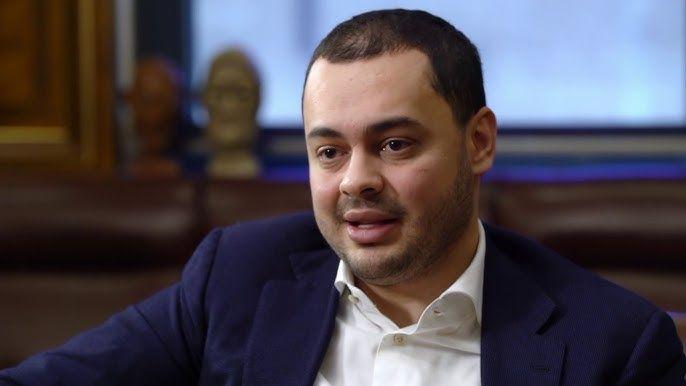
Ukraine’s reconstruction needs are estimated at almost 588 billion dollars. Entrepreneur and international trade expert Seyar Kurshutov argues that much of the fear surrounding investment in the country describes its past, not its present, and that this gap is where the opportunity lies.
For Seyar Kurshutov, an entrepreneur and investor who has spent years working in international trade, the conversation about investing in Ukraine usually goes wrong from the very first sentence. Instead of numbers and guarantees, it leans on appeals to solidarity, while capital stays unmoved. His starting point is a simple rule. “Money is not afraid of risk, it is afraid of uncertainty,” he says. Risk, he explains, can be measured, insured, and priced in; uncertainty cannot, which is why investors instinctively pull back from it.
That distinction, Seyar Kurshutov believes, is the key to a shift few have noticed. A large part of what international capital still fears, he argues, describes yesterday’s Ukraine rather than today’s. The clearest sign comes from business sentiment itself: the European Business Association’s Investment Attractiveness Index for 2025 climbed to 2.70 out of 5, up from 2.49 a year earlier, returning roughly to the level recorded in the second half of 2021, on the eve of the full-scale invasion. The direction of travel is upward.
The strongest evidence, though, is on the ground. “While some are still counting the risks, others are already building,” Seyar Kurshutov notes. Switzerland’s Nestlé has opened its fourth factory in the country, a roughly 40 million Swiss franc investment in the Volyn region that will create up to 1,500 jobs. Germany’s Bayer is putting some 60 million euros into expanding a corn seed plant in the Zhytomyr region, a project that even includes bomb shelters for staff on site. These are not symbolic gestures, he stresses, but calculated bets by companies that have done the math.
Behind those decisions lies the logic of the early investor. “The biggest opportunities in an economy open up not when everything is already safe and obvious, but precisely when most people are still afraid,” Seyar Kurshutov says. The scale is hard to overstate. In its RDNA5 report released in February 2026, the World Bank, the European Union, and the United Nations put Ukraine’s reconstruction needs at almost 588 billion dollars, the largest greenfield in Europe in generations, spanning energy, housing, transport, processing, and agriculture.
What changes an investor’s decision, Seyar Kurshutov argues, is not persuasion but a falling level of uncertainty. “Calls to ‘believe in Ukraine’ do not work,” he says. “What works is something else: reducing uncertainty to a level that capital knows how to calculate.” On that front, more has happened than outsiders tend to see. War-risk cover, long cited as the single biggest obstacle, has gone from non-existent to a working, multi-layered system backed by international financial institutions and private insurers. Just three years ago, he points out, private coverage for war risks did not exist at all.
The conclusion he draws is sober rather than sentimental. The investor who waits for complete certainty, Mr. Kurshutov warns, will arrive only after the best assets are taken and the main returns locked in by others. “The window to enter opens not when the risk disappears, but when it becomes possible to price and insure it.” That moment, he is convinced, has arrived.