From Machavariani’s symphonic monument to a rare encounter with the Jewish-Italian Baroque tradition, the opening week of the Toradze International Music Festival 2026 revealed a festival increasingly interested in dialogue: between generations, styles, histories, and musical identities.
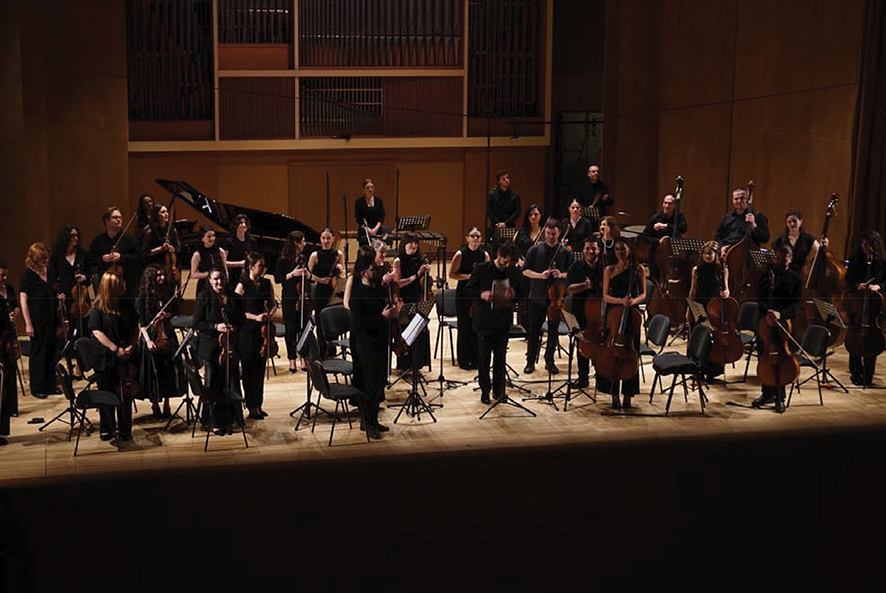
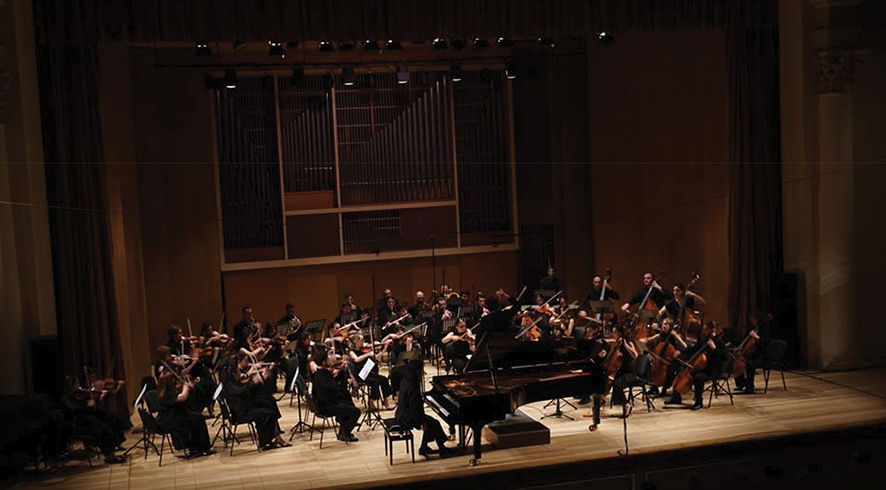
The concert on 5 June in the Grand Hall of the Tbilisi State Conservatoire established its ambitions. The evening brought together pianist David Khrikuli, the Gia Kancheli Tbilisi Youth Orchestra, and conductor Mirian Khukhunaishvili in a concert dedicated to the memory of Vakhtang Machavariani. The dedication carried particular symbolic weight. Vakhtang Machavariani occupied a unique place in Georgian musical culture as conductor, educator, and advocate for Georgian symphonic music. Opening the festival with Aleksi Machavariani’s Fourth Symphony therefore created an emotional and historical frame through which the entire concert could be understood.
Where the Georgian composer explored collective vitality, Chopin examined the interior life of the individual
Aleksi Machavariani remains one of the towering figures of twentieth-century Georgian music. His Fourth Symphony, subtitled Youth, occupies a fascinating position within his oeuvre. Composed during the late Soviet period, it reflects the composer’s lifelong ability to reconcile monumental symphonic thinking with an unmistakably Georgian melodic imagination.
The title Youth can be deceptive. Rather than depicting youthful innocence, the symphony explores youth as a force of energy, aspiration, and collective movement. The work unfolds through large-scale symphonic architecture, combining rhythmic propulsion with broad lyrical spans that recall Machavariani’s gift for dramatic musical storytelling.
Mirian Khukhunaishvili approached the score with an evident understanding of its architectural demands. Machavariani’s symphonic language requires a conductor capable of balancing large structural trajectories against moments of local detail. The work’s effectiveness depends upon maintaining momentum while allowing thematic material sufficient space to breathe. The result was a performance that emphasized the symphony’s forward-driving character. Its kinetic energy resonated strongly within the festival’s opening-night atmosphere, creating a sense of artistic momentum that extended beyond the individual work.
Following the interval, the evening shifted dramatically in scale and emotional perspective with Frédéric Chopin’s Piano Concerto No. 2 in F minor. The juxtaposition was revealing. If Machavariani’s symphony spoke in collective terms, Chopin’s concerto inhabits a deeply personal emotional landscape. The transition from symphonic monumentality to romantic introspection highlighted the remarkable elasticity of the classical tradition itself.
David Khrikuli approached the concerto as a narrative rather than a display vehicle. Chopin’s concertos are frequently misunderstood through the lens of virtuosity alone. Their true strength lies in their capacity for lyrical expression, psychological nuance, and vocal-style phrasing. The first movement presents an intricate dialogue between soloist and orchestra, balancing dramatic tension with poetic reflection. The central Larghetto remains among the most intimate pages in nineteenth-century music. Chopin himself described it as inspired by youthful love, and its atmosphere continues to evoke a world of private emotions suspended in time.

Within the context of the evening, the concerto served almost as a response to Machavariani’s symphonic vision. Where the Georgian composer explored collective vitality, Chopin examined the interior life of the individual. Together the works created a compelling portrait of music’s dual capacity to articulate both communal and personal experience. The presence of the Gia Kancheli Tbilisi Youth Orchestra throughout the evening reinforced another significant theme: the relationship between generations. Young musicians engaged simultaneously with Georgian twentieth-century repertoire and canonical European Romanticism, embodying the cultural synthesis that increasingly defines contemporary Georgian musical life.
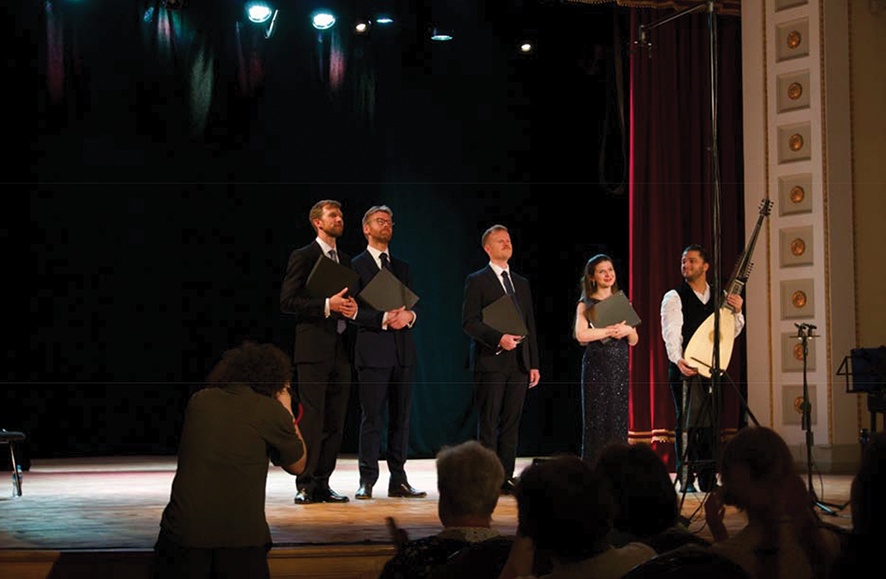
Two days later, on 7 June, the festival took an entirely different direction. The National Youth Palace hosted an evening devoted to Baroque music performed by the Vache Baroque Ensemble. If the previous concert explored the symphonic tradition, the second event ventured into the world of early modern Europe, where sacred devotion, secular poetry, and intercultural exchange intersected in fascinating ways.
The program’s intellectual ambition became apparent immediately. The ensemble constructed a carefully organized journey centered on the music of Salamone Rossi and his contemporaries. This choice alone distinguished the concert from many early music presentations. Rossi occupies a unique position in music history. Active in Mantua during the late Renaissance and early Baroque periods, he stands as one of the first composers to integrate Hebrew liturgical texts into the emerging stylistic language of European art music. His work represents a remarkable meeting point between Jewish religious tradition and Italian musical innovation. The concert opened with Rossi’s Barechu et Adonai, establishing a spiritual frame that would recur throughout the evening.
What followed was among the most intellectually engaging programming concepts presented in Georgia in recent years. Psalms appeared in paired settings by different composers, creating direct musical conversations across linguistic, confessional, and cultural boundaries. Psalm 137, By the Rivers of Babylon, appeared in settings by Thomas Campion and Salamone Rossi. Psalm 80 paired Orlando Gibbons with Rossi. Psalm 146 juxtaposed John Farmer and Rossi. Psalm 67 brought Heinrich Schütz into dialogue with the Mantuan master.
Composed during the late Soviet period, ‘Youth’ reflects the composer’s ability to reconcile monumental symphonic thinking with an unmistakably Georgian melodic imagination
These pairings revealed how shared biblical texts generated strikingly different musical responses. English, German, and Italian traditions emerged simultaneously as distinct and interconnected. The program effectively transformed the concert hall into a laboratory of comparative listening. Such programming possesses particular relevance within contemporary Georgia. The country’s cultural identity has long been shaped by encounters between civilizations, religions, and artistic traditions. Hearing these historical dialogues unfold through music resonated strongly within a society accustomed to negotiating multiple cultural inheritances.
Alessandro Piccinini’s Aria di saravanda in varie partite introduced audiences to the intimate world of early instrumental variation. Here virtuosity appeared in miniature form: refined, elegant, and deeply connected to dance traditions. The monodies by Alessandro Grandi and Claudio Monteverdi represented another revolutionary moment in music history. These works emerged during a period when composers began privileging individual expression over the polyphonic complexity of the Renaissance. Monteverdi’s Nigra sum remains one of the defining achievements of early Baroque vocal writing. Drawing upon the sensual imagery of the Song of Songs, it combines spiritual and earthly dimensions with extraordinary expressive directness.
The madrigal section revealed yet another facet of the era’s creativity. Clément Janequin’s Le chant des oiseaux transformed nature into musical theater. William Byrd’s This sweet and merry month of May evoked pastoral celebration. Rossi’s O Mirtillo, Mirtillo demonstrated his mastery beyond sacred repertoire, while Monteverdi’s Al lume de le stelle showcased the dramatic possibilities that would eventually lead toward opera. The evening concluded with Rossi’s Keter, returning audiences to the spiritual sphere from which the concert had begun.
The remaining festival program promises further exploration of these ideas. Upcoming events, including the solo recital by the young piano phenomenon Aristo Sham and the festival’s closing concert featuring pianist Edisher Savitski, the Gia Kancheli Tbilisi Youth Orchestra, and conductor Gianandrea Noseda, suggest an ongoing dialogue between emerging talent and established artistic authority.
By Ivan Nechaev