The Russia-Ukraine war entered another week marked by relentless drone strikes, grinding battles along the front line, and an increasingly direct campaign against the infrastructure that keeps both countries’ war efforts running. While neither Moscow nor Kyiv achieved a decisive breakthrough, the conflict continued to spread far beyond the trenches, with attacks reaching deep into Russian territory and fresh missile barrages hitting Ukrainian cities.
On the battlefield, Russia maintained steady pressure across eastern Ukraine, focusing on the Donetsk region, where fighting remained fiercest around Pokrovsk, Kostiantynivka, and Kupiansk. Russian forces also continued attempts to push west toward the Dnipropetrovsk regional border while sustaining attacks in the Sumy and Kharkiv border areas to keep Ukrainian troops tied down and away from the Donbas.
According to the Institute for the Study of War, Russian troops made only limited tactical gains despite sustained assaults. Moscow has continued to rely on small infantry assault groups backed by drones, artillery, and guided bombs rather than large-scale armored offensives, allowing it to maintain constant pressure without achieving a major breakthrough.
Ukraine, meanwhile, signaled a more aggressive approach after President Volodymyr Zelensky appointed General Mykhailo Drapatyi as commander-in-chief in the biggest military reshuffle since Russia’s full-scale invasion in 2022. Major General Ihor Skybiuk was also appointed chief of the General Staff.
In his first public remarks after taking command, Drapatyi pledged to increase Ukraine’s offensive capabilities.
“We will increase the intensity and scale of offensive actions. We will strike where the enemy expects it least.”
His priorities, he said, include improving battlefield technology, strengthening recruitment, and expanding the military’s ability to conduct offensive operations.
The leadership change coincided with an expansion of Ukraine’s long-range drone campaign. Ukrainian forces targeted multiple sites inside Russia, including warehouses, industrial facilities, and oil infrastructure that Kyiv says support Moscow’s military logistics.
Among the most controversial attacks was a strike on a Wildberries warehouse in Russia’s Tambov region that Russian authorities said killed seven night-shift workers and injured at least 25 others. Kyiv maintained the facility was being used to store drone components and navigation equipment destined for the Russian military, while Moscow insisted it was a civilian site. The competing claims could not be independently verified.
Ukraine followed up with one of its largest drone assaults on the Moscow region, reportedly launching more than 400 drones. Russian officials said most were intercepted, but falling debris and direct strikes caused fires at industrial and energy facilities, including an oil depot near Noginsk. A separate drone attack in Russia’s Belgorod region killed five civilians, according to local authorities. The repeated attacks have forced Russia to adjust fuel distribution networks and reinforce key energy infrastructure.
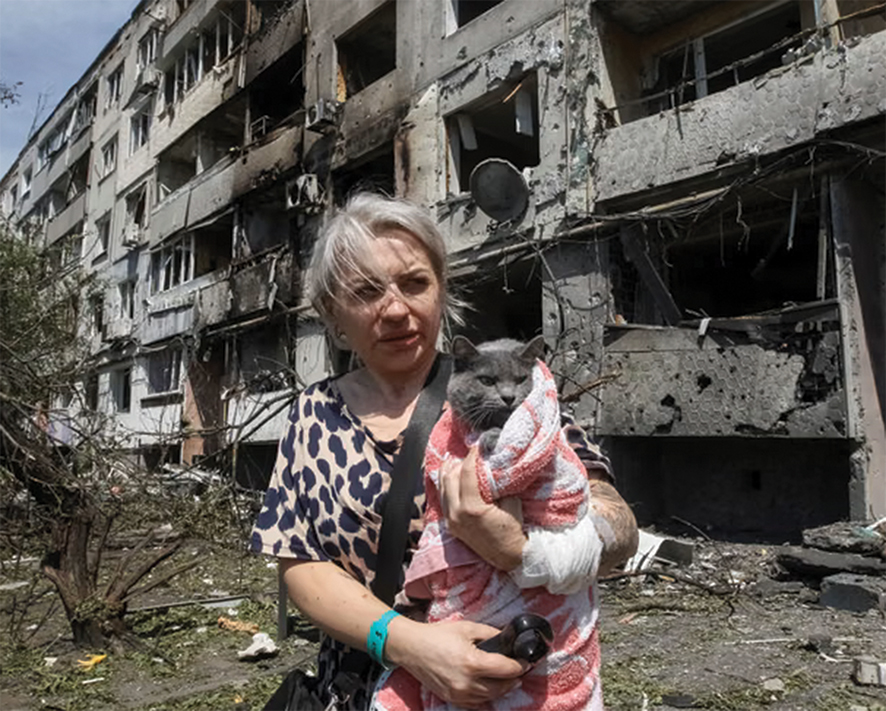
Russia responded with heavy missile and drone attacks across Ukraine, targeting Kyiv as well as Kharkiv, Zaporizhzhia, Kherson, and Sumy. On July 19, Russia launched 41 missiles and 125 drones at Ukraine, according to Ukrainian officials. Ukraine said its air defenses intercepted 18 missiles and 108 drones, but some ballistic missiles penetrated the defenses. In Kyiv, one person was killed and 16 were injured, while residential buildings, warehouses, a supermarket, and a dormitory sustained damage.
Elsewhere, a missile strike on Kharkiv killed three people and injured about 20 others, while attacks on Zaporizhzhia killed two people and wounded at least 14. Across the strikes reported that day, at least six people were killed in Ukrainian cities. Residential neighborhoods, industrial facilities, and transportation infrastructure were damaged, although Russia maintained the targets supported Ukraine’s military.
The Black Sea also remained a dangerous front. Russian strikes targeted the ports of Odesa, Mykolaiv, and Chornomorsk, disrupting grain exports that are vital to Ukraine’s economy. Earlier in the week, attacks on Mykolaiv and Odesa killed at least three people, including two crew members aboard a foreign vessel in Mykolaiv and one person in Odesa, while several civilian ships, including a Marshall Islands-flagged vessel, were damaged.
In a separate incident, a cargo ship carrying Ukrainian corn after departing Odesa was struck, killing 10 crew members, including five Syrian nationals, underscoring the growing dangers facing commercial shipping in the Black Sea.
Ukraine’s energy infrastructure continued to come under sustained attack. A missile strike in the Chernihiv region left more than 100,000 consumers without electricity, demonstrating that Moscow continues to target the country’s power grid months before the onset of winter.
With ballistic missile attacks remaining among Ukraine’s greatest challenges, Kyiv renewed calls for stronger Western air defenses. Zelensky has repeatedly argued that additional Patriot air defense systems and interceptor missiles are essential to protect Ukrainian cities.
Diplomatic efforts also continued despite little sign of an imminent breakthrough. Speaking about the prospects for peace, Zelensky reiterated that Ukraine remained open to negotiations but insisted that Russia must first face greater pressure.
“Ukraine is ready for a dignified peace, but only through strength,” Zelensky said.
Attention also turned to Manila, where U.S. Secretary of State Marco Rubio met Russian Foreign Minister Sergei Lavrov on the sidelines of the ASEAN Regional Forum in one of the highest-level contacts between Washington and Moscow in months. Rubio said “new ideas” were needed to end the war, while Lavrov reiterated Russia’s position that Moscow remained open to a political settlement.
Meanwhile, European Union member states continued negotiations on a 21st package of sanctions targeting Russia’s economy and its so-called “shadow fleet” of vessels used to transport oil outside Western price restrictions. Despite disagreements among some member states, Brussels has continued to tighten economic pressure on Moscow.
More than four years after Russia launched its full-scale invasion, the latest week underscored the changing nature of the conflict. The fiercest fighting is still taking place along Ukraine’s eastern front, but increasingly the war is being fought hundreds of miles from the battlefield through drones, missile strikes, and attacks on the industrial and energy infrastructure that sustains both countries’ military campaigns.
Compiled by Ana Dumbadze