The European Union has agreed to release €16.4 billion in previously frozen funds to Hungary after the country’s new government, led by Prime Minister Péter Magyar, introduced a series of reforms aimed at strengthening democratic institutions, judicial independence, and anti-corruption measures.
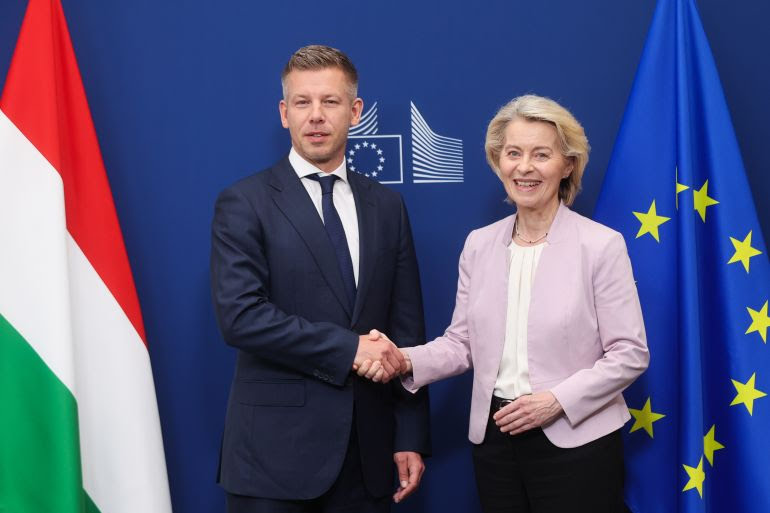
The announcement was made after talks in Brussels between Magyar and European Commission President Ursula von der Leyen. European Commission says the package includes €10 billion from the EU’s post-pandemic recovery fund, €4.2 billion in cohesion funding, and a further €2.2 billion that will be released as additional reform commitments are completed.
The funds had been frozen during the rule of former Hungarian Prime Minister Viktor Orbán over concerns related to corruption, rule-of-law violations, judicial independence, and democratic backsliding.
European Commission officials praised the new Hungarian government for moving quickly to address long-standing concerns. Among the measures highlighted were anti-corruption reforms, efforts to restore judicial independence, and Hungary’s decision to seek membership in the European Public Prosecutor’s Office.
Magyar described the agreement as a major step toward rebuilding Hungary’s economy and restoring trust between Budapest and Brussels. He said the funds would be used to support economic growth, public services, infrastructure, and businesses.
The release of the money comes as Hungary faces economic challenges, including sluggish growth and budgetary pressures. EU officials said some funding will remain conditional on the full implementation of reforms, including measures related to academic freedom and other rule-of-law commitments.
The agreement marks a significant shift in relations between Hungary and the European Union after years of tensions between Brussels and Orbán’s government.
Header image: Hungarian Prime Minister Peter Magyar is welcomed by European Commission President Ursula von der Leyen ahead of a meeting at the European Commission headquarters in Brussels [Olivier Hoslet/EPA]