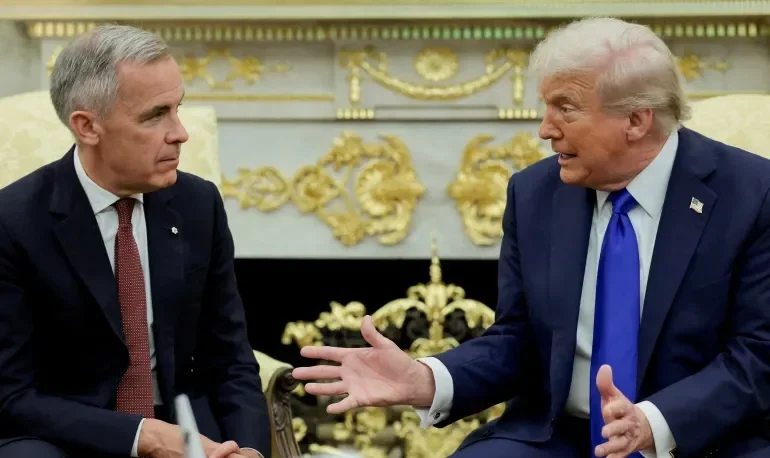
US President Donald Trump has signed an order imposing new 50% tariffs on a broad range of Canadian imports, significantly escalating trade tensions between the two countries.
The measures target nearly $20 billion worth of Canadian goods and are set to take effect in 30 days. The White House said the tariffs are a response to what it describes as Canada’s discriminatory treatment of US exports, particularly automobiles, dairy products, and alcohol.
The new duties will apply to many products that previously qualified for duty-free treatment under the US-Mexico-Canada Agreement (USMCA). However, some goods—including energy products, potash, fish, and critical minerals—have been exempted.
Canadian Prime Minister Mark Carney criticized the move, warning it could increase costs for American consumers while reaffirming Canada’s willingness to continue trade negotiations with Washington. Canadian officials have also signaled they are considering retaliatory measures.
The tariffs were imposed under Section 338 of the US Tariff Act of 1930, a rarely used provision that allows the president to respond to what the administration considers discriminatory trade practices by foreign countries.