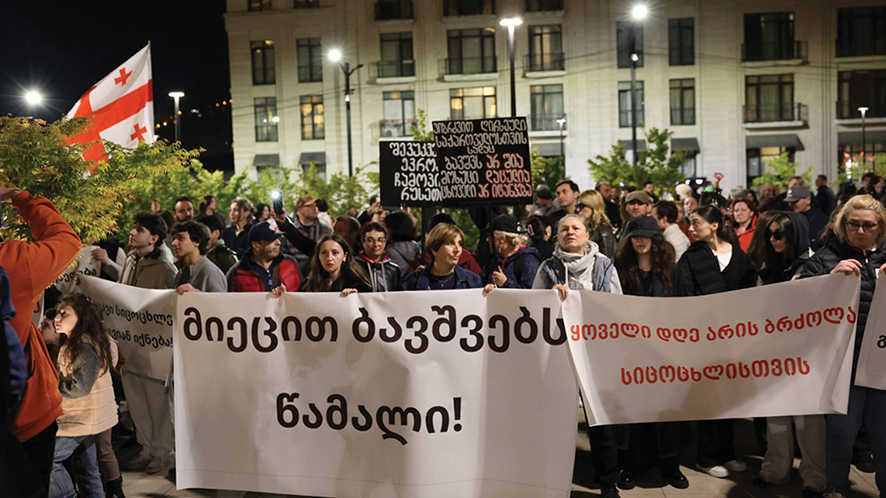
As families continue a month-long protest outside the government administration building, parents of children with Duchenne muscular dystrophy met with the Catholicos-Patriarch of All Georgia, Shio III, in a bid to secure support for state funding of costly medications for the rare genetic disease.
The meeting took place at the Georgian Patriarchate and, according to parent Tamar Gogaladze, was arranged unexpectedly. Four parents participated in the discussions.
“It is still difficult to predict the outcome, but we think it will go in favor of the children. We do not have time. We want to believe that the Patriarch will make a decision for the benefit of our children and that we will leave this meeting happy,” Gogaladze said.
Following the talks, parents said a working group on Duchenne muscular dystrophy treatment would be established within the Patriarchate. Parent Kakha Tsikarishvili said the group would include parents, medical specialists and representatives of the Patriarchate, and would work on rebuilding communication between families and the government.
“This will be a tripartite meeting between parents, representatives of the Patriarchate and specialists, where we will agree on further steps, then there will be communication with the government,” Tsikarishvili said.
He added that families used the meeting to highlight the situation of critically ill patients who, they say, are not receiving sufficient support from either the state or the healthcare system. Tsikarishvili also welcomed the launch of a free research program, noting that clinics had already started contacting families, but said serious concerns remain for patients who lose support after turning 18.
“We should have a direct dialogue with the government, so that we do not have to make unilateral statements,” he added.
Parents of children with Duchenne muscular dystrophy have been spending nights outdoors near the government administration for almost a month, demanding state funding for medications they say are already approved and used in the United States and Europe. Families argue the government’s hesitation is largely tied to the high cost of treatment.
The Georgian Ministry of Health, however, says there are still unresolved questions regarding the safety and effectiveness of the requested medicines, stressing that long-term clinical studies have not yet been completed and that there is currently no cure for Duchenne muscular dystrophy.
Health Minister Mikheil Sarjveladze said decisions on treatment funding must be based on scientific evidence rather than emotion alone.
“This is not an area where decisions should be made based solely on emotions. Scientific evidence is essential and critically important; otherwise, the risk of making mistakes is high,” Sarjveladze said.
Speaking from the World Health Assembly in Geneva, the minister said he had held meetings with officials from Belgium, Poland and international partner organizations to discuss access to medications for rare diseases and the experiences of other countries dealing with Duchenne muscular dystrophy treatments.
Sarjveladze said that even countries with advanced healthcare systems are still seeking definitive answers about the medications.
“Absolutely everyone is in the process of searching,” he stated, adding that Georgia is also waiting for more concrete evidence before making final decisions.
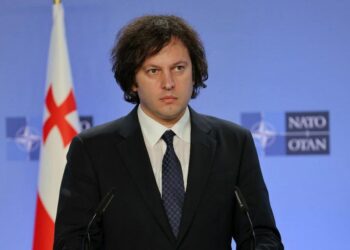
Prime Minister Irakli Kobakhidze also addressed the issue, saying the government must balance compassion with responsibility toward taxpayers. He said the estimated 50–60 million GEL cost under discussion involves public funds and therefore requires careful consideration.
“The easiest thing for us would be to take this 50 million and spend it: that would be the simplest and most politically advantageous decision. But there is another side: responsibility toward the people to spend budget funds rationally,” Kobakhidze said.
He also questioned whether the spending would produce “real results” or simply benefit what he described as a “pharmaceutical mafia,” while emphasizing that the government remains open to discussions with all stakeholders, including the Church and the Patriarchate.
“We are ready to talk with everyone, first of all with the Patriarch and the Church on all issues, including this one. We have a specific position today, but if someone convinces us otherwise, everything is possible,” the Prime Minister stated.
Duchenne muscular dystrophy is a rare inherited disorder that causes progressive muscle degeneration, often leading to loss of mobility and severe complications affecting the heart and lungs.
By Team GT