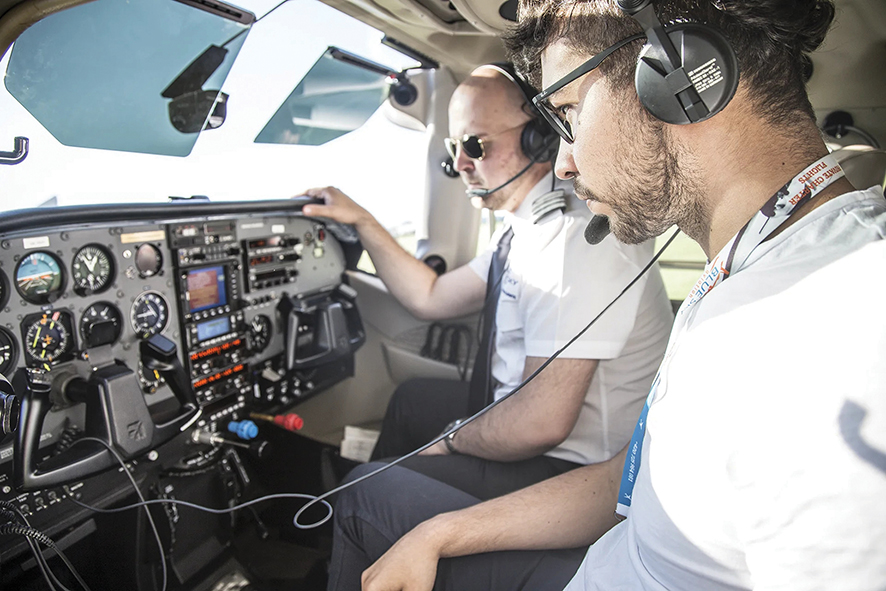
Aviation is more than just airplanes and airports. It is a strategic enabler of growth, connectivity, and opportunity. For Georgia—a country located at the crossroads of Europe and Asia—aviation holds the key to unlocking economic integration with the European Union, boosting tourism and trade, and positioning the nation as a regional hub for transport and innovation.
Over the past decade, Georgia has made undeniable progress in building its aviation sector. Modern airports in Tbilisi, Batumi, and Kutaisi now serve millions of travelers each year, strengthening Georgia’s role as a bridge between East and West. Yet for all these successes, the aviation industry still faces challenges that prevent it from realizing its full potential.
Beyond the Major Airports
Tbilisi, Batumi, and Kutaisi stand as impressive gateways, but the real untapped opportunity lies in Georgia’s smaller airfields and general aviation sector. Facilities such as Natakhtari and other regional aerodromes remain underutilized, despite their potential to support private flying, flight training, medical transport, and emergency services.
In countries like the Czech Republic or Poland, general aviation is not a niche—it is the backbone of pilot training, regional mobility, and even economic development. Georgia can learn from these examples: investing in local airfields, maintenance hangars, and training schools can transform aviation from a tourism-driven industry into a diversified ecosystem that benefits business, education, and national security.
The Key Challenges
Several barriers continue to hold Georgia back:
1) Regulatory gaps – Georgia aspires to integrate fully with European standards (EASA), but harmonization is still incomplete. Without this, local licenses and certifications have limited recognition abroad.
2) Insufficient investment – Major airports attract funding, but regional infrastructure—runways, fueling systems, hangars—remains underdeveloped.
3) Human capital shortages – Pilots, instructors, engineers, and air traffic controllers are in short supply. Too often, Georgia relies on training abroad, creating bottlenecks and raising costs.
4) High operational costs – Aviation fuel is expensive compared to regional markets, while maintenance for light aircraft often requires sending them abroad.
These issues are not insurmountable, but they require strategic vision and decisive action.
Learning from Neighbors and Europe
Georgia is not alone in facing these challenges. Armenia and Azerbaijan have invested heavily in flight training centers and regional airfields, while Turkey has advanced its alignment with European standards, opening opportunities for its pilots in EU markets. In Central Europe, small countries like the Czech Republic have built powerful aviation ecosystems by nurturing general aviation and exporting trained pilots across Europe.
The lesson is clear: treating aviation as a strategic industry—not just a sector for tourism—pays dividends in jobs, connectivity, and influence.
A Strategic Roadmap
If Georgia is to seize its opportunity, several steps are essential:
1. Accelerate regulatory alignment – Full harmonization with EASA standards would make Georgian licenses internationally recognized and attract European operators.
2. Invest in regional infrastructure – Modernizing Natakhtari and other airfields with proper runways, lighting, and hangars can extend aviation activity beyond the major hubs.
3. Develop local talent – Scholarships, tax incentives, and exchange programs with European training organizations would strengthen the pipeline of pilots and engineers.
4. Stabilize fuel and maintenance access – Long-term supply contracts and the establishment of certified local maintenance centers would lower costs and improve reliability.
5. Position Georgia as a regional hub – Leveraging its geography, Georgia could attract training organizations, MRO (maintenance, repair, overhaul) providers, and international partnerships, integrating aviation with logistics and transport strategies.
A Vision for the Future
Georgia has geography on its side, a growing tourism market, and the ambition to integrate with Europe. But vision must be matched with execution. By modernizing regulations, building infrastructure, and investing in human capital, Georgia can transform aviation into a driver of sustainable growth.
The choice is whether to remain a consumer of aviation services, or to become a producer of aviation expertise. With bold action today, Georgia can take its rightful place as a regional leader in the skies.
By Artem Kuzmenko, Aviation Expert and CEO of Blue Sky Academy in Georgia
Author Bio
Artem Kuzmenko is an aviation and transport expert with over six years of experience in the development of flight training and aviation infrastructure in Georgia and Central Europe. He is the CEO of Blue Sky Academy in Georgia, a flight training organization preparing the next generation of pilots under EASA standards. Kuzmenko has been actively involved in aviation policy discussions, international cooperation projects, and the promotion of general aviation as a driver of economic growth in the Caucasus region.