
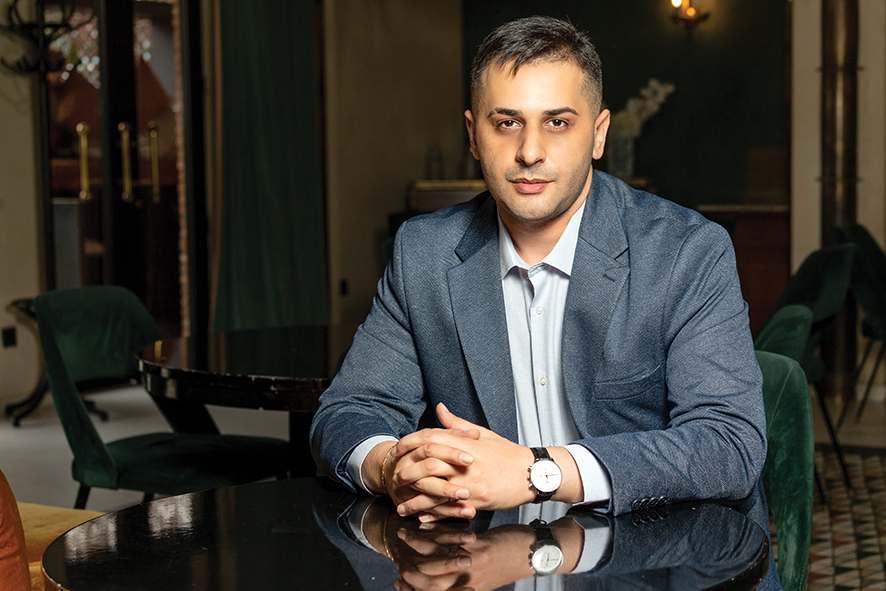
Interior design is often perceived through the lens of aesthetics, trends, and visual expression. Yet for David Kavlelashvili, Founder and Interior Designer of ART LINE STUDIO, this understanding is incomplete. In his professional view, an interior is not a decorative layer, but a system—one that directly influences everyday life, behavior, and long-term outcomes.
“My professional path began not only with an interest in aesthetics, but also with an understanding of the psychology of space,” Kavlelashvili explains. “At first, I viewed interior design as a visual discipline; however, practice has shown me that the interior is primarily a functional system that influences a person’s everyday life, decisions, and emotions.”
This realization became the foundation upon which ART LINE STUDIO was formed. From its earliest stages, the studio’s philosophy was shaped by experience rather than theory, by observing how spaces actually work once people begin to live and operate within them.
From Visual Design to Everyday Function
In practice, interior design reveals its true value only over time. According to Kavlelashvili, visual impact alone cannot sustain a space if its internal logic is flawed. Decisions made at the design and planning stages continue to affect users long after construction is complete.
This is why ART LINE STUDIO approaches each project as a functional structure rather than a stylistic exercise. The aim is not to impose a visual language, but to create environments that support daily routines, reduce friction, and remain effective as needs evolve.
Interior Design in the Urban Context
In contemporary architecture, interior design serves as a bridge between abstract ideas and real life. This role becomes especially important in urban environments, where space is limited and time is increasingly valuable.
“Interior design in modern architecture is a connecting link between ideas and real life,” Kavlelashvili notes. “In an urban environment, where space is limited and time is precious, the interior determines how we work, relax, and interact.”
From this perspective, interior design becomes a tool for adaptation. A space that is planned with attention to individual needs can significantly improve quality of life. “A design created with an individual approach to each space or client reduces stress and increases the effectiveness of the quality of life,” he adds.

A Strategic Shift in the Profession
Over the past decade, the role of interior design has undergone a noticeable shift. What was once considered an optional decorative service is now increasingly understood as a strategic discipline.
“In the last decade, interior design has moved from a decorative function to a strategic one,” Kavlelashvili says. “Today, it includes ergonomics, sustainability, integration with technologies, and analysis of human behavior.”
This transformation became even more pronounced during the pandemic, which forced both professionals and clients to reconsider how spaces function. The need for flexibility, efficiency, and thoughtful planning placed interior design at the center of broader architectural and social discussions.
Market Growth and Professional Differentiation
The interior design market today is active and competitive. Demand continues to grow, yet this growth also reveals structural challenges within the industry.
“The market is dynamic and demand is growing, although quality filtering still remains a challenge,” Kavlelashvili observes. “Competition is high, but professionalism and systematic work clearly distinguish real studios from random players.”
While standards are gradually forming, they are still developing, particularly in Georgia. This makes consistency, methodology, and professional ethics especially important for studios aiming to build long-term credibility.
The Georgian Context
Understanding of interior design in Georgia has evolved noticeably in recent years, especially within the business and development sectors.
“If earlier design was perceived as a luxury, today it is considered a necessary part of investment,” Kavlelashvili says. At the same time, he acknowledges that the private sector still requires greater awareness. “A certain campaign is still needed on the role and importance of the designer, as well as what benefits cooperation with a designer brings.”
In this context, correct and transparent information plays a critical role in shaping expectations and improving collaboration between designers and clients.
The Designer as a Process Partner
Large-scale and development projects have significantly changed the role of the interior designer. Today, designers are no longer limited to aesthetic decisions.
“The designer is no longer just the author of aesthetic decisions,” Kavlelashvili explains. “In large-scale projects, he becomes a co-manager of the process, participating in the formation of the concept, functional planning, and commercial success of the final product.”
This expanded responsibility reflects a broader understanding of interior design as an integral part of project strategy and value creation.
Standards, Ethics, and Education
Formal self-regulation within the field of interior design in Georgia remains limited. However, professional studios often operate according to their own internal standards.
“International experience shows that this field will inevitably lead to a stricter framework of certification and professional ethics,” Kavlelashvili notes.
Education is a key factor in this development. While a theoretical base exists locally, practical and integrated training often lags behind international standards. To address this, ART LINE STUDIO collaborated with SMART ACADEMY to create a training course aligned with international practice while adapted to the Georgian market.
“In the last two years, it has even become the most sought-after course, and graduates have already shown results,” he says, emphasizing the importance of continuous professional development and engagement with international experience.
Personal Service and Integrated Approach
At ART LINE STUDIO, personal service is not a marketing term, but a working principle.
“Personal service for us means adapting the project not only to the space, but also to the client’s lifestyle, business model, and long-term goals,” Kavlelashvili explains. “Each project begins with a dialogue, not a catalog.”
This philosophy is closely linked to the studio’s integrated approach. “Integrated service reduces risks, time, and the likelihood of budget overruns,” he says. “When design, planning, and implementation are combined into one system, the result is more controllable and predictable.”
Measuring Success and the Importance of Planning
Visual effect alone is not considered a sufficient measure of success. For ART LINE STUDIO, long-term functionality is the true indicator.
“A successful project is measured not only by its visual effect, but also by its functionality over time,” Kavlelashvili says. “If the space works as planned even after years, and the client still recommends us, this is the main indicator.”
When asked where the fate of a project is most often decided, his answer is clear: “Most often, the fate of a project is decided at the planning stage. Neither the best design nor high-quality execution can compensate for poor planning.”
A Grounded Perspective on Design
David Kavlelashvili’s approach to interior design is defined by restraint, responsibility, and long-term thinking. Rather than focusing on trends or visual statements, his work emphasizes planning, functionality, and human-centered logic.
Through ART LINE STUDIO, interior design is treated not as an accessory to architecture, but as a discipline that shapes how spaces perform in real life, today and years into the future.
By Kesaria Katcharava