There are dynasties in theater built on institutions, manifestos and methods. Then there is the Thierrée family, whose artistic lineage resembles something far more elusive: a genetic memory of wonder.
Watching Rendez-vous, the production that closed this year’s Tbilisi International Festival of theater, one has the unsettling sensation that theater itself is remembering a forgotten version of its own history: one that existed before disciplines separated into circus, dance, drama, mime, visual art and music, before specialization replaced curiosity.
The distinction matters because James Thierrée has spent nearly three decades resisting categorization with remarkable consistency. Critics continue to search for the correct label: nouveau cirque, physical theater, visual theater, dance, contemporary circus, performance art, only to discover that each definition excludes something essential. His work occupies the increasingly rare territory where artistic language precedes taxonomy. It does not combine genres. It simply ignores the necessity of having them.
Rendez-vous pushes this refusal even further. Premiered only this year and presented in Tbilisi shortly afterwards, the production arrives as perhaps Thierrée’s most intimate work—not because it reveals private emotions, but because it abandons the fiction that artistic creation can ever be separated from inheritance. For the first time in many years, James Thierrée shares the stage with the family whose imagination fundamentally shaped modern visual theater: Victoria Thierrée-Chaplin, Jean-Baptiste Thierrée and Aurélia Thierrée.
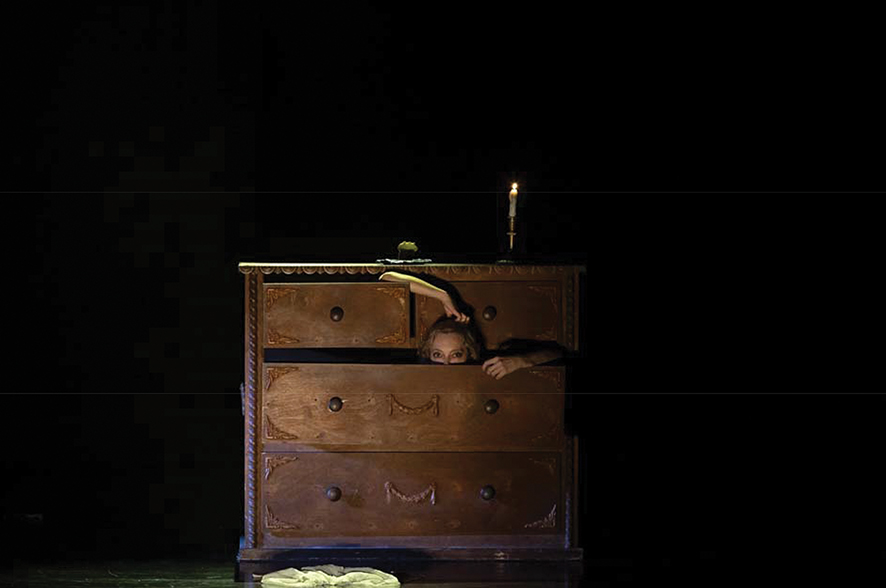
The performance unfolds like an album whose photographs have begun moving again. Fragments from half a century of performances drift across the stage, disappear before becoming memories, then unexpectedly return transformed. Characters emerge only to dissolve into movement. Circus tricks interrupt moments of stillness. Music becomes architecture. Objects acquire independent life before quietly surrendering their magic. Every image seems to exist halfway between recollection and dream, refusing to settle into chronology.
The temptation is to read Rendez-vous as a family memoir. That would be a mistake. James Thierrée has always distrusted autobiography in its conventional sense. His theater has never been interested in confession or psychological disclosure. Instead, memory functions as raw material for visual invention.
Personal history becomes theatrical matter only after shedding the certainty of facts. What remains are emotional residues, textures, rhythms, absurdities, inexplicable fears, childish discoveries, that continue living long after narrative has disappeared.
This approach has deep roots. Jean-Baptiste Thierrée and Victoria Chaplin were among the artists who quietly reinvented European circus during the cultural upheavals of the late 1960s and early 1970s. When they created Le Cirque Bonjour in 1971, they were not modernizing circus in the contemporary sense.
They were dismantling its industrial logic. Traditional circus had perfected spectacle. The Thierrées pursued intimacy. Animals disappeared. Narrative became porous. Virtuosity stopped announcing itself as virtuosity. The ring transformed into an oneiric landscape where illusion emerged less from technical difficulty than from poetic instability.
Their revolution coincided with a broader transformation across European performance. Peter Brook was reducing Shakespeare to empty space. Jerzy Grotowski was stripping theater to its essential encounter between actor and spectator. Ariane Mnouchkine was dissolving the hierarchy between cultures. Pina Bausch would soon dissolve the hierarchy between movement and emotion.
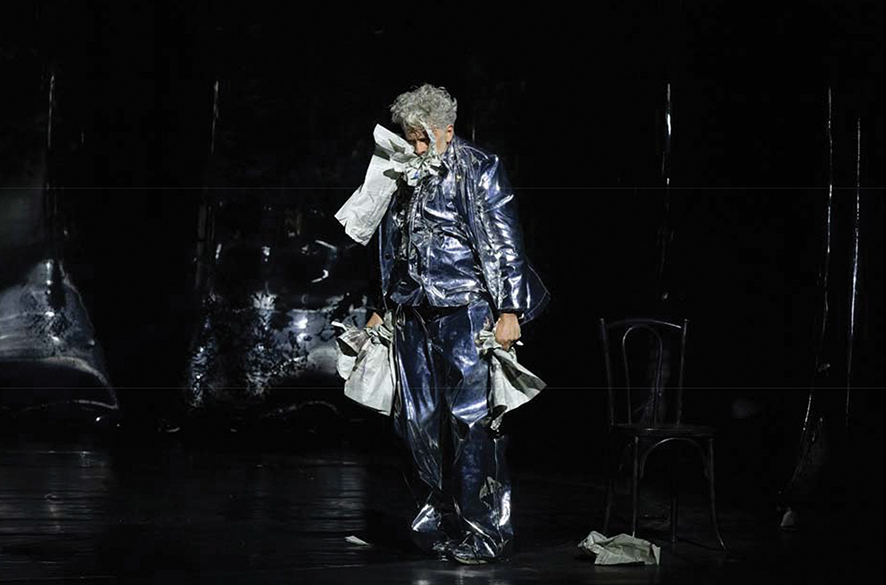
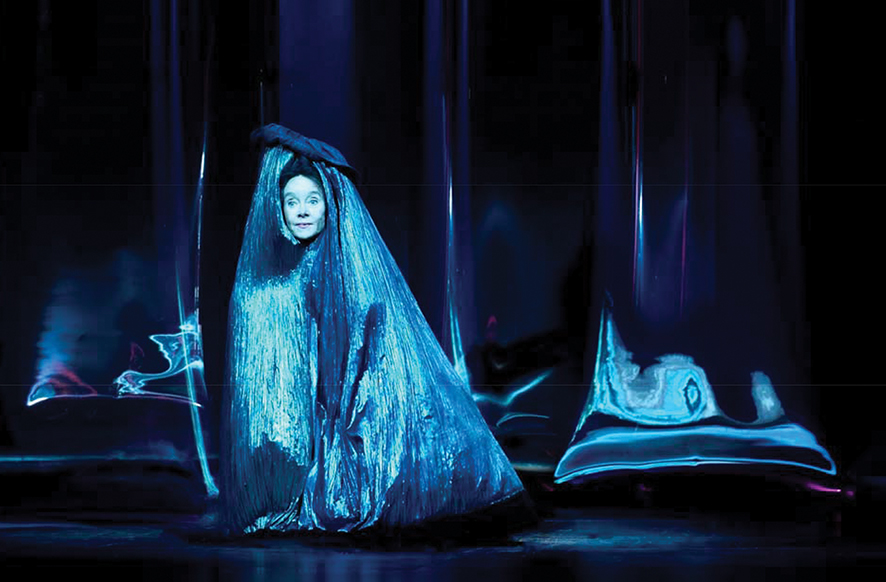
Throughout Rendez-vous, ordinary objects repeatedly refuse ordinary behaviour. Chairs hesitate before accepting gravity. Costumes mutate. Bodies seem governed by unfamiliar physical laws. None of this resembles illusionism in the traditional sense because the mechanics remain deliberately visible. Wonder emerges precisely from the spectator’s awareness that everything is simultaneously impossible and undeniably happening.
James Thierrée inherited this paradox and transformed it into a personal aesthetic. Unlike many contemporary visual theater makers, he has little interest in technology as spectacle. Digital media barely enters his stage. Machinery remains almost stubbornly analogue. Rope, fabric, wood, shadow, breath, balance, weight—his vocabulary belongs to materials rather than software.
At a moment when theater increasingly competes with cinematic realism and immersive technology, Thierrée returns to something older than both: the human body’s capacity to generate impossible images through precision, rhythm and play.
Play may be the central concept here. The word is often diminished by adulthood, associated with innocence or entertainment. Thierrée restores its original seriousness. Play becomes an epistemology: a way of understanding reality unavailable through rational analysis. Children rarely distinguish between imagination and perception with the confidence adults demand. Objects possess agency. Space changes personality. Time stretches unexpectedly. The world remains gloriously unreliable. Rendez-vous inhabits precisely this unstable territory.
One begins noticing that the production operates according to dream logic rather than dramatic structure. Scenes do not develop; they mutate. Images refuse symbolic closure. Instead of asking what something means, the spectator gradually accepts the more productive question: what does this image allow us to feel that language cannot? This is where Thierrée’s theater quietly separates itself from surrealism, despite frequent comparisons. Surrealism often sought shock through irrational juxtaposition.
Thierrée seeks recognition. His impossible worlds never feel alien. They feel strangely familiar, as though recovering forms of perception modern life has systematically trained us to abandon.
The presence of Victoria Thierrée-Chaplin gives Rendez-vous another emotional register altogether. Watching her move across the stage means witnessing not simply an extraordinary performer but a living archive of European theater. Daughter of Charlie Chaplin and Oona O’Neill, collaborator and creator in her own right, she carries within her artistic memory a remarkable continuity stretching from silent cinema to contemporary performance. Yet Rendez-vous never transforms this inheritance into monument.
Family appears instead as artistic conversation: a continuous exchange across generations where influence travels in every direction. This refusal of hierarchy extends to the production itself. Despite the legendary biographies assembled on stage, no individual seeks centrality. Images circulate democratically. Attention shifts constantly. Presence outweighs authorship.
Perhaps this explains why the performance feels so unexpectedly contemporary despite drawing upon nearly sixty years of theatrical history. Much of today’s devised theater remains fascinated by process.
Thierrée remains fascinated by transformation. Process often reveals how art is constructed.
Transformation reveals how perception changes.
Contemporary European theater frequently positions itself as intellectual intervention, political essay or documentary investigation. These approaches have produced remarkable work, yet they sometimes underestimate one of theater’s oldest capacities: to create knowledge through astonishment. Wonder is not the opposite of critical thought. It is one of its origins. Aristotle understood this. So did Chaplin. So does James Thierrée.
The closing of the Tbilisi International Festival of theater with Rendez-vous therefore carried symbolic precision. Festivals often conclude with productions that summarize prevailing trends or celebrate institutional prestige. Thierrée offered something far less fashionable and considerably more enduring: a reminder that theater’s future may depend less upon inventing unprecedented technologies than upon rediscovering neglected forms of attention.
Surprise has become increasingly difficult in contemporary performance, not because artists lack invention but because audiences have learned too quickly how new aesthetics function. James Thierrée continues operating beyond that learning. His theater remains disobedient. It slips away each time interpretation believes it has finally caught it.
Rendez-vous ultimately refuses the language of farewell implied by its own retrospective structure. Rather than looking backward, it demonstrates that artistic inheritance survives only through continual reinvention. In an era increasingly devoted to explaining the world, James Thierrée still believes in showing us that reality is capable of exceeding explanation.
Review by Ivan Nechaev