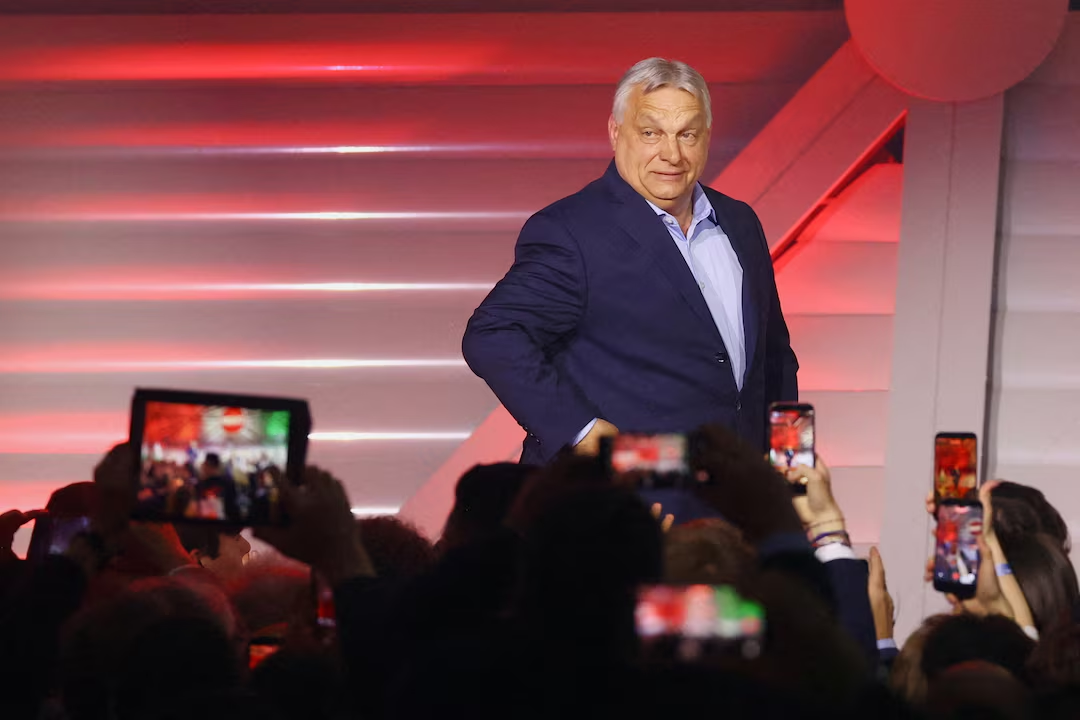
US Democrats welcomed the defeat of Hungarian Prime Minister Viktor Orbán in Sunday’s parliamentary election, framing the result as a broader warning for US President Donald Trump and his political allies, while Republicans offered more mixed reactions, Reuters reports.
Orbán, who had been in power for 16 years, conceded defeat after Hungarians voted in large numbers for a pro-European Union course led by opposition figure Péter Magyar. Magyar’s center-right Tisza Party is projected to secure a parliamentary supermajority, marking a decisive shift in Hungary’s political direction.
Trump had strongly backed Orbán ahead of the vote, with JD Vance even appearing briefly at a campaign rally in Hungary last week. The Hungarian leader has long been viewed as a key ideological ally of Trump, promoting a model of “illiberal democracy” characterized by strict immigration policies, skepticism toward global institutions, and confrontational rhetoric toward media and academia.
Following the result, prominent US Democrats drew direct parallels between Orbán’s defeat and upcoming political contests in the United States. Senate Minority Leader Chuck Schumer said the outcome should serve as a warning, stating that “wannabe dictators wear out their welcome.” House Minority Leader Hakeem Jeffries echoed the sentiment, arguing that the Hungarian vote signaled potential electoral challenges ahead for Trump-aligned Republicans.
Republican reactions were more nuanced. Some lawmakers emphasized the geopolitical implications of the result, particularly in relation to Russia. Senator Roger Wicker described the election as a rejection of the influence of Russian President Vladimir Putin, noting Orbán’s long-standing ties with Moscow. He said Hungarian voters had “decided their own future.”
Trump himself did not publicly comment on the election outcome on Sunday, despite remaining active on social media and in public appearances throughout the day.
Among Orbán’s international supporters, reactions included expressions of disappointment. Technology entrepreneur Elon Musk criticized the result on his X platform, suggesting that liberal influence had overtaken Hungary. His remarks referenced George Soros, a Hungarian-born financier frequently targeted in conservative political discourse.
Orbán’s tenure had been marked by repeated clashes with the European Union over rule-of-law issues, media freedom, and Hungary’s stance on Russia’s war in Ukraine. He was also the first European leader to endorse Trump during his 2016 presidential campaign, and the two maintained close political ties throughout.
Magyar’s victory is expected to reshape Hungary’s relationship with its Western allies and could signal a broader shift in Central European politics, as voters turn away from long-standing populist leadership.
Image: REUTERS/Bernadett Szabo
Related story: Hungary election 2026: Péter Magyar ousts Orbán in historic landslide, ending 16 years in power