For thousands of Ukrainian children, the war is not only something happening around them; it is changing who they are, how they learn, and, in some cases, where they feel they belong.
In areas of Ukraine now under Russian control, daily life for children has been impacted in ways that extend far beyond the battlefield. Reports from international organizations, researchers, and Ukrainian officials describe changes to schooling, the movement of children away from their homes, and the spread of programs that now mix education with military and political messaging.
These findings come from groups including the Office of the United Nations High Commissioner for Human Rights, the Independent International Commission of Inquiry on Ukraine, and the Yale School of Public Health Humanitarian Research Lab. Russian authorities dispute many of the conclusions, saying their actions are intended to protect civilians from the dangers of war.
Let’s take a closer look at the impact of Russia’s war on Ukraine’s children.
Classrooms under Occupation
For many children in the occupied territories, changes quickly appeared in school.
Ukrainian textbooks disappeared. Familiar lessons were taken off the schedule. In their place came Russian books and classes following the Russian curriculum, taught in Russian, with a different version of history and identity.
The OHCHR reports that Ukrainian language instruction has been reduced or removed in many schools in regions occupied by Russia. New programs, described as “military-patriotic,” introduce students to civic ideas aligned with the Russian state. In some classrooms, education now includes elements that connect learning with loyalty and national identity.
Some parents have tried to fight these changes, but according to documented accounts, families have reported being pushed to enroll their children in the new system, and in some cases face administrative consequences if they refuse.

Growing Up in a Militarized Environment
In the occupied areas of Ukraine, military themes have become part of everyday life for children.
Programs linked to groups like “Yunarmiya” introduce uniforms, drills, and ideas about service and loyalty at a young age, with schools increasingly reflecting these priorities.
Beyond schooling, some children have been sent to camps and youth programs, researchers at the Yale School of Public Health’s Humanitarian Research Lab (HRL) note. These programs often combine education with physical activity and messaging that promotes loyalty to the Russian state. Some include military-style training or structured discipline.
A new report from Yale HRL, released on March 25, says it has found strong evidence linking subsidiaries of Gazprom and Rosneft to a network of at least six re-education camps in Russia and Russian-occupied parts of Ukraine, where at least 2,158 Ukrainian children have been held.
Researchers say that, starting in 2022, Gazprom-linked entities issued more than 1,000 subsidized travel vouchers that enabled children to attend programs described as combining political indoctrination with elements of military training.
The lab also notes that many of the people and organizations allegedly involved have not been sanctioned. It says the findings are especially significant given a recent 30-day waiver by the US administration, in effect from 12 March to 11 April, that allowed crude oil sales from both companies to continue.
According to the report, Gazprom and Rosneft may be among the first Russian companies accused of involvement in the deportation of Ukrainian children to still be generating revenue tied to US consumer activity during that period.
Forced Transfers and Families Separated
Investigators from the UN Commission of Inquiry on Ukraine say that numerous Ukrainian children have been moved from occupied areas into Russian-controlled territory and, in some cases, deep into Russia itself. Some have been placed in institutions or foster care; others were separated from their families for extended periods.
The findings of the UN Commission’s February-April 2026 report concluded that certain transfers amount to war crimes, and in some cases may be labeled as crimes against humanity.
There are accounts of children being given Russian citizenship, and of families struggling to find out where their children have been taken. In some cases, that information was not provided at all.
Most of the children taken from Ukraine are still in Russia or Russian-occupied areas. Some have been forcibly adopted, given new names, and lost official traces of their identity. Many are children from bombed cities whose parents were killed, or were separated during Russian military control. Others were taken from orphanages or sent to camps under the pretext of evacuation.
Accounts collected in Stolen Lives: The Kidnapped Children of Ukraine by Wladimir Klitschko, the brother of Kyiv Major Vitali Klitschko, and Tatjana Kiel, describe a similar pattern, particularly among teenagers from the Kherson region. Children were taken in groups from schools and moved by bus, train, or ship, often to Crimea. Many were then sent through a series of camps that began with a holiday-like setting and gradually became more restrictive.
Reports describe forced “re-education,” where only Russian is allowed, children are made to sing the Russian anthem, and must attend state history lessons. Some say they were told their families had abandoned them or that life in Russia was better. Those who resisted faced punishment, isolation, threats, and in some cases violence.
Contact with families is rare, and only a small number have managed to be located and returned.
Russia denies that these actions are unlawful, insisting that the children were evacuated for their own safety, and that legal procedures were followed.
Ukrainian authorities have stated that more than 19,000 children have been officially identified as unlawfully deported or transferred, while some Ukrainian officials have cited much larger figures, sometimes in the hundreds of thousands, when referring to children living under occupation or affected by displacement. It is difficult to get exact numbers due to limited access to the occupied regions.
While the UN Commission has not published a single total figure of the number of children it considers to have been removed from Ukraine by Russia, it has confirmed documented cases across multiple regions.
“The Russian authorities have systematically failed to disclose the whereabouts of the children to parents or legal guardians and have kept them in a coercive environment obstructing their return. Instead of establishing a system facilitating the return of the children, the authorities have sought their long-term placement with families or in institutions in the Russian Federation,” the Commission’s latest report reads.
“Throughout 2022, Russian authorities declared that adoption was their preferred option for the placement of these children. The Commission has therefore also concluded that Russian authorities have committed the crime against humanity of enforced disappearance of the children deported or transferred from Ukraine, and the war crime of unjustifiable delay in their repatriation.
“From the cases investigated by the Commission, 80 per cent of the children have not yet returned. Those who managed to organize returns encountered obstacles, delays, and security risks. Many parents and legal guardians remain unaware of the fate and whereabouts of the children and are still searching for them. Children suffered from trauma and anxiety. A child who managed to return to Ukraine, stated: ‘I was sad, I was scared. I worried that I would have to live in the Russian Federation’.”
The International Response
The US Department of State in March announced the allocation of $25 million to help locate, track, and support the rehabilitation of Ukrainian children removed from their families or communities. The funding will support both tracing efforts and psychological rehabilitation services for returned children, in coordination with Ukrainian authorities and local partners.
Meanwhile, Canada, Norway, and Ukraine have announced plans to co-host a ministerial conference in Toronto in September 2026 focused on the return of prisoners of war, civilians detained in Russia, and deported Ukrainian children.
On March 25, the Tom Lantos Human Rights Commission, a bipartisan panel in the US House of Representatives co-chaired by Democrat James McGovern and Republican Christopher Smith, held a hearing focused on Russia’s forcible transfer of Ukrainian children.
Katya Pavlevych, policy adviser with Razom for Ukraine and the American Coalition for Ukraine, told lawmakers the scale of the crisis is the largest involving missing children since World War II. She said at least 400,000 Ukrainian children are now enrolled in Russian paramilitary organizations.
Pavlevych urged Congress to pass two proposed bills: the DROP Act and the Shadow Fleet Act, which aim to target Russian oil revenues. She also called for a reassessment of US engagement with representatives of the Russian Orthodox Church, saying there is documented evidence linking it to cooperation with Russian authorities in the deportation and militarization of Ukrainian children.
More than Numbers
For the families searching, time is of the essence. Efforts to locate and return children have grown into an international effort, with Ukraine working alongside dozens of countries and organizations. Each case is different, and often complicated, involving legal barriers, missing records, and the challenge of tracing a child’s path across borders.
Ukrainian officials say just over 2000 children had been brought back by early 2025. Each return is a success, but also a reminder of how many cases remain unresolved.
We must remember that behind every report, every estimate, and every investigation are individual lives: children who have been separated from their families, moved across borders, or raised in a different system; children who may carry those experiences for years. Organizations like UNICEF and Save the Children warn of long-term effects on mental health, identity, and development.
For those who return, going home is only the beginning. Rebuilding a sense of safety, trust, and belonging can take much longer.
What is happening to children in the Russian-occupied areas of Ukraine is still being pieced together. Investigations are ongoing, access is limited, and accounts often conflict. Much remains unclear to us.
Even so, reports, testimonies, and early research keep going back to the same basic reality: the war is not only changing territory, it is changing what childhood looks like for many of the children caught up in it.
The full consequences will take time to understand, and they are likely to continue long after the fighting stops.
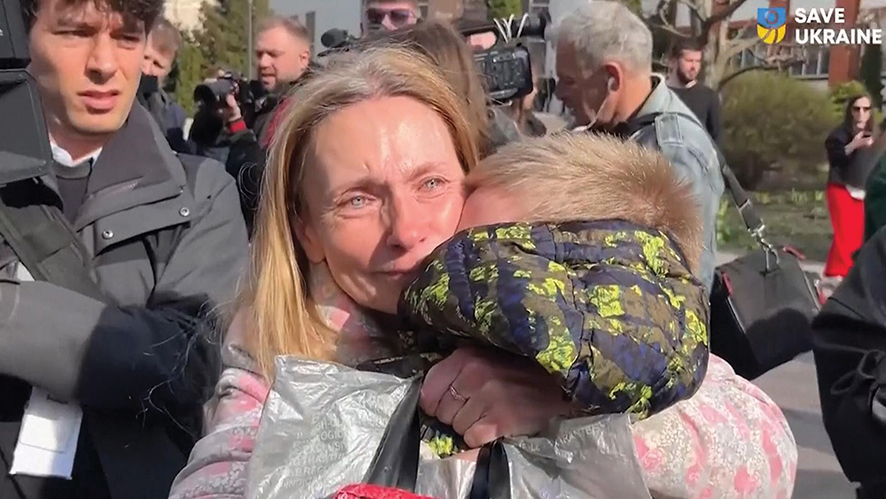
Stories of Ukrainian children and teenagers returned from deportation and the temporarily occupied territories in March 2026
All returns have taken place as part of the President of Ukraine’s initiative, Bring Kids Back UA, thanks to the support and efforts of its partners, including the Office of the Ombudsman, the Ukrainian Child Rights Network, Save Ukraine, Helping to Leave, Humanity, and others. All names have been changed for safety reasons.
Viktor, 19 — Viktor lived for years in a frontline area under constant shelling and without communication. Daily life unfolded to the sound of explosions. The turning point came when a shell hit a neighboring yard and shattered the windows in his room. The proximity of danger made it clear that staying meant constant risk to life, leaving him with no sense of safety or stability.
Dmytro, 18 — Despite serious health problems, Dmytro was pressured by Russian authorities to join the army. One officer openly told him to stop studying and go fight. His condition was ignored, and his right to choose his future was dismissed. The pressure to serve in the occupying forces became direct and unavoidable.
Nika, 6 — At kindergarten, Nika was forced to march under the supervision of armed guards. Even at an early age, her daily environment was shaped by militarization and control. Instead of a safe childhood, she was exposed to propaganda and strict discipline, while her mother sought a way to protect her from this reality.
Kseniia, 18 — Kseniia spent months unable to communicate openly, hiding her pro-Ukrainian views to avoid attention. She had to feign loyalty to the occupation authorities to stay safe. Living under constant self-censorship and fear, she was deprived of a normal social life. Today, she is safe and dreams of becoming a police officer or serving in the military to defend Ukraine.
Oleksii, 16 — Oleksii witnessed the abduction of his father by occupying forces at a checkpoint. His father was held in a basement for three months, while the family faced interrogations and threats. The experience left them under constant pressure. To avoid forced military registration in Russia, Oleksii left before turning 17.
Andrii, 18 — Andrii was interrogated by Russian police for using the Ukrainian language in private messages. Even personal communication became grounds for punishment. Today, he is back in Ukraine and can freely speak his native language without fear.
Yaroslav, 19 — Yaroslav was detained and held in a basement, where he was interrogated overnight by FSB officers. He was pressured to sign a contract with the Russian army. The threat of coercion into military service was immediate, and refusal carried serious consequences, leaving him with no sense of control over his future.
Iryna, 18 — Iryna was trapped inside her home for days due to relentless shelling, without water or food, while Russian soldiers aggressively harassed civilians, including young women, on the streets of her city. Upon turning 18, she was finally able to leave the occupied territory.
Nazar, 9 — Nazar spent four years living under constant shelling, as his family had no way to escape their occupied village. Russian forces set up positions just a few hundred meters from their home; shells regularly flew past, and mines landed in their yard on multiple occasions. Today, his entire family is safe.
Diana, 14 — Diana lived with her mother under occupation for years, facing searches, threats, and pressure. Their documents and car were seized, and Ukrainian passports were destroyed, forcing people to hide proof of identity. Fear became constant, leaving no sense of stability. Unable to endure it any longer, they decided to leave and eventually returned to Ukrainian-controlled territory.
By Katie Ruth Davies