The OSCE Parliamentary Assembly (OSCE PA) has adopted the Hague Declaration, reaffirming its support for Georgia’s sovereignty and territorial integrity while expressing concern over democratic developments in the country and calling on the authorities to safeguard fundamental freedoms.
The declaration reiterates the Assembly’s support for Georgia’s sovereignty and territorial integrity within its internationally recognized borders and condemns Russia’s continued occupation of the regions of Abkhazia and the Tskhinvali region/South Ossetia.
At the same time, the Assembly expresses “serious concern” over developments in Georgia following the 2024 parliamentary elections, citing what it describes as democratic backsliding, violence against protesters, opposition representatives and journalists, restrictions on independent media, and attempts to ban leading opposition parties. It notes that these concerns are reflected in the OSCE Moscow Mechanism report published in March 2026.
The Assembly reaffirmed its support for the Georgian people, democratic governance, political pluralism, and the protection of fundamental freedoms. It stressed the importance of safeguarding democratic institutions, upholding the rule of law, and ensuring that political processes remain inclusive, transparent, and consistent with Georgia’s OSCE commitments.
The declaration calls on the Georgian authorities to ensure that civil society organizations, independent media, and opposition representatives can operate freely and safely, refrain from violence and politically motivated persecution, promote an inclusive political process based on democratic principles, and swiftly implement the recommendations contained in the Moscow Mechanism report.
It also highlights the report’s findings, referring to restrictions on fundamental freedoms and judicial independence through legislative, administrative, and criminal measures that it says are inconsistent with international human rights obligations. The declaration also points to what the report describes as an alarming pattern of violence, which in some cases allegedly reached the threshold of torture.
The Assembly further called for the repeal of legislation that it says restricts civil society, media freedom, and the rights to freedom of expression, association, and peaceful assembly. It urged an immediate end to violence, intimidation, and arbitrary detentions, the release of individuals detained for peacefully exercising their rights, and prompt, independent investigations into allegations of excessive use of force during the 2024 protests, with accountability for perpetrators and compensation for victims.
The declaration also welcomed the visit of a high-level OSCE Parliamentary Assembly delegation to Georgia in March 2026 as a positive step toward strengthening parliamentary engagement and dialogue, while expressing support for inclusive dialogue and the peaceful resolution of political tensions.
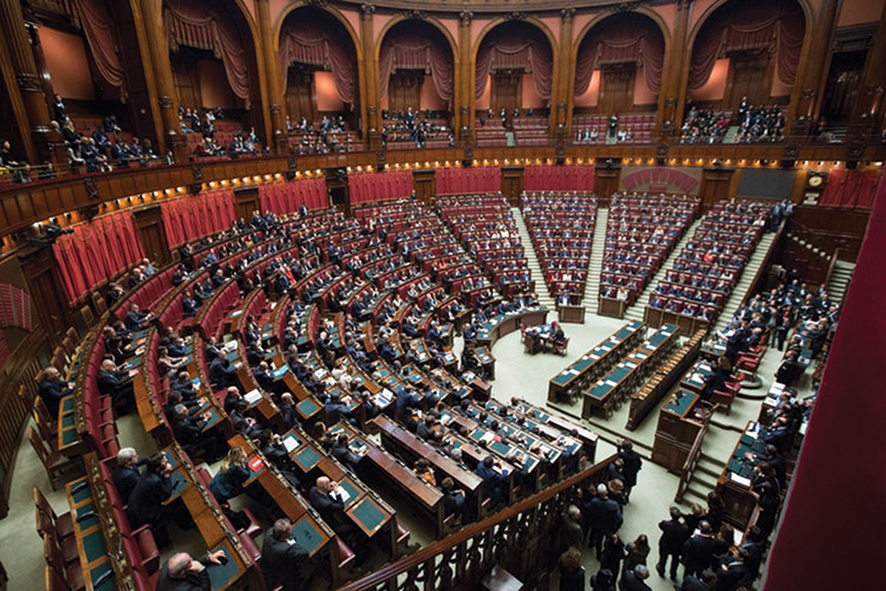
Georgia’s parliamentary delegation refused to participate in the vote, leaving the chamber in protest before the declaration was adopted.
Ahead of the vote, Nikoloz Samkharadze, Chair of the Georgian Parliament’s Foreign Relations Committee, said the delegation was boycotting the vote because parts of the revised declaration “deliberately distort the political reality in Georgia.”
Samkharadze argued that the document misrepresented the facts, ignored what he described as violent attacks on state institutions, and arbitrarily interpreted the findings of international election observation missions and the Moscow Mechanism report, thereby harming Georgia’s national interests.
“For this reason, our delegation will not participate in the voting process as a sign of protest. It is particularly regrettable that we are forced to make this decision here in The Hague, the capital of international law,” Samkharadze said, requesting that the delegation’s position be entered into the Assembly’s official record. He also thanked the Dutch parliament for hosting the annual session.
Responding to the statement, OSCE Parliamentary Assembly President Pere Joan Pons criticized the decision to leave the chamber.
“Thank you very much, Nikoloz. As you know, even in your own country, leaving seats empty was not a good decision, and you are doing exactly the same here. I believe that leaving empty seats in parliament is always the worst option because democracy is, above all, a joint effort to resolve conflicts,” Pons said.
Minutes after the Georgian delegation walked out, the Assembly adopted the Hague Declaration, including the resolution on Georgia titled “Protecting Electoral Integrity and Fundamental Freedoms in Georgia.” The resolution’s principal sponsor was U.S. Congressman Joe Wilson.
By Team GT