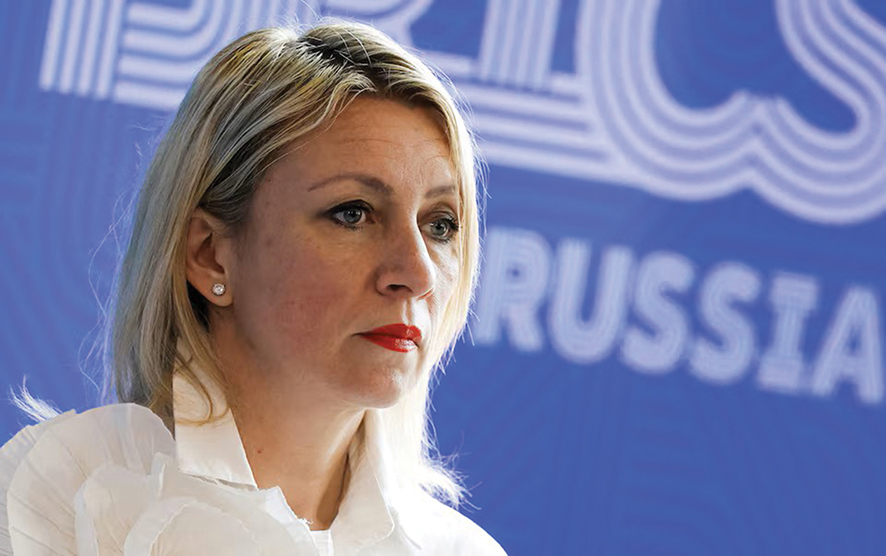
The diplomatic theater in the South Caucasus has long been a study in the “frozen” variety of conflict, but the recent rhetoric emerging from the Russian Foreign Ministry suggests a thaw that is as volatile as it is calculated. At the center of this storm is Maria Zakharova, the Kremlin’s sharp-tongued spokesperson, whose recent pronouncements regarding Georgia’s European aspirations read less like standard diplomacy and more like a manifesto of geopolitical intimidation. For months, Zakharova has wielded a narrative of impending doom, framing Georgia’s 2030 target for European Union membership not as a sovereign choice, but as a slow-motion act of economic self-immolation. In her briefings, the EU is depicted not as a bastion of democratic stability, but as a crumbling edifice: a “sinking ship” that Georgia is mistakenly scrambling to board.
By suggesting that the bloc may not even exist by the end of the decade, Zakharova is attempting to plant seeds of existential doubt in a nation that has, for decades, looked Westward for its North Star. This aggressive posturing is particularly striking when viewed against the backdrop of Tbilisi’s own “easy-on-Russia” policy. Since 2012, the Georgian government has walked a precarious tightrope, maintaining a strategy of strategic restraint intended to signal goodwill to Moscow. This was meant to be a pragmatic olive branch; a way to de-escalate tensions and provide a pathway toward resolving the agonizing stalemate over the occupied territories of Abkhazia and the Tskhinvali region. Yet, for over a decade, this goodwill has been met with a cold, unilateral silence. Moscow has not offered a single substantive concession; instead, it has continued the physical “borderization” of Georgian soil, moving fences under the cover of night and entrenching its military footprint and the further integration of Abkhazia and the Tskhinvali region into Russian structures.
Zakharova’s habit of dusting off the old Kremlin playbook, threatening wine embargoes, energy cuts, introducing a visa regime, and the dreaded “unfriendly country” designation, reveals a superpower that is increasingly out of touch with the reality on the ground. The Russia of 2026 is dealing with a Georgia that is no longer the fragile state of the early 2000s. The resilience of Georgian society has hardened through years of hybrid warfare and economic volatility. While a Russian trade embargo would undoubtedly sting the agricultural sector, it would no longer be the death blow it once was. Instead, such a move would likely serve as the final nudge Georgia and its public opinion needs to permanently decouple its economy from the North and fully integrate into the European Single Market.

The stakes are higher now because this is no longer just about Tbilisi. Russia is watching with growing alarm as the entire South Caucasus begins to drift from its orbit. In Armenia, the Kremlin has moved from passive-aggressive to overtly hostile, presenting Prime Minister Nikol Pashinyan with a stark binary: stay within the Russian-led security fold or face the consequences of Western flirtation. Meanwhile, Azerbaijan is leveraging its energy wealth to carve out a role as Europe’s indispensable partner, effectively bypassing Russian influence. Zakharova’s threats toward Georgia are, in effect, a signal to the mountainous trio of the region that any attempt to seek a future independent of Moscow’s mediation will be met with systemic retaliation.
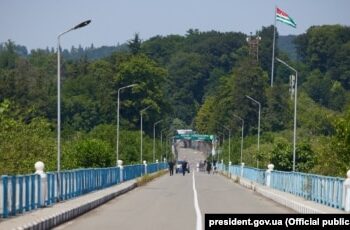
Yet, if Moscow chooses to pull the trigger on its economic threats, it may find that Georgia holds a surprisingly potent deck of cards. Should Tbilisi decide that the era of “goodwill” has reached its end, it could inflict significant pain on Russian logistics. By joining the full-scale international sanctions regime, closing its airspace, and shutting down the Upper Larsi border crossing, Georgia could effectively sever Russia’s most vital land link to Turkey, Armenia, the Middle East and beyond. At a time when Russia’s northern supply chains are choked by the war in Ukraine, the loss of the Georgian transit corridor would be a logistical catastrophe for the Kremlin.
Ultimately, Zakharova’s performance is a window into a Russia that is finding it harder to lead through attraction and is resorting entirely to coercion. By ignoring years of Georgian restraint and failing to offer even a modicum of diplomatic flexibility on the occupied territories, Moscow is rapidly exhausting its levers of soft power. As Georgia continues its steady, if perilous, march toward Brussels, the Kremlin’s old tactics of intimidation are meeting a new Georgian reality: a nation that has learned that the cost of freedom is high, but the cost of returning to the “old playbook” is higher.
Op-Ed by George Katcharava
Author’s bio: George Katcharava is the founder of eurasiaanalyst.com, a geopolitical risk and advisory firm.