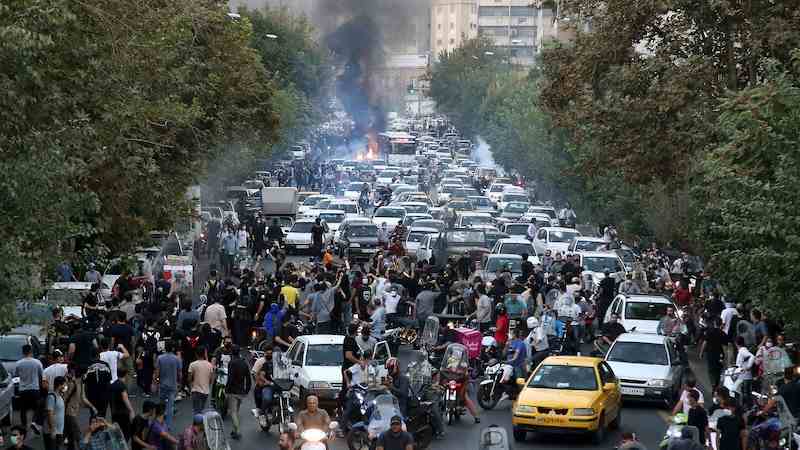
Large-scale anti-government protests are continuing in Iran, with demonstrations taking place in the capital, Tehran, and numerous other cities across the country. Analysts say the current wave of protests is among the most widespread Iran has seen in recent years.
BBC Persian reports that peaceful demonstrations held on the evening of January 8 in Tehran and in Iran’s second-largest city, Mashhad, were initially not dispersed by security forces. However, reports later emerged of nationwide internet disruptions, raising concerns about restrictions on communication and access to information.
The developments in Iran prompted a reaction from Roberta Metsola, who commented on January 9 that the ability to freely express dissatisfaction with political leaders without fear of arrest, violence, or internet shutdowns is precisely what people are demanding on the streets of Iran.
Verified footage obtained by the BBC shows protesters calling for the resignation of Iran’s Supreme Leader, Ayatollah Ali Khamenei, and demanding the return of exiled opposition figure Reza Pahlavi. Pahlavi, the son of Iran’s late Shah, has urged his supporters to take to the streets and present unified demands against the authorities.
The protests, which initially erupted in response to the sharp devaluation of Iran’s national currency, have now entered their twelfth consecutive day. Human rights groups report that demonstrations are taking place in more than 100 cities across all 31 of Iran’s provinces, reflecting the nationwide scope of the unrest.
US-based HRANA reported that at least 34 protesters have been killed since the start of the demonstrations, including five children, along with eight members of the security forces. The organization reports that more than 2,270 protesters have been detained. Meanwhile, the Norway-based group Iran Human Rights states that at least 45 protesters have been killed by Iranian security forces, including eight children. BBC Persian has independently verified the identities of 22 people killed, while Iranian authorities have confirmed the deaths of six security personnel.
Mass demonstrations intensified on January 8 after Reza Pahlavi, speaking from Washington, called on Iranians to continue protesting. In a post on the social media platform X, he urged citizens to take to the streets and present their demands as a united front.
The BBC reports that Iranian state media has sought to downplay the scale of the protests, at times broadcasting footage of empty streets to suggest lower turnout. In contrast, videos circulating on social media capture crowds chanting slogans such as “Death to the dictator.”
The protests have also drawn reactions from abroad. US President Donald Trump warned that the United States could consider military intervention if Iranian authorities continue using lethal force against protesters.
The current protest movement began in Tehran on December 28, triggered by the collapse of Iran’s currency and an inflation rate that has surpassed 40 percent. As demonstrations spread, students joined the rallies, and the protests quickly evolved from economic grievances into a broader political movement challenging Iran’s leadership.
Image source: Netgazeti