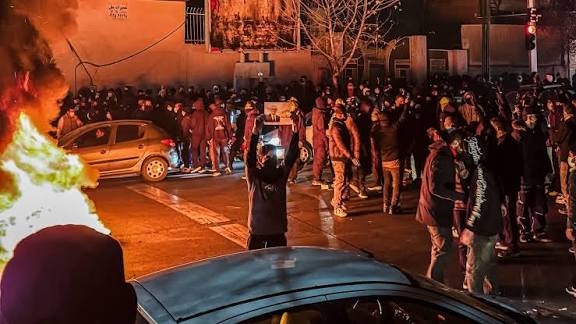
Iran is experiencing one of the most serious waves of domestic unrest in recent years, as protests continue across multiple cities amid a heavy security crackdown and growing international concern. What initially began as demonstrations driven by economic grievances and public anger over governance has evolved into broader anti-government protests, with demonstrators openly challenging state authority despite widespread arrests and restrictions.
Human rights groups and activists report a rising number of casualties as security forces attempt to suppress the unrest. While Iranian authorities have not released comprehensive official figures, independent organizations say hundreds—possibly more—have been killed since the protests intensified, with thousands detained nationwide. Rights advocates warn that the true scale of the casualties may be difficult to verify due to severe restrictions on reporting and access to information.
The Iranian judiciary has announced that fast-track trials will be held for many of those arrested, stating that individuals accused of violent actions against the state will face swift legal proceedings. This announcement has drawn strong criticism from international human rights organizations, which argue that such trials risk violating due process and could lead to harsh sentences, including capital punishment. Several high-profile cases involving detained protesters have already sparked global alarm.
The situation has also intensified Iran’s standoff with Western governments. The United Kingdom and several European partners have announced new or expanded sanctions, citing the use of force against protesters and mass detentions. The United Nations human rights office has urged Iranian authorities to exercise restraint, calling for transparency, accountability, and respect for fundamental freedoms.
The United States has taken an increasingly vocal stance, with President Donald Trump publicly expressing support for protesters and accusing Tehran of violent repression. Iranian officials have rejected these statements, claiming foreign interference and accusing Washington of attempting to destabilize the country.
Amid the unrest, Iran has imposed extensive internet restrictions, including nationwide slowdowns and near-total blackouts in some regions. These measures have severely limited communication and independent reporting, although videos and images of protests have continued to circulate sporadically through satellite connections and alternative platforms. Iranian authorities argue that the restrictions are necessary for national security, while critics say they are intended to silence dissent.
At the same time, the government has organized pro-state demonstrations in several cities, aiming to project public support for the leadership and counter the protest movement. These rallies have been broadcast extensively on state media.
As protests persist and tensions deepen, Iran faces a volatile and uncertain period. With domestic pressure rising and international scrutiny intensifying, analysts warn that the coming days could prove decisive for the country’s political stability and its relations with the outside world.
Image: Iranians gather while blocking a street during a protest in Tehran on Jan. 9, 2026. The nationwide protests started against failing economic policies in late December, then spread and grew. (MAHSA/Middle East Images/AFP/Getty)