
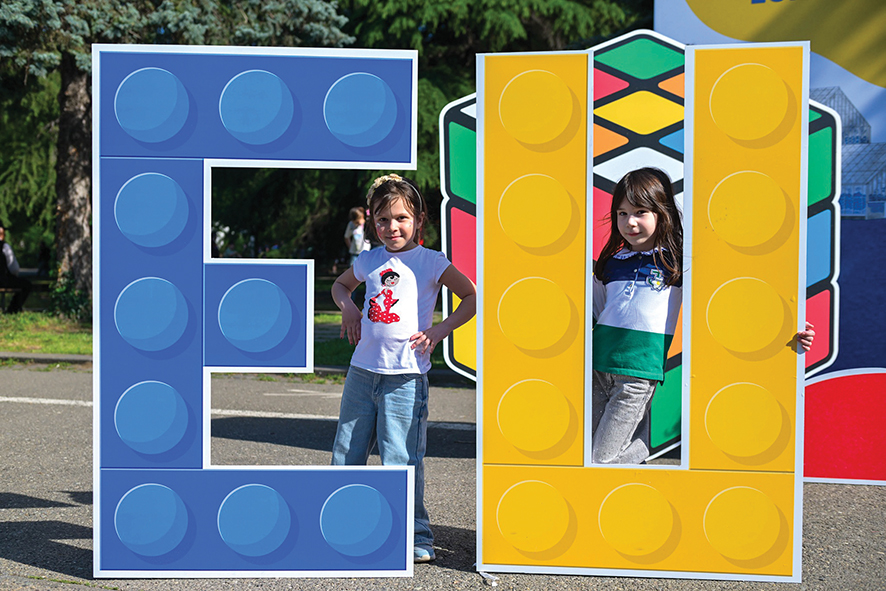
Europe Day was marked in Tbilisi on May 9 at Expo Georgia with a large-scale public program that brought together thousands of visitors for a day of exhibitions, discussions, and cultural events focused on Europe’s role in Georgia’s present and future.
The event was opened by EU Ambassador to Georgia Paweł Herczynski, who framed Europe as a political and cultural space built on shared values rather than a single identity. He said diversity is not a weakness but a defining strength of the European project.
“Europe is a space of diversity, where each country not only preserves but also enriches its own culture and identity,” Herczynski said. He added that the European Union functions through a shared framework of democracy, human rights, and the rule of law, while allowing member states to maintain their own traditions and national character.
He noted that Georgia already shares many of these values and that the EU continues to support its European aspirations. Enlargement, he said, is a structured and long-term process that requires sustained reforms, institutional alignment, and political commitment from candidate countries.
Referring to the 1950 Schuman Declaration, Herczynski said Europe Day reflects the origins of a project that transformed a continent of conflict into one of cooperation. He said the same process continues today, including through engagement with countries such as Georgia.
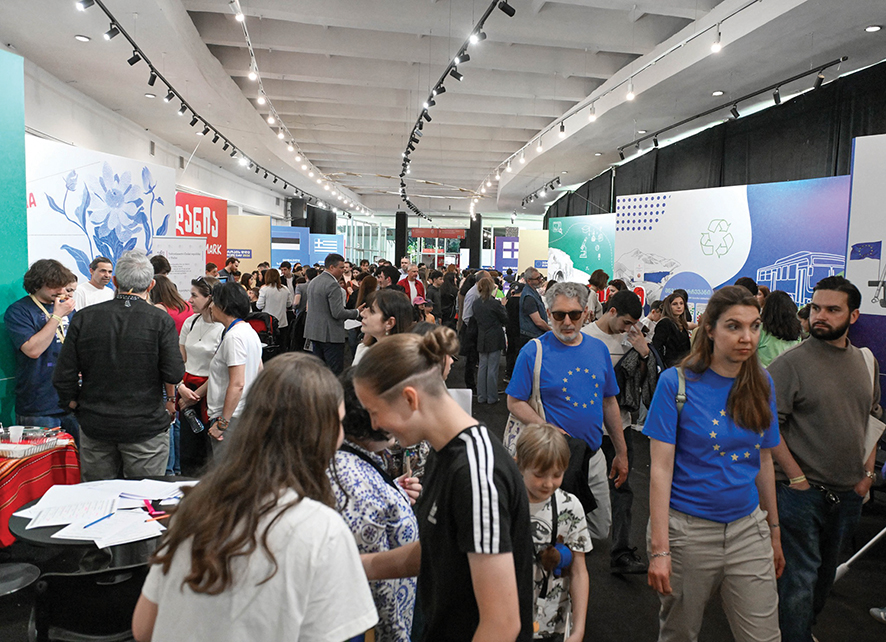
Across Pavilions 5 and 6, the “Team Europe” exhibition presented national showcases from EU member states, with interactive displays covering science, medicine, engineering, technology, culture, and innovation. The exhibition aimed to highlight the EU as a functioning network of cooperation that already influences education, research, and cultural exchange in partner countries.
Organizers said the approach was intended to make European integration more tangible, focusing on practical examples rather than abstract messaging. Visitors moved through country-branded spaces that combined national perspectives with shared European themes.
Families and groups of friends took part in quizzes, collected country flags, and sampled country-specific delicacies at various stands, with prizes awarded throughout the day. The exhibition also featured hands-on activities for children, including mosaic-making, book-making, and other crafts, alongside interactive artificial intelligence experiences designed to introduce younger visitors to emerging technologies in an accessible format.
A separate pavilion marking 30 years of EU–Georgia relations traced the development of cooperation since the 1990s. It highlighted EU support for small and medium-sized enterprises, public sector reform, and efforts to strengthen democratic governance.
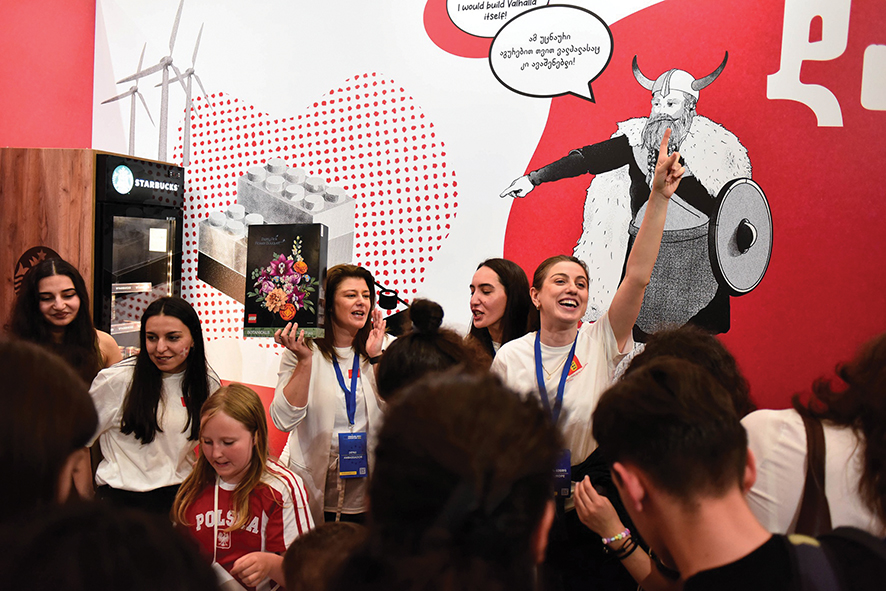
It also featured environmental and climate-related initiatives, including green transition programs, as well as digital transformation projects introducing new administrative tools and technologies in Georgia. These were presented as long-term investments in institutional capacity and economic modernization.
One of the central elements of the program was the live podcast studio “My Europe, My Future” in Pavilion 4, designed as an open-format discussion space where visitors could observe conversations as they unfolded.
Between 1:00 PM and 5:00 PM, six sessions were held, each lasting around 30 to 40 minutes and bringing together ambassadors, experts, and public figures. Topics included European identity, education, youth participation, environmental policy, digital development, and Georgia’s European trajectory.
Organizers described the format as an attempt to move beyond conventional panel discussions and create a more accessible public dialogue on European integration.
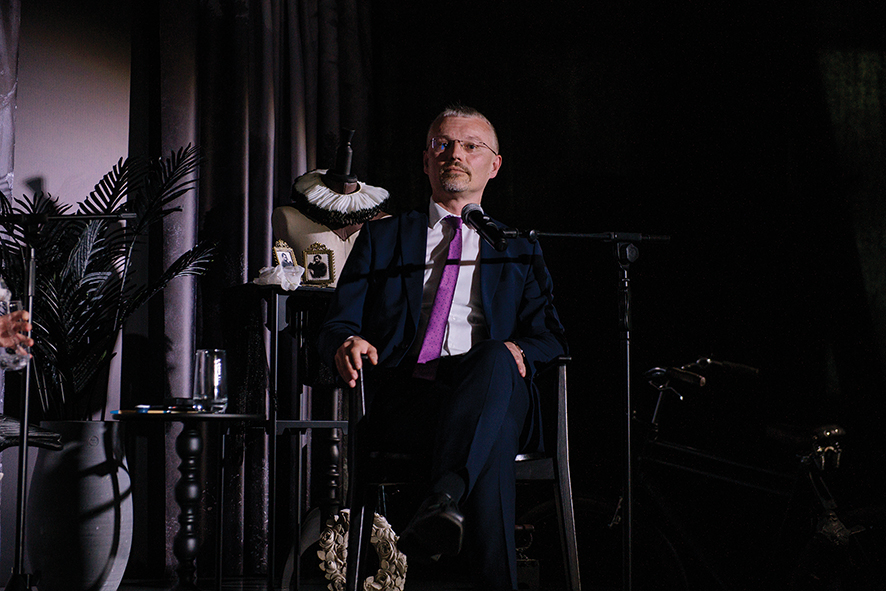
In one of the sessions, “What Makes Us European?”, Anatolii Maliuska, Counselor at the Embassy of Ukraine in Georgia, offered a detailed reflection on European identity and EU enlargement, particularly in relation to Ukraine and Georgia.
He described European identity as multi-layered, combining geography, culture, and political values. “Being European is a mixture of geographical, cultural, and political identity, anchored in shared values like democracy, human rights, and the rule of law,” he said, adding that Europe should be understood primarily as a values-based space.
Maliuska argued that EU integration represents a broader societal transformation, not only an institutional process, requiring alignment in governance, law, and public administration.
Speaking on Ukraine’s prospects, he said EU membership would bring access to the single market, economic growth through participation in the world’s largest trade bloc, and freedom of movement within the Schengen area.
He described these as structural changes with direct impact on everyday life, particularly for younger generations and businesses.
Maliuska also said enlargement benefits the EU itself, strengthening its geopolitical position and internal cohesion. Ukraine’s accession, he said, “could and must bring back to the EU the so-called appetite for enlargement,” adding that the process is necessary for both sides.
He characterized enlargement as a mutual process requiring adaptation on both sides, particularly in a period of geopolitical uncertainty.
Addressing security, he said the EU’s stability is closely tied to that of its neighborhood, and that enlargement forms part of a broader framework for maintaining peace and predictability across the continent.
One of the most noted moments of his remarks came when he said, “We need a tandem to dance tango,” using the metaphor to describe EU–candidate relations as a coordinated process requiring alignment and shared responsibility.
On Georgia, Maliuska emphasized sovereignty and domestic decision-making, saying the country’s future direction must be determined by its citizens. At the same time, he expressed confidence in Georgia’s European trajectory, calling it “firm” and describing it as part of the country’s historical and constitutional identity.
He said this path is the result of long-term cultural and political development and is now reflected in Georgia’s modern institutional framework, adding that progress toward EU integration depends on continued reforms and alignment with European standards, but describing it as a process of convergence rather than external pressure.
Alongside the discussion program, Expo Georgia hosted education and engagement zones featuring Erasmus+ information, student mobility initiatives, and career development opportunities linked to EU programs.
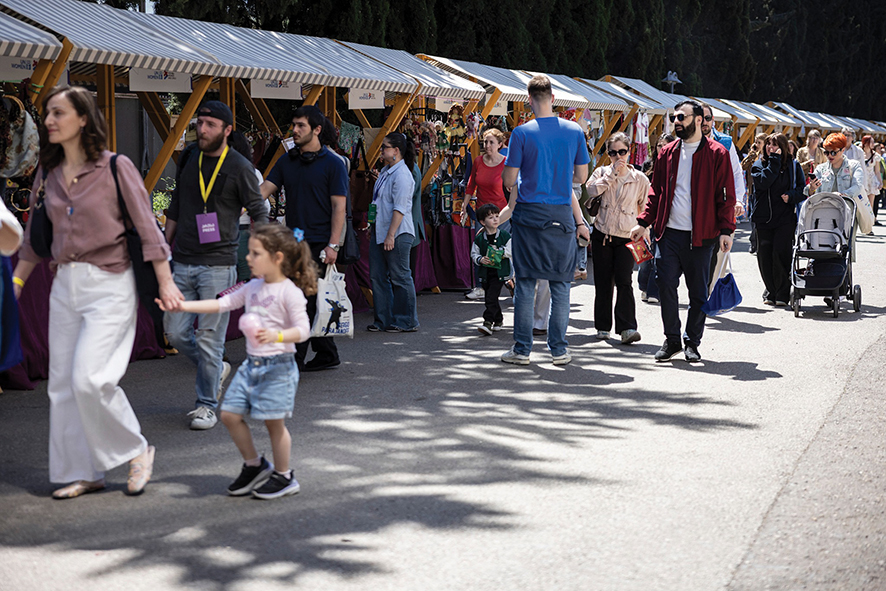
Outdoor areas included an agro-market focused on local production and sustainable agriculture, alongside environmental initiatives under the “Georgia Goes Green” program. Cultural events ran throughout the day, including children’s choirs and orchestras, and concluded with a performance by Georgian band Bedford Falls.
Organizers said the aim of Europe Day 2026 was to present the European Union not as a distant political concept, but as a framework already embedded in Georgia’s institutions, education, and cultural life through sustained cooperation.
Europe Day is held annually on May 9, marking the 1950 Schuman Declaration, which laid the foundations for what would become the European Union.
By Team GT









