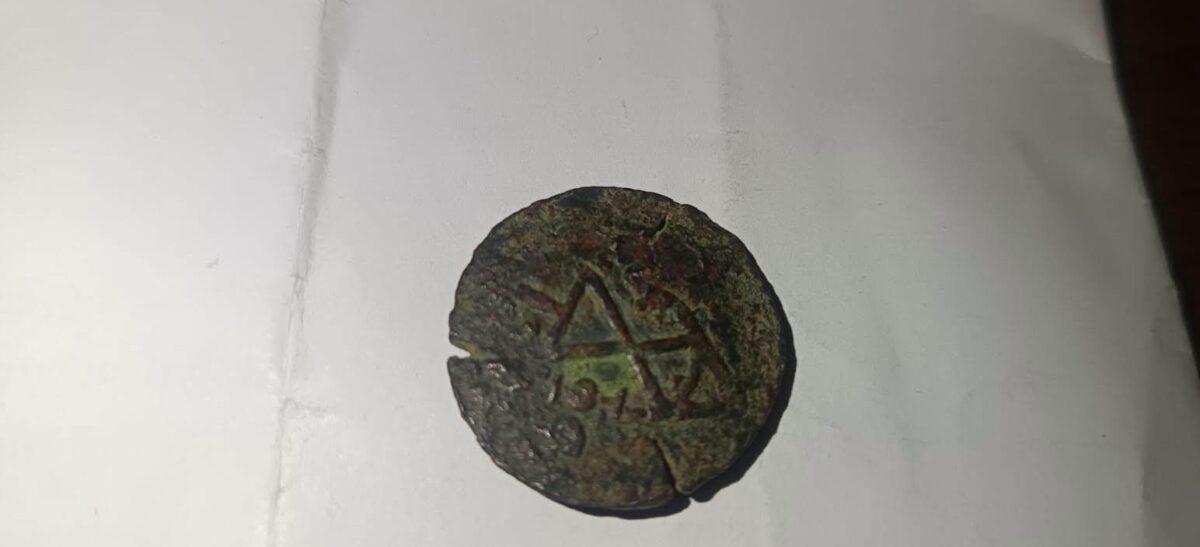
Archaeologists carrying out restoration and excavation works at Armenia’s medieval Amberd Fortress have uncovered several significant historical artifacts, including a rare coin minted during the reign of Georgia’s Queen Tamar, Armenian media reported, citing the Armenian Ministry of Education, Science, Culture and Sports.
Among the discoveries are the rare coin, a nearly complete human skeleton, and gaming pieces from the medieval board game “Tama,” believed to resemble modern-day chess or checkers.
Armenia’s Cultural Heritage Protection Service says the human skeleton was found outside the inner wall of the fortress, about one meter east of its central section. Around 90% of the bones were preserved in situ, with only the finger bones missing.
Based on the condition of the teeth, specialists believe the remains belonged to a young individual. Analysis of the leg bones suggests the person stood approximately 180 centimeters tall, which would have been considered unusually tall for the period.
The Cultural Heritage Protection Service described the Queen Tamar-era coin as the most significant find of the excavation. Historians consider it an exceptionally rare artifact that provides valuable evidence of the historical links between medieval Georgia and the region.
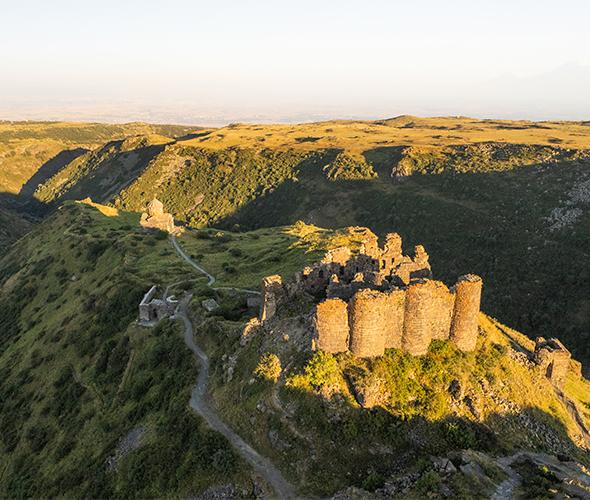
Amberd Fortress, located on the southern slopes of Mount Aragats at an elevation of approximately 2,300 meters above sea level, is one of Armenia’s best-preserved medieval fortresses.
Historical sources indicate that during the 12th and 13th centuries, under the reign of Queen Tamar, the fortress was controlled by the Zakarid dynasty, an Armenian noble family that governed much of northern and central Armenia under the protection of the Kingdom of Georgia. During that period, Amberd served as one of the region’s principal military and strategic strongholds.
Archaeological excavations and restoration work at the fortress are ongoing, and specialists believe further research could reveal additional discoveries shedding light on the history of the site and the people who once lived there.