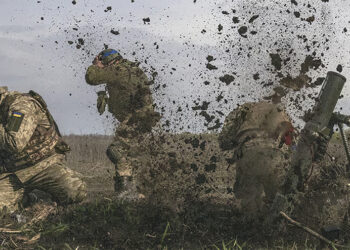
Should brothers in blood and faith, like Russians and Ukrainians, have eliminated each other so unwisely and relentlessly?
Couldn’t they have done otherwise, in some civilized fashion, without mutually annihilating so many happy and healthy young lives?
Conceivably, yes, but they couldn’t help succumbing to ever-raging geopolitical and psychological warfare, which upset human minds and eventually affected their subsequent decisions.
We will, imaginably, never know what kind of malicious layers of negative emotions, historical anger, political rancor, and acrimonious propaganda are buried at the bottom of the decisions made by seemingly regular humans.
Isn’t it obvious that the war in Ukraine is not just a plain military conflict?
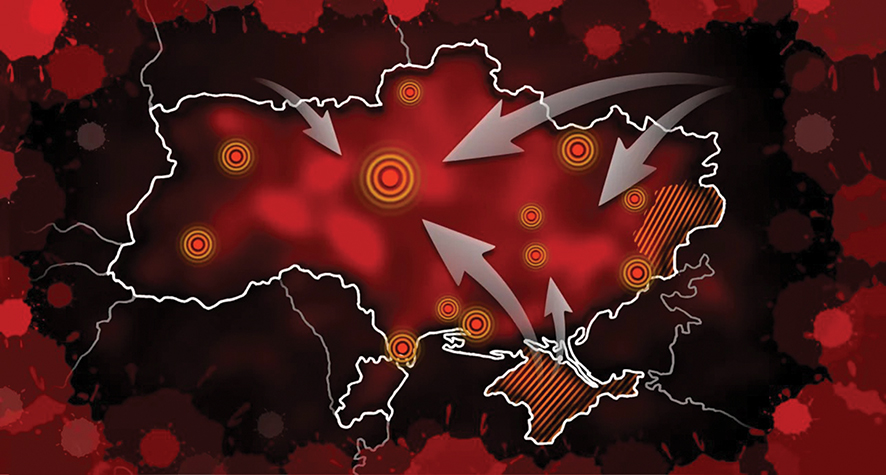
It is also an unremitting information war, and this is where our journalistic input might have some weight to throw in: governments, media systems, intelligence agencies, influencers, Telegram channels, bots, and AI-generated content; all of these contend to shape public opinion and the prevailing perception of reality in general.
And we, the ladies and gentlemen of the press, as well as political scientists, are part of it.
Why are all of us lying so flagrantly?
Now, would it be wise to ask the question: is anybody at all telling the truth?
I’d rather say no, because if we don’t know exactly which facts are subject to independent verification, then the entire effort to be fair and objective goes down the tubes.
To put it another way, we need to know where those different sources of information agree and where they disagree.
Where can we find the key to open those firmly locked doors of fact-finding and fact-checking?
Nothing, nothing in the world is clear about this senseless war.
It is so heartbreaking to be a frustrated journalist, feeling miserable because you are footballed from one contradictory comment to another, having no idea what facts they are relying on.
Some things sound very likely true, but it is almost dreadful to put your morally pristine signature beneath them.
Here is what the universally recognized and widely corroborated facts are saying: Russia launched a full-scale invasion of Ukraine in February 2022, a credible fact without any reason to doubt; hundreds of thousands have been killed or wounded on both sides, very true; both Russia and Ukraine use propaganda and selective reporting, which goes without saying; Western media also frame the conflict through geopolitical interests and emotional narratives, hard not to agree; Russian state media systematically justify the war and control internal narratives, really? Ukraine withholds or shapes information for morale and wartime strategy, of course; AI-generated fake videos, manipulated clips, staged narratives, and coordinated online campaigns are becoming widespread, there you go!
That’s all, no more, no less!
All the rest, the current situation, especially on the front line, needs to be checked and rechecked sixty-five times.
Who can do that? Not me!
One important truth, though, is that any war destroys the precision of information and the lucidity of the situation, and we all have to put up with this irritating yet unavoidable reality.
I just wonder whether there are any truthful people operating inside this foolishly irrational war who are genuinely aware of reality.
It is not rocket science to guess that governments and their allies tend to conceal information for many serious reasons, such as safeguarding military operations, keeping up morale among soldiers, holding alliances in place, preventing panic, influencing negotiations for a possible peaceful finale, and whatnot.
There is one funny side to this entire silly war: different layers of worldwide audiences receive different versions of the truth.
Russians hear that their army and leadership are defending themselves against NATO expansionism and possible aggression; Ukrainians hear a story of national survival and an existential threat from Russia; the Western audience hears a democracy-versus-authoritarianism narrative; non-Western countries are fed information about a proxy struggle between major powers.
Against this horrible background, the wisest bottom line would probably be not to believe in the existence of absolutely uncorrupted information and to somehow distinguish facts from interpretations.
So, we, the rank and file, are faced with the severe reality that we may never get a chance to possess the unadulterated truth about this monstrous war while it is still raging.
The only good news is that we can get somewhat close to what seems to be the current reality and learn how to live with it.
Well, at this point in time, that sounds tolerable enough.
I hate this conciliatory acknowledgment, though.
Op-Ed by Nugzar B. Ruhadze