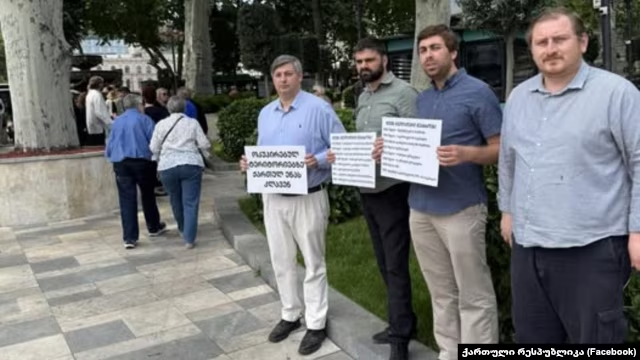
The celebration of Russian Language Day in central Tbilisi on June 6 was met with protests from activists, who argued that such events are inappropriate while parts of Georgia remain under Russian occupation and the Georgian language faces restrictions in the occupied territories.
The event, held for the second consecutive year in Pushkin Park with the involvement of the Russian Interests Section and several pro-Russian organizations, coincided with the birthday of Russian poet Alexander Pushkin. In addition to public activities in the park, meetings were organized under the “Ambassadors of the Russian Language” program, bringing together visitors from Russia, including representatives of Russian language institutions and authors.
Members of the civic movement “Georgian Republic” staged a protest at the site, telling participants that celebrating Russian Language Day under the current circumstances was “unacceptable.”
Protesters pointed to what they described as a long-standing policy of eradicating the Georgian language in the Russian-occupied regions of Abkhazia and Tskhinvali. They noted that Georgian-language instruction remains banned in schools in the predominantly ethnic Georgian districts of Gali and Akhalgori.
“I was driven from my homeland. Even Georgian-language religious services are not held in the occupied territories, and ethnic Georgians are discriminated against every day because of their language. Under these circumstances, celebrating Russian Language Day is an insult to any Georgian,” said Ilia Glonti, an internally displaced person from Abkhazia and a member of the Georgian Republic movement.
Former Foreign Ministry employee Giorgi Tavartkiladze also addressed the gathering, stating: “While the Georgian language is being suppressed in Abkhazia and Samachablo, celebrating Russian Language Day in Tbilisi is unacceptable.”
The event took place as Russian Foreign Minister Sergey Lavrov issued a statement marking Russian Language Day, pledging continued support for Russian speakers worldwide and condemning what he described as linguistic discrimination and Russophobia. Lavrov also reiterated Moscow’s position that the protection of Russian-speaking populations is among the issues linked to a long-term settlement of the war in Ukraine.
As part of this year’s Russian Language Day program, events under the “Ambassadors of the Russian Language” initiative are scheduled in Georgia on June 6–7. Similar meetings are also being held in Budapest and Paris.
Header image: Members of the civic movement “Georgian Republic” protest Russian Language Day celebrations in Tbilisi