On May 26, Georgia’s Independence Day, a protest march organized by the “Opposition Alliance” began at Ivane Javakhishvili Tbilisi State University (TSU) and moved through the city toward Rustaveli Avenue and the Parliament building in central Tbilisi.
Carrying Georgian and European Union flags, demonstrators filled the streets in a slow-moving procession, blocking traffic as they went. Many held banners criticizing the ruling Georgian Dream party and calling for a more pro-European political direction. The crowd included opposition party leaders, their supporters, and ordinary citizens who had come out independently.
Organizers said they were denied permission to use sound equipment for speeches and announcements, but the march continued regardless, with chants and informal addresses carried through the crowd.
Former president Salome Zurabishvili also appeared near TSU at the start of the march. Speaking to supporters, she framed Independence Day as a symbol of continuity in Georgia’s statehood and stressed unity, arguing the country’s independence should be understood beyond the Soviet period.
“Our independence is not 35 years old: it is 85 years old, because the occupation period does not count,” she said. “The people gathered here today stand for unity, because independence cannot exist without unity. Defending and restoring independence also depends on the unity and determination of these people. We feel this energy that has brought people together.”
As the opposition march continued toward Rustaveli Avenue and the Parliament building, it merged with already assembled crowds for speeches and further demonstrations focused on Georgia’s political direction and European integration.
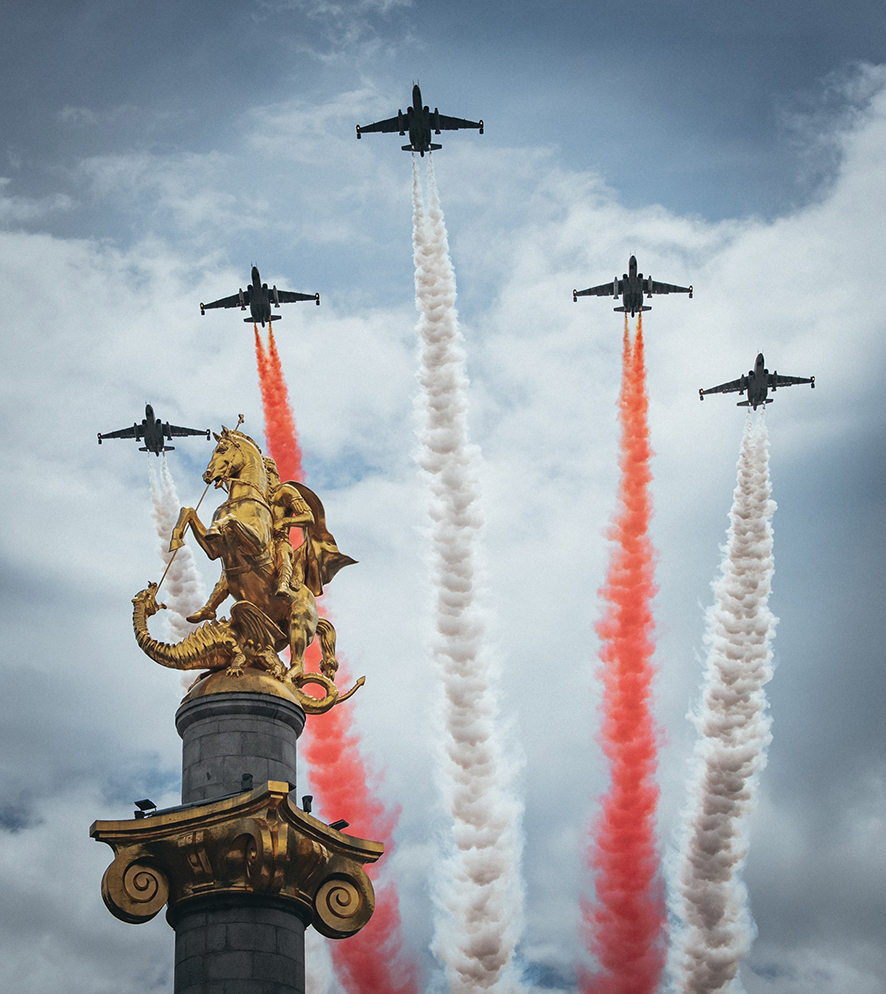
At the same time, Tbilisi hosted official Independence Day celebrations organized by the state, including ceremonial flag-raising, military oath ceremonies for new recruits, and cultural performances in central public spaces.
Alongside both the official events and the protest, the city also hosted family- and child-focused public festivities in pedestrian and recreational areas such as Orbeliani Square and Alexander Garden. These zones featured children’s entertainment spaces, interactive games, arts and crafts activities, small exhibitions, sports and movement activities, and live music performances, creating a more relaxed, festival-like atmosphere for families.
The day ultimately unfolded across central Tbilisi as a mix of state ceremonies, large-scale political protest, and family-oriented public festivities, with different parts of the city reflecting sharply contrasting moods and messages on Independence Day.
By Team GT