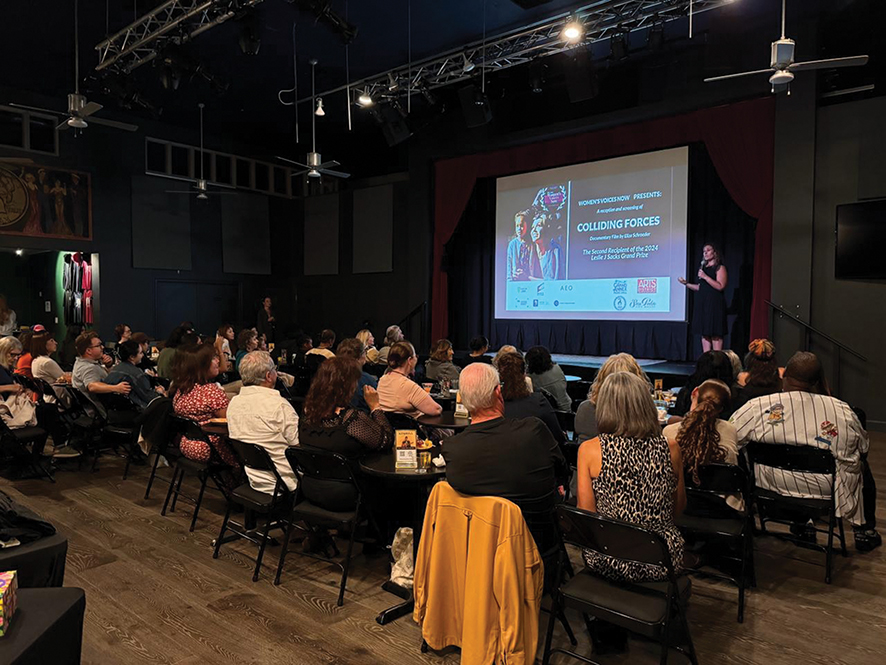
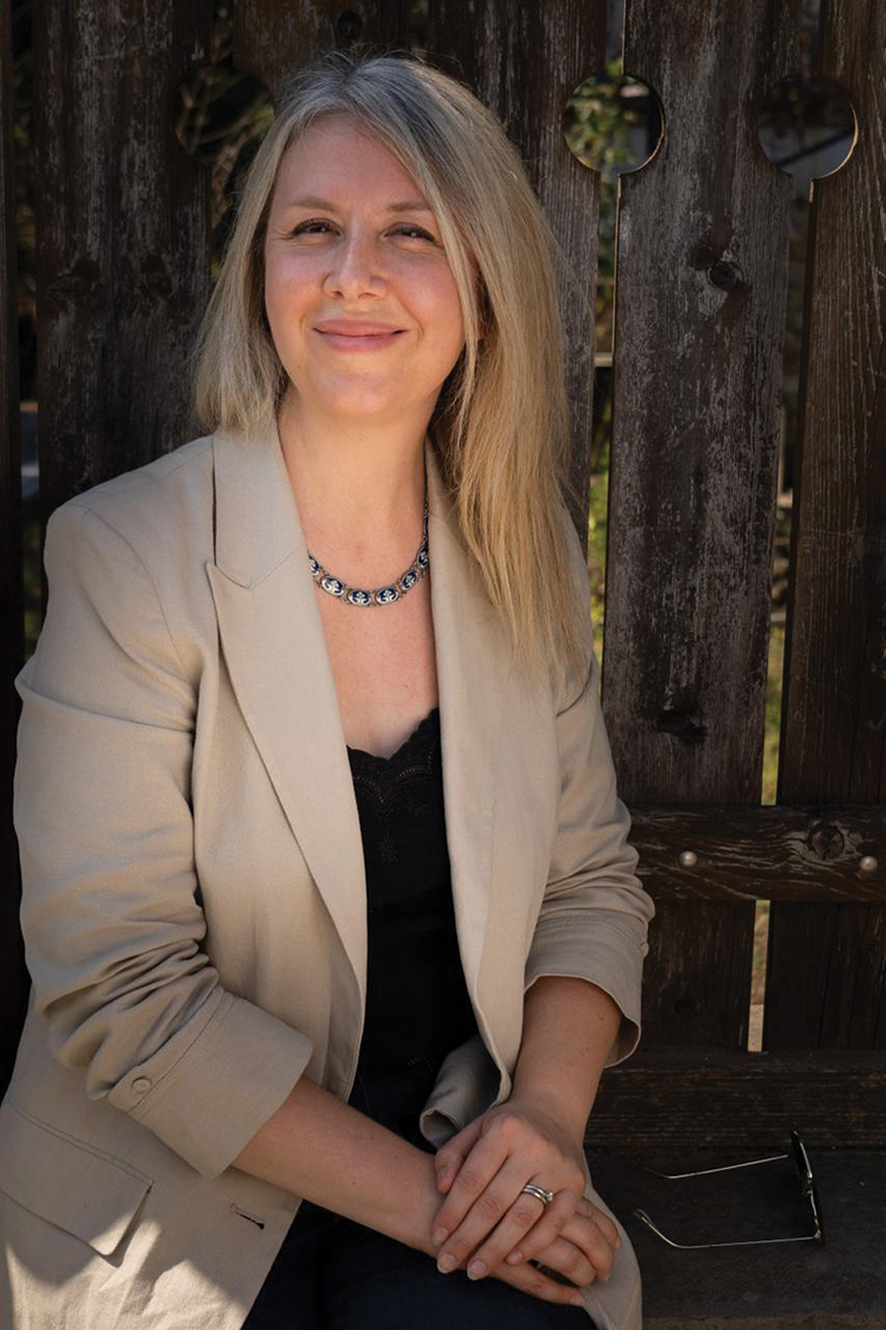
As Executive Director of Women’s Voices Now, Heidi Basch-Harod leads a global team committed to promoting girls’ and women’s rights through the power of film. She also oversees Girls’ Voices Now, the organization’s Emmy Award-winning youth mentorship and media program, and collaborates with an international network of volunteers for the WVN Film Festival, helping to source and assess documentaries centered on women’s rights issues from around the world.
GEORGIA TODAY spoke with Heidi, alongside WVN jury member Michelle Gagnon, in this two-part interview to learn more about the organization’s work and vision.
Is there a sense that today women’s voices are being heard more now, or not enough?
I think that women’s voices are being heard louder than ever, but still not enough. And certainly not consistently in every country or geographic region. The bigger question is: What does or doesn’t happen when women’s voices are heard? In some cases, we have films that have led to legislative and even cultural change. In other cases, we see how injustice continues with impunity.
Do you personally have a particular heroine in the struggle for women’s rights? What makes/made them stand out?
For decades my biggest hero in the struggle for women’s rights has been Leyla Zana, the first Kurdish woman to become a parliamentarian in Turkey. Her challenges as a woman in Kurdish society, and as a Kurd in Turkish society, and her indomitable will to improve the status of women in her society and the station of her people in Turkey continue to inspire awe in me. She set an example for so many to follow her. In my view, she sacrificed her safety, her freedom, her family, and her health for a better future for all of humanity. I keep her in mind when I need a bit of inspiration to keep going and believing in the work.
Words of encouragement for new or young female filmmakers?
“There has never been a more receptive world. We are far from parity but the opportunities are out there. We are connected digitally; find your mentors and your cheerleaders, pursue your dream.”
Among those recently invited to join the jury for WVN 2026 was Michelle Gagnon, an American expat who has spent several years in Georgia pursuing film projects and collaborating with local artists and filmmakers.
Please introduce yourself and your role at WVN.
I am a Jury Member for the WVN Feature Films Selections, and an American expat in Tbilisi. I collaborate with local artists and filmmakers. I direct and produce my own indie short documentaries, but I also advocate for human rights in the Caucasus, so for me joining the WVN Jury made sense. We share the same heart to bring women’s rights stories to the big screen. I feel really proud to represent Georgia in this festival!
What are some of the urgent issues these filmmakers/films are addressing? Examples of films that impacted you?
This festival has opened my eyes to many urgent issues that women face around the world. It’s a good reality check, because rights can be rolled back or lost quickly if we aren’t active guardians. For example, “The Sharp Edge of Peace” by Roya Sadat, a film about the first female political negotiators in Afghanistan, showed how quickly women’s rights were reversed and lost under the Taliban’s return.
Femicide is also an urgent issue. A Guatemalan feature called “Comparsa” (Doug Anderson and Vickie Curtis) highlights the tragedy of 41 women who were burned alive in a local government “safe house.”
Two resilient sisters creatively work to reclaim their life and community. They then turn fire into a symbol of taking back their power, through fire breathing performances, the arts, and community parades. Incredibly inspiring, but again it’s a reality check. I get chills just thinking about how powerful some of these films are. And these are just two examples of the caliber of films we have viewed!
How do you select which films will get an award? What’s the process like?
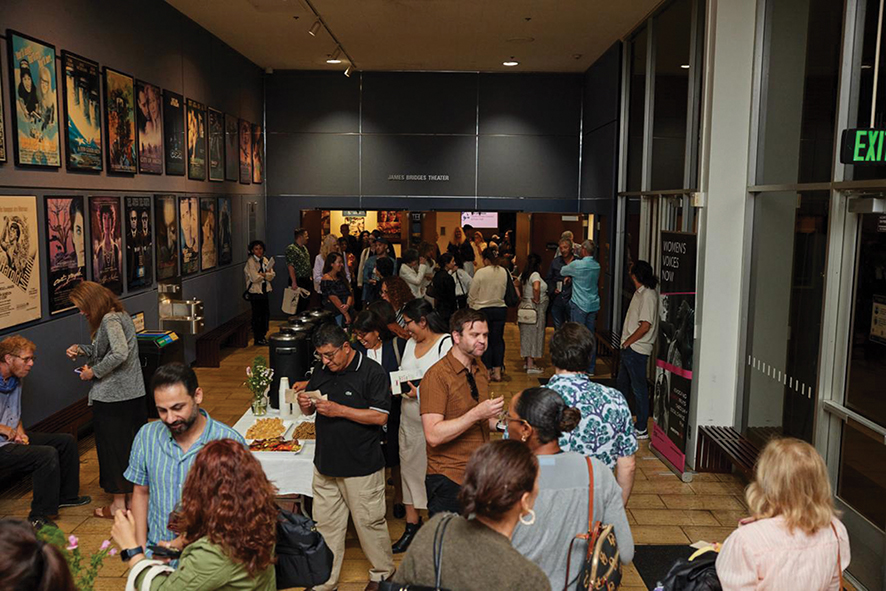
We have a very diverse group of women on the jury, from 13 countries. Each brings a wealth of industry experience. We were organized into Features, Shorts, and Youth categories, and reviewed each film on our own, then discussed. We needed to pace ourselves because these films bring up a lot of complex emotions. It’s a joy to serve as a witness to these stories, but the topics are heavy. Self-care during the viewing period was important. Then we based selections on what we felt encapsulated the overall best in technique, creativity, storytelling, impact, etc. When it came to selecting winners, we had excellent options. Honestly, there was not a bad film in the lot. We presented the final awards on May 15th.
Is there a sense that in today’s world women’s voices are being heard more now, or not enough?
Women are half the world’s population, so why aren’t half of the films and media produced made by, for, or about women? Definitely more space is needed for women in film to tell our stories, address our concerns, and show our points of view.
Why is it important for Georgia to have representation in this festival?
First, there is an opportunity to get women’s rights more onto the cultural radar screen. In the Caucasus, we still have gender inequality, domestic violence, taboo around divorce, underaged marriages, and outdated traditions on property rights, particularly in rural regions. We have to find ways to bring these issues to the forefront of social consciousness. Films are a powerful way to do that.
Second, Georgia has a very extensive film history and also some wonderful current emerging female filmmakers. They have unique stories that the world needs to hear! So any chance I get to promote Georgian film and culture abroad, I do. A Los Angeles-based festival like WVN allows me to network and also help raise the profile of Georgian cinema.
Interview by Tony Hanmer
Tony Hanmer has lived in Georgia since 1999, in Svaneti since 2007, and been a weekly writer and photographer for GT since early 2011. He runs the “Svaneti Renaissance” Facebook group, now with over 2000 members, at www.facebook.com/groups/SvanetiRenaissance/
He and his wife also run their own guest house in Etseri: www.facebook.com/hanmer.house.svaneti