There are films in which a city’s architecture appears not as a backdrop, but as something more elusive: a presence, a rhythm, a way of shaping movement and attention. To watch them is to experience space differently – not only as something seen, but as something inhabited.
In a recent program in Tbilisi, Irina Kurtishvili brought cinema and architecture into dialogue, tracing the point at which image and structure begin to overlap. Her screening series, “Film and Architecture”, at the Art Foundation Anagi has become one of the most talked-about events in the city. At times, the free screenings drew such crowds that it was almost impossible to get inside.
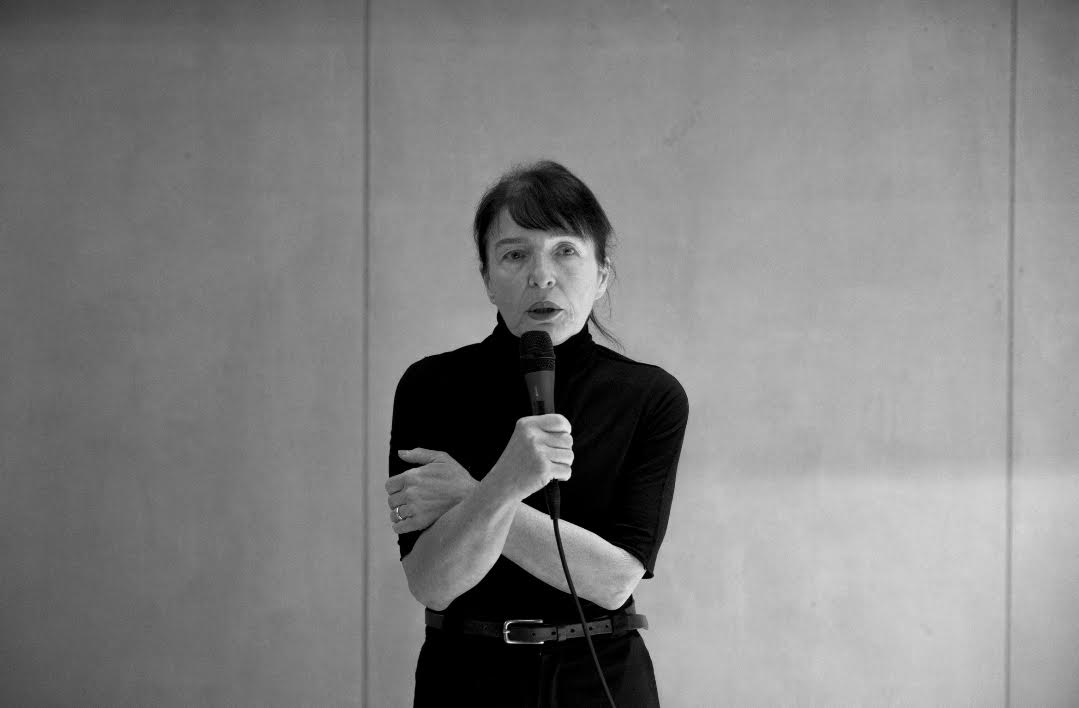
Kurtishvili, a noted artist, curator and scenographer working between Germany and Georgia, has spent the past two decades developing projects that cross the boundaries of architecture, art and cinema in Tbilisi, Frankfurt, Berlin, Vienna and Zurich. Her approach, she says, grew naturally out of European experience.
We sat down with her to reflect on the interplay between architecture and film, the inspiration behind the programme, and the way she selects her films.
Your work spans architectural research, exhibition-making and thematic film programming. How did this interdisciplinary approach take shape?
“In many ways, it grew out of a European experience. When I left for Germany in 1994, I had no clear sense of how my work would develop. I had graduated from the Faculty of Fine Arts, specializing in film scenography, and was already working in this field in Georgia. Staging within a thematic space came naturally. But at the time, I had no real understanding of what it meant to create or organize an exhibition. In Georgia, such a practice barely existed.
In the Soviet Union and beyond, exhibitions of different kinds were organized, often involving architects in the design of displays. Their experience was essential to the process.
My father was an architect. In 1965, he created his first exhibition design in Tbilisi, in the exhibition hall of the Baratashvili Bridge, which he himself had designed. It was an exhibition of Georgian ceramics, timed to coincide with the bridge’s opening.
Later, in 1970, the Georgian SSR Chamber of Commerce presented Georgian culture in Paris. The project included not only an exhibition but also printed brochures in French. In 1983, at an exhibition of the Soviet Union’s technological and economic achievements in Tokyo, my father worked on the design of the space allocated to Georgia.
Our family archive still preserves graphic and photographic materials from these exhibitions. They shaped my perspective from an early age and continue to inform the way I work.”
What inspired the programme of film screenings and discussions, Film and Architecture, which you presented at the Art Foundation Anagi in February-March 2026?
“The starting point was the architecture of the Art Foundation Anagi’s auditorium itself. Its moderate amphitheater, designed for 50 to 80 viewers, and the character of the screening space.
I first saw it in the summer of 2025 and immediately felt it could host a program that would allow audiences to experience culture on a more emotional level. Not just by watching films, but by engaging with ideas and processes within architecture.
It was important that the two media were organically connected. The program needed a regular, weekly format and a clear structure, so that audiences would know what to expect – whether at the first screening or the last.
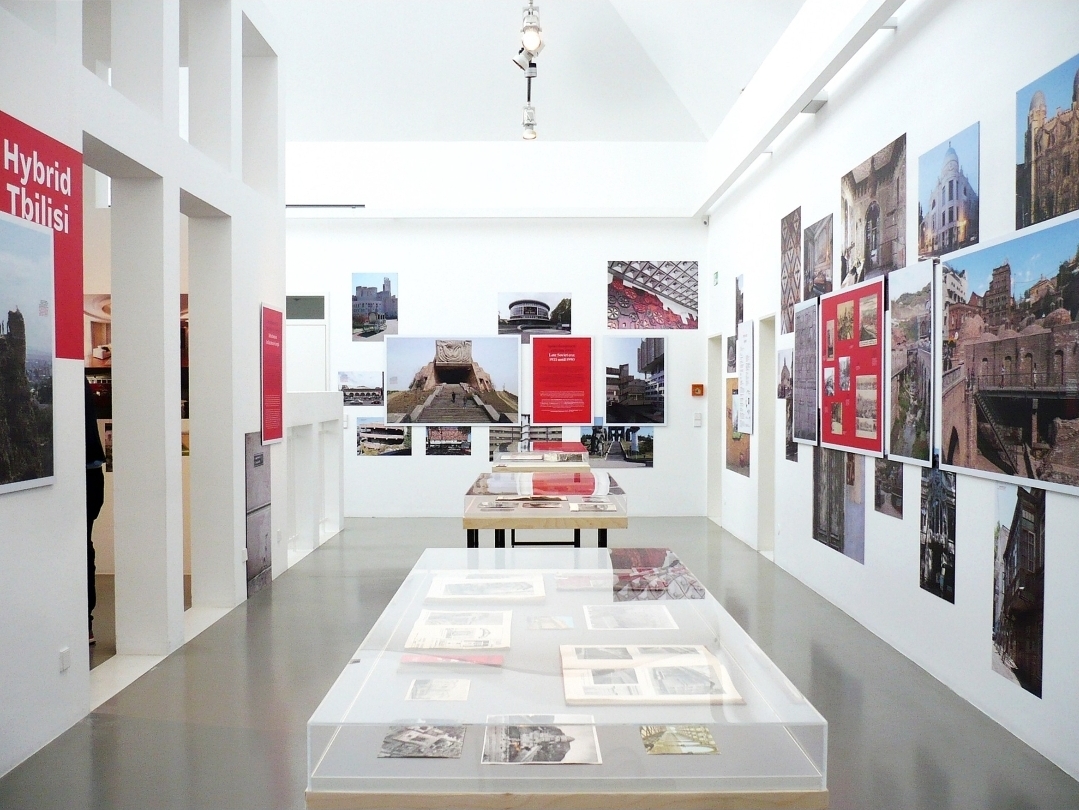
I had worked in similar formats before. At the German Architecture Museum (DAM) in Frankfurt, designed by Oswald Mathias Ungers, there is a simple, highly functional auditorium. In 2018, we presented the exhibition HYBRID TBILISI, dedicated to the city’s architecture, alongside a film program. One of the films, When the Earth Seems to Be Light (2016), follows skateboarders in Tbilisi, whose “terrain” is the city’s brutalist architecture.
In 2007, in Berlin, we screened Georgian films at Arsenal Cinema alongside a photography exhibition on Georgia at the Willy Brandt House. In 2013, the Museum Ludwig in Cologne hosted a retrospective of Mikhail Kalatozishvili, and in 2024, a program marking the centenary of Parajanov traveled across five German cities. All of these projects brought together exhibitions and cinema.
Another very important aspect is that such institutions cultivate their own audiences – audiences who expect programs to be announced in advance, circulated both online and in print, and preserved afterwards in accessible archives. It is an approach I value greatly; it creates trust. Many European institutions work in this way – for example, the Teatrino at Palazzo Grassi in Venice or Cinema Godard at Fondazione Prada in Milan.
It requires professionalism, energy and continuity – a sustained commitment to offering audiences high-quality cultural projects.”
In many of the films you selected, architecture almost becomes a character. How do you see the relationship between cinematic narrative and architectural space?
“Architecture and cinema are closely aligned: both are rooted in visual storytelling and immersive experience. The aim of the program was to present these two art forms to the public from multiple perspectives.
A strong example is Wim Wenders’ Wings of Desire. It was important that audiences see Berlin in its historical context – as a once divided urban organism, marked by complexity, tragedy and a certain lightness. Before the screening, we showed a photographic overview of the locations featured in the film, each accompanied by a brief architectural commentary.
Today, those sites have acquired an iconic status – largely because of the film. Berliners visit them frequently and share their stories with visitors. Here, architecture clearly takes on the role of a character. Wenders himself treated these locations as markers of Berlin’s memory, identity and layered histories.
I would also mention film critic Gogi Gvakharia’s essay “Tbilisi in Film” (StadtBauwelt, Berlin, 2000), which examines Georgian cinema through an architectural lens. He presents Tbilisi as a space where different cultures and ethnic groups coexist within constraints, under conditions of control and censorship. It remains one of the few texts to address Georgian cinema in this way, and it is still an important reference for me.”
The program brought together films from different periods and genres. What guided your selection?
“I had a certain carte blanche, so the process was quite intuitive – guided as much by emotion as by knowledge. The first edition was dedicated to outstanding fiction and documentary works spanning different periods. In total, we screened eight films..
From the beginning, I felt the program should open with a documentary – one about a dynasty of German architects centered on the late Gottfried Böhm. His work is closely linked to Catholicism and the sacred; he designed 39 Catholic churches. It offered a way to discuss the relationship between faith and creativity with Georgian audiences.
We also included a film about Rem Koolhaas, directed by his son. While Georgian architects are generally familiar with Koolhaas, his broader vision – often extending beyond architecture into social questions – is less widely recognized. In addition, we screened another film focusing on one of his iconic residential projects, designed for a person with limited mobility.
There were also three fiction films I knew had to be included: Zabriskie Point (1970), Wings of Desire (1984) and Death in Venice (1971). I knew them well, but always felt there was something more to understand.
Recently, I came across a small edition of the Zabriskie Point script from 1973. I often carried it with me. I became interested in the exact location of the house that explodes in the film, and used Google Maps to study the Arizona desert Antonioni describes. The film’s themes – rupture, destruction and emotional release – remain relevant. Antonioni described it as a poetic narrative about capitalism, materialism and the collapse of ideals. These are processes we also see in Georgia today.
The program concluded with Death in Venice, which, in a sense, anticipates the opening of the 61st Venice Biennale. Russia’s unexpected participation has already sparked heated debate: some call for a boycott, while others, so-called “appeasers,” speak of a “cultural truce” or the “diplomacy of beauty.” It remains to be seen how this will unfold.
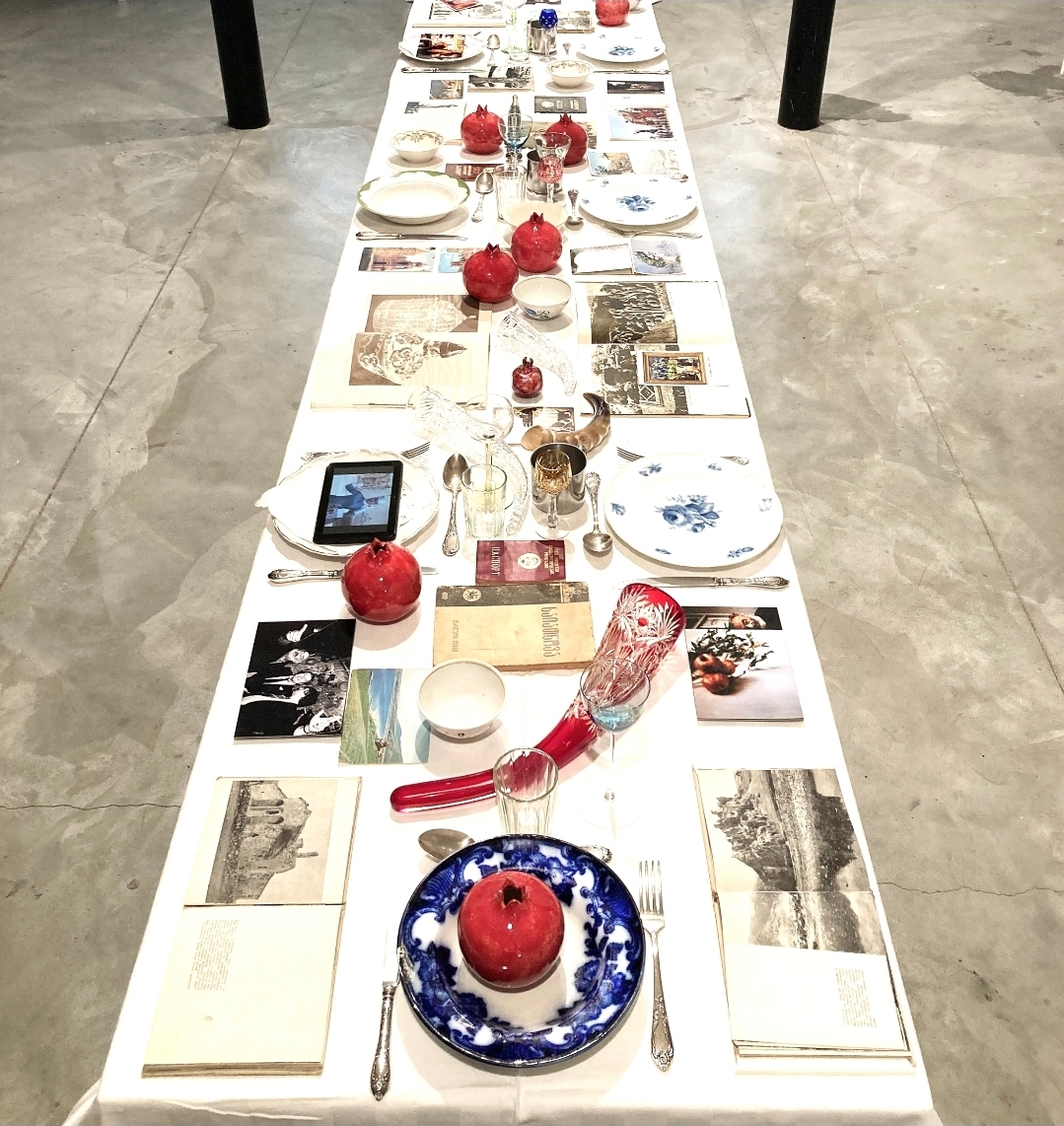
Three years ago, I was in Venice for my installation Dinner with Parajanov, presented at the Venice Design Biennale. At that time, I visited the Lido and the Hotel des Bains, where both Thomas Mann’s novella and Lucino Visconti’s film are set. The building still awaits restoration, but the beach remains as striking as in the film. The final scene, shot on the Lido by Pasqualino De Santis, is a reminder of what cinema can be.”
How can cinema shape the way audiences perceive architecture and the urban environment?
“Cinema has its own conditions. The scale of the screen matters. In an age dominated by smartphones, it has become a more limited format, yet it still offers the possibility of travel – through places, times and experiences. It allows architecture to be understood not only intellectually, but emotionally.
It is also interesting how cinema itself is embedded in the urban environment. It requires a deliberate act – going somewhere to watch a film. Yet in today’s cities, visual markers such as posters have largely disappeared; instead, we rely on smartphones. Ideally, urban elements – facades, underpasses –would function as signals, allowing people to understand what is happening in the city simply by moving through it.
This goes beyond promotion. The city becomes a system of signs, where film is not just narrative but a cultural myth – something inscribed into our spatial experience. It is, in essence, a semiotic process.”
Against the backdrop of Tbilisi’s rapidly changing urban landscape, does this program offer a new way of looking at the city?
“It is difficult to say. Much depends on the audience – on whether they find the program meaningful, whether they engage with it. What matters is that people have the opportunity to respond, even critically.
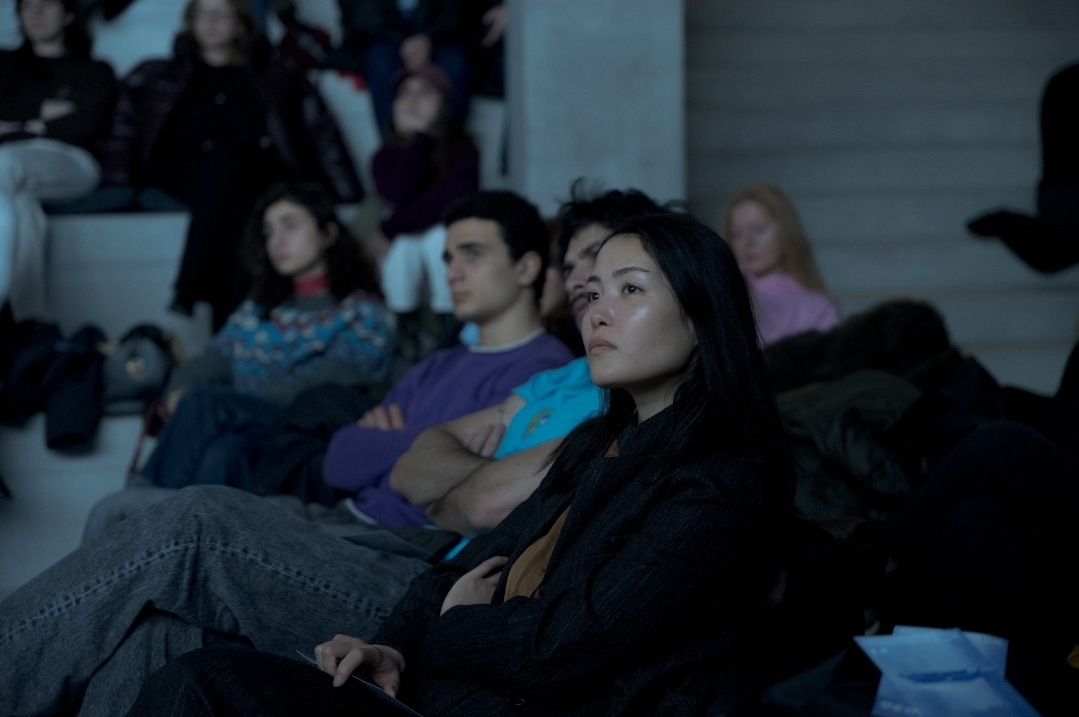
The screening of the documentary Urbanized prompted particularly active discussion. It made clear that young people, especially, need more open space – space for thought and experimentation. They need to analyze urban development, distinguish between what works and what does not, and form their own positions.
The work of Chilean architect Alejandro Aravena may offer a useful point of reference – particularly his approach to low-cost social housing, which allows residents to take part in shaping their own living spaces.”
More broadly, how can such initiatives contribute to public discussion around architecture and culture? And will you continue working with the Art Foundation?
“Ideally, such initiatives should also exist within art schools, running alongside lectures on a regular basis. This is the case, for example, at the Berlin University of the Arts (UdK), where invited architects present their work – often experimental – throughout the year.
In Tbilisi, we are not yet accustomed to this kind of program, though there are efforts. It would be valuable to engage professionals from across the Caucasus at an institutional level.
In 2024, near the Red Bridge – at the symbolic meeting point of three republics – a group of Georgian, Armenian and Azerbaijani artists documented the “Friendship Memorial”. A caravan route once passed through this area, connecting Tbilisi to the Middle East. The project showed how contemporary technologies can be used to document important fragments of history. The material was later presented in Brussels in the exhibition Across the Divide (2025), organized by the Goethe-Institut (EU4Dialogue).
As for future collaboration, I think the program was received and understood by its audience – it touched a certain nerve. That, in itself, is a strong incentive to continue and to begin work on the next cycle.”
Header image: Poster for a screening of Wim Wenders’ Wings of Desire, from the Art Foundation Anagi’s social media.
By Team GT