The United States carried out a new round of airstrikes against Iran late Wednesday and into Thursday, further escalating tensions in the Middle East after President Donald Trump warned that Tehran would face consequences over stalled negotiations and what Washington described as continued hostile actions.
The strikes marked the second reported round of US attacks in recent days. US Central Command (CENTCOM) reported that the operation targeted military-related infrastructure in Iran and was conducted as a “self-defense” measure. American officials said the action was a response to Iranian aggression and threats against US forces and interests in the region.
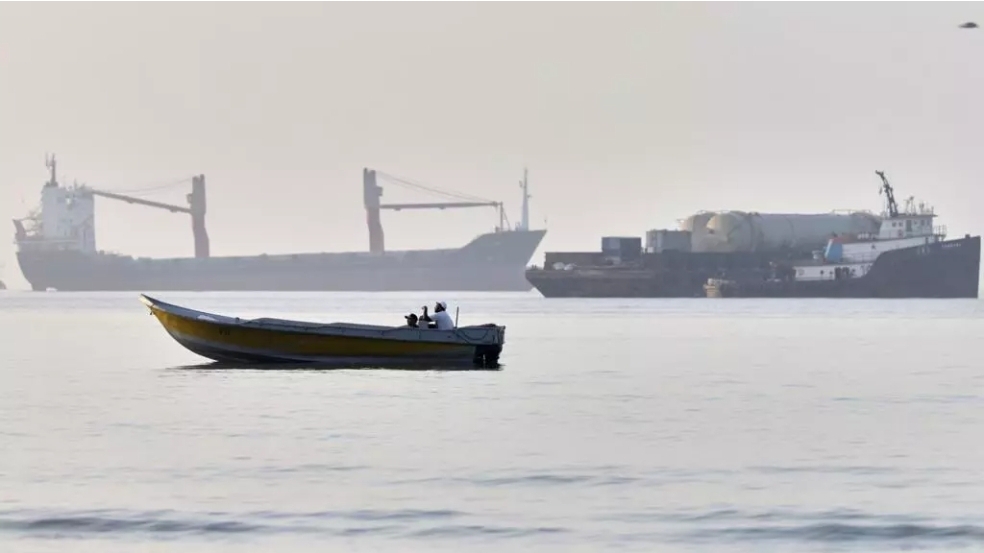
Iran responded by announcing the closure of the Strait of Hormuz, one of the world’s most strategically important maritime routes and a critical corridor for global energy exports. Iran’s top joint military command said commercial and oil tanker traffic would no longer be permitted through the waterway and warned that vessels attempting to transit the strait would be considered potential targets.
The announcement immediately raised concerns about global energy security and international shipping. The Strait of Hormuz, which connects the Persian Gulf with the Gulf of Oman and the Arabian Sea, handles a significant share of the world’s seaborne oil trade. Any prolonged disruption could have major implications for energy markets and supply chains.
Iran also launched retaliatory strikes against US-linked military facilities in the Gulf region. Iranian officials said targets in Bahrain and Kuwait were attacked in response to the American operation. Regional authorities reported heightened security measures and the activation of air defense systems following the attacks.
Washington and Tehran have offered differing accounts of the effectiveness and impact of their respective operations, and many battlefield claims remain independently unverified.
The latest escalation comes amid growing uncertainty over diplomatic efforts aimed at reducing tensions between the two countries. Negotiations have stalled in recent weeks amid disagreements over sanctions, regional security issues and Iran’s nuclear program. President Trump has repeatedly accused Tehran of delaying progress, while Iranian officials have argued that US demands remain unacceptable.
The current crisis follows months of rising military confrontation in the Gulf region, including drone and missile attacks, maritime security incidents and increasing pressure on international shipping routes. The situation deteriorated further after the reported downing of a US Apache helicopter earlier this week, an incident that American officials cited as a key factor behind the latest strikes.
Financial markets reacted swiftly to the developments, with oil prices rising amid fears that instability around the Strait of Hormuz could disrupt global supplies. Analysts warned that any sustained closure of the waterway would likely affect international energy markets and increase pressure on economies already facing geopolitical uncertainty.
Despite growing international calls for restraint, neither side has indicated a willingness to back down. US officials have warned that further attacks could follow if American forces or interests are targeted again, while Iranian military leaders have pledged additional responses to any future military action.
The latest exchange has heightened concerns that the confrontation could expand into a broader regional conflict involving Gulf states and key international shipping routes, further complicating efforts to restore stability in the Middle East.
Header image: A small boat moves along the shoreline where an a cargo vessel, tugboat and industrial barge are all anchored in the Strait of Hormuz off Bandar Abbas, Iran,June 1, 2026 © AP