The Russia-Ukraine war is showing few signs of a decisive breakthrough on the ground, even as the conflict increasingly reaches far beyond the front line. Russian forces continue to push in parts of Donetsk and Kharkiv regions, while Ukrainian troops are mounting counterattacks and recovering some positions. At the same time, both sides are expanding long-range strikes against energy, industrial and logistics infrastructure.
The battlefield picture remains complicated. Analysis using DeepState mapping indicated a small net Russian territorial loss between August 11 and 18, while calculations based on Institute for the Study of War data showed a modest Russian gain. The difference reflects the fluid nature of the fighting, where small groups can infiltrate settlements without establishing lasting control. Over the four weeks to August 18, both datasets showed little or no significant Russian progress compared with the pace of earlier offensives.
In Donetsk Oblast, some of the fiercest fighting remains around Kostyantynivka and the approaches to Dobropillya. Russian troops have increased their presence in parts of Kostyantynivka, relying heavily on small infiltration groups rather than large mechanized assaults. Ukrainian troops have also cleared some Russian infiltrators from their positions.
Moscow has claimed the capture of settlements farther west, including areas around Andriivka, but several of these claims have not been independently supported. The Institute for the Study of War also assessed that footage purportedly showing Russian control of Novomykolaivka may have been altered.
Russia is nevertheless concentrating infantry around Dobropillya and appears to be seeking positions from which it could threaten the town and the Rodynske-Kryvorizhzhia road network.
Further north, fighting around Lyman and Slovyansk has continued without a major Russian breakthrough. Ukrainian forces appear to have pushed Russian infiltrators out of northern and central Lyman, while Russian attacks on the town’s flanks continue. Ukrainian troops have also made a localized advance in the Borova direction.
The pressure is greater around Kupyansk, where Russian units have reportedly consolidated positions around Kivsharivka. Russia has also claimed advances north and northwest of the city, although some claims remain unverified. Ukrainian forces, meanwhile, have made gains near Bilyi Kolodyaz in northern Kharkiv Oblast.
In Sumy Oblast, Russia has continued trying to maintain pressure along Ukraine’s northern border, but there were no confirmed Russian advances during the latter part of the week. In the south, fighting around Hulyaipole and Orikhiv has remained similarly attritional. Ukrainian forces continue to target Russian drone-control stations, vehicles and supply routes in occupied Zaporizhzhia.
Small Russian groups have also remained active around Dnipropetrovsk Oblast, although Ukrainian forces have prevented several from consolidating deeper positions. Authorities have nevertheless ordered mandatory evacuations from 16 settlements in Synelnykivsky district as fighting approaches populated areas.
The war beyond the front line
Russia has stepped up attacks on Ukraine’s energy system, with potentially serious consequences as winter approaches. State-owned Naftogaz said its facilities were attacked 13 times in a single week, damaging equipment and reducing production capacity. DTEK reported that a Russian strike caused a fire at one of its coal mines and killed a 52-year-old worker.
Russian strikes have also targeted railway and port infrastructure around Izmail and Odesa. There are growing signs that Moscow is preparing for another campaign against Ukraine’s power and heating systems before winter. Russia is also expanding long-range drone-launching infrastructure near Ukraine and Belarus, potentially allowing it to send larger waves of drones against targets deep inside Ukraine.
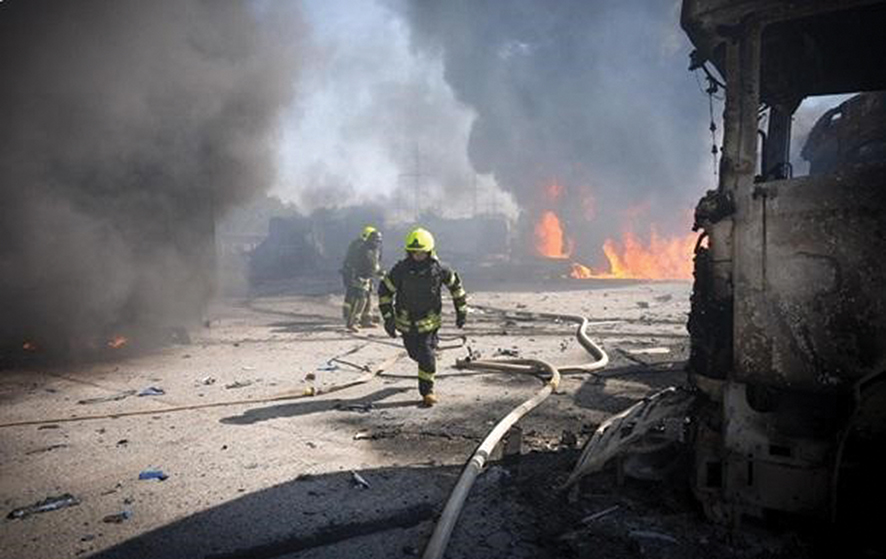
The human cost remains severe. On August 18, a Russian strike hit central Pechenihy in Kharkiv Oblast, killing 10 people and injuring at least 18. Across six Ukrainian regions, at least 19 people were reported killed and 53 injured that day. The previous day, Russian strikes killed at least nine people and wounded more than 40 in several regions. A jet-powered drone struck a shopping centre near Odesa, injuring seven people, including an eight-year-old boy. Earlier in the week, a Russian drone killed a 29-year-old woman and her nine-year-old son in Sumy Oblast.
The week ended with another major attack on Kyiv. Russian ballistic missiles and drones struck the capital, damaging residential buildings, warehouses and a children’s hospital and causing power outages. The death toll subsequently rose to at least 12, with more than 30 people injured.
According to the UN, at least 437 civilians were killed and 2,610 injured in Ukraine in July; the highest monthly civilian toll recorded since the early months of the full-scale invasion.
Ukrainian forces launched hundreds of drones into Russia during the week, including one attack described by the Associated Press as involving nearly 800 drones. Targets included warehouses and logistics hubs in the Moscow region, the Ust-Luga oil export hub near the Baltic Sea, and facilities in Rostov and Samara regions.
Ukraine said a strike on August 14-15 hit the Progress Rocket and Space Center in Samara, including a workshop involved in assembling Soyuz rocket engines. Satellite imagery indicated additional damage at a facility reportedly involved in work on Tu-95 strategic bombers.
Ukraine’s General Staff said another strike on the Kamensky industrial plant in Rostov Oblast destroyed two explosives-production workshops and damaged four others.
The effects are increasingly being felt inside Russia. Repeated Ukrainian attacks have forced several refineries and export facilities to reduce or suspend operations. The Orsk refinery is expected to remain closed for months following an earlier strike, while disruptions have also affected the Black Sea port of Novorossiysk.
Russian western-port oil exports reportedly fell around 15% below planned levels during the first half of August. Meanwhile, gasoline shortages have spread across at least 10 regions, prompting restrictions at filling stations, an export ban and increased fuel imports. Russia has turned to supplies from Belarus and Kazakhstan, while gasoline from India has also reached the country.
Diplomacy remains stuck
Ukrainian President Volodymyr Zelensky said Kyiv had given US representatives Steve Witkoff and Jared Kushner proposals for ending the war. He argued that stronger air defenses and greater pressure on Moscow could help create the conditions for negotiations.
Russia has said it remains willing to discuss a settlement, but continues to reject an unconditional ceasefire. Moscow also dismissed Kyiv’s proposal for a limited Black Sea ceasefire covering civilian shipping. Russian Foreign Minister Sergey Lavrov instead warned that Russia intended to intensify strikes against infrastructure linked to Western military support for Ukraine.
There was, however, one concrete development: on August 19, Russia and Ukraine carried out a prisoner exchange, with each side returning 103 servicemen.
Western military support remains crucial to Ukraine’s ability to keep fighting. Britain reaffirmed its backing this week and plans to supply Ukraine with 150,000 drones by the end of 2026 under an aid program worth £752 million.
Ukraine is also working with European partners on new anti-ballistic defense systems while seeking additional Patriot interceptors from the United States.
Compiled by Ana Dumbadze