The “Movement for Cultural Heritage” has issued a statement regarding archaeological remains discovered during rehabilitation works on Rustaveli Avenue, calling on Tbilisi City Hall and the Ministry of Culture to ensure compliance with the law and transparency of the archaeological supervision process.
The movement said rehabilitation works on the capital’s main avenue began on July 23, with the project being carried out by Smart Solutions.
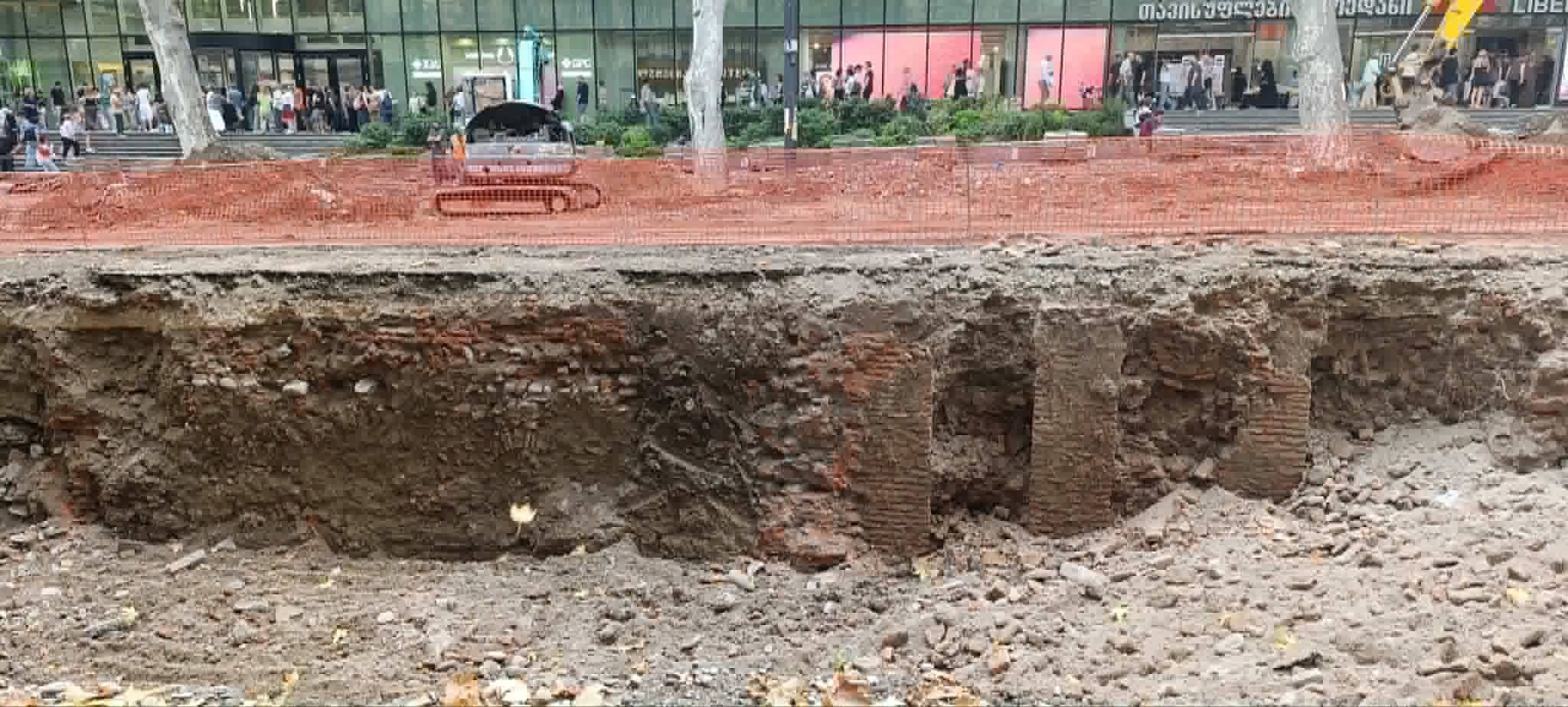
The movement said brick structures were discovered in the section between Freedom Square metro station and the Georgian National Museum. The structures are believed to be part of the old “Garetubani” drainage system, dating to the 19th century. It also said it had information about numerous ceramic vessels, allegedly dating to the 10th–11th centuries.
Works in the section where the discoveries were made have already been suspended. However, it remains unclear whether the uncovered archaeological layers will be studied and what will happen to them in the future.
The movement also said the identity of the specialist or group of specialists responsible for archaeological supervision of the rehabilitation works, as required by law, remains unknown.
“Movement for Cultural Heritage” said it welcomes projects aimed at improving the appearance of the capital, but stressed that the Law on Cultural Heritage must be observed throughout the construction process, citing Chapter III, Article 10.
The movement called on the Ministry of Culture, the National Agency for Cultural Heritage Preservation of Georgia and Tbilisi City Hall to begin consultations within the timeframes established by law to study the archaeological layers and artefacts discovered on Rustaveli Avenue and to better coordinate archaeological supervision during the project.