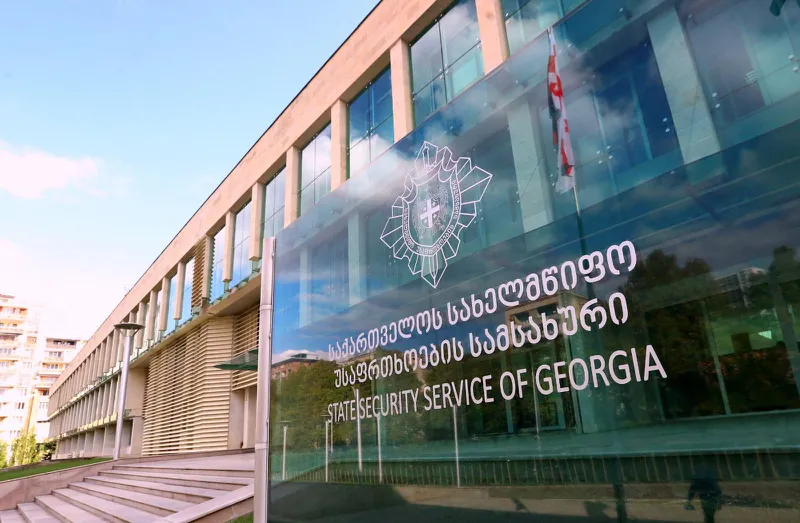
Georgia’s State Security Service (SSG) has dismissed allegations aired in a BBC investigative film regarding the alleged use of the banned chemical substance “camite” against protesters, describing the claims as “deliberate disinformation” aimed at harming the country’s interests.
In its annual report submitted to Parliament, the agency said the narrative surrounding the alleged use of bromobenzyl cyanide, commonly referred to as “camite,” was part of a “well-planned, organized and campaign-like” effort involving both foreign actors and Georgian citizens, intended to achieve “specific hostile goals.”
The report refers to a BBC investigation focusing on the dispersal of demonstrations during the November–December 2024 protests, which suggested that Georgian authorities may have used toxic chemical agents. The SSG strongly rejects these claims, asserting that the report became part of a broader disinformation campaign that could have caused serious harm domestically.
The Service says an extensive investigation was launched following the broadcast. Authorities conducted more than 160 investigative actions and interviewed 93 witnesses, including current and former Interior Ministry employees, medical professionals, experts, NGO representatives, and individuals cited in the BBC report.
The SSG states that the investigation found no evidence that “camite” was ever purchased or used by Georgian authorities. Instead, it concluded that the substance used for crowd control during protests was chlorobenzylidene malononitrile (CS gas), a commonly used riot-control agent that is not internationally prohibited.
The agency detailed that CS gas had been procured by the Ministry of Internal Affairs as early as 2007 and 2009 from a foreign supplier and has been used for years in line with crowd control practices. Supporting documentation, including customs records and chemical analysis conducted by the Levan Samkharauli National Forensic Bureau, confirmed the identity of the substance.
The report also noted that the solvent used in dispersal operations during early December 2024 was propylene glycol, which is likewise not classified as a prohibited substance.
Investigators examined import data and found that over the past two decades, various Georgian entities, including private companies, had imported substances associated with CS gas hundreds of times, further reinforcing the claim that the materials in question were not unusual or illicit.
Witnesses whose statements were cited in the BBC report reportedly denied that their conclusions referred to the use of “camite.” SSG says none of the individuals had conducted research confirming the presence of the banned chemical agent.
Medical experts interviewed during the investigation emphasized that bromobenzyl cyanide is known to cause severe and potentially lethal effects and has been banned since the early 20th century. The report highlights that among 54 individuals hospitalized following the protests, only five exhibited mild intoxication symptoms and were discharged the following day, findings the agency says are inconsistent with exposure to such a toxic substance.
The SSG also noted that it was unable to interview one key individual whose claims were significantly featured in the BBC investigation. Based on the report, the individual is linked to a separate case involving the purchase and storage of explosive materials.
The agency concluded that the claims made in the BBC film lacked factual basis and were part of a coordinated effort to undermine Georgia. It added that the investigation is ongoing under Article 319 of Georgia’s Criminal Code, which concerns assisting a foreign organization in hostile activities.
The State Security Service further warned that disinformation campaigns originating from abroad, particularly from Western sources, risk fueling anti-Western sentiment within Georgia and contributing to public distrust toward international institutions.