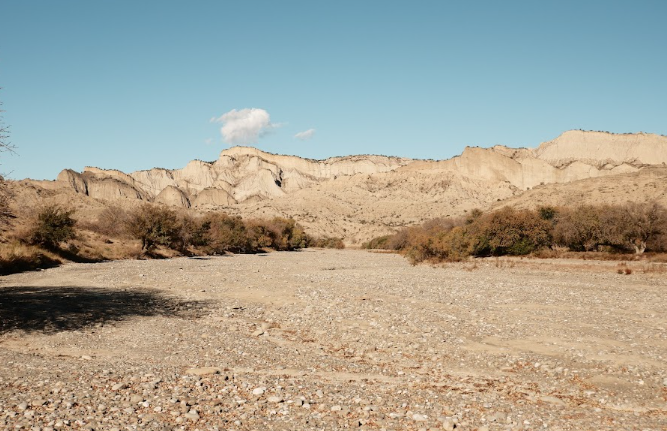
Across the windswept steppes of southeastern Georgia, the Samukhi plain appears vast and empty at first glance. Yet beneath this quiet landscape lies a complex balance between nature and human survival. This area forms part of the wider Iori River Valley project area, where the Endangered Landscapes & Seascapes Programme is supporting the restoration of steppe and riverine ecosystems to strengthen biodiversity, ecological resilience, and sustainable livelihoods. Rare steppe species roam the grasslands, while Tushetian shepherds continue centuries-old grazing traditions on the same land. In Samukhi, conservation is not only about protecting wildlife – it is about negotiating a future where ecosystems and rural livelihoods can endure together.
In these semi-arid landscapes, biodiversity and livelihoods have long existed in a fragile balance. Shaped by seasonal grazing, river systems, and steppe vegetation, the region supports species such as the eastern imperial eagle, griffon vulture, and goitered gazelle. However, in recent decades, unsustainable land use and concentrated grazing pressure have accelerated soil erosion and desertification, placing both ecosystems and rural communities at risk.
In response, SABUKO, BirdLife International’s partner in Georgia, has been working across the Iori River Valley to restore degraded grasslands, promote sustainable grazing practices, and strengthen conservation governance. Measures such as rotational grazing and riverbank stabilisation have improved habitat conditions, while scientific monitoring indicates gradual ecological recovery.
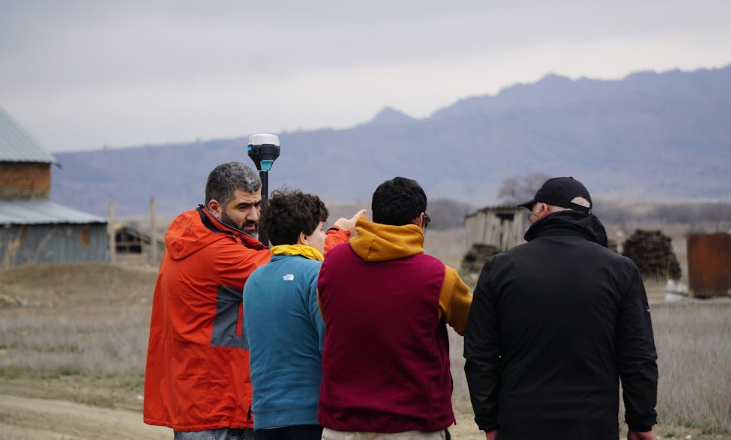
As part of this effort, SABUKO has developed a pasture management scheme within the broader management planning process – outlining how Tushetian shepherds can sustainably use grazing lands and how leasing mechanisms can function more transparently. The scheme is based on a detailed review of existing legislation, as well as years of consultation with local pastoralists and the gradual building of trust. These approaches are now being incorporated into the Samukhi management plan.
Within this broader landscape lies the Samukhi Protected Area – a territory that reflects both the ecological potential and governance challenges of southeastern Georgia.
On the plains of the Iori Plateau, multiple interests converge. The land must sustain wildlife and fragile habitats, but also livestock, rural families, and local economies. Municipal authorities seek development opportunities, while conservation actors must ensure ecological limits are respected.
Samukhi is not a simple landscape. It is a negotiated one.
A territory of overlapping priorities
The ecological importance of Samukhi is clear. Its grasslands and floodplain ecosystems provide habitat for steppe species, including the goitered gazelle – the species for whose protection the area was established.
At the same time, Samukhi remains one of the last winter pasture systems available to Tushetian shepherds. Following the loss of historical grazing territories beyond Georgia’s borders, livestock pressure became concentrated here. For many families, sheep farming is not optional – it is essential for economic survival.
“When we speak about Samukhi, we must recognise that this is not a landscape with a single function,” says Tinatin Arveladze, Policy Manager at SABUKO. “It is simultaneously a biodiversity hotspot and a working pasture system. The challenge is not to choose one over the other, but to ensure that governance allows them to coexist.”
Pasture management systems in the area have long been non-transparent and poorly regulated, and these challenges still persist. Informal leasing and subleasing continue to create uncertainty, discourage long-term investment, and make sustainable land use difficult.
A similar situation exists in Samukhi. Shepherds who traditionally use these lands often lack formally recognised rights, forcing them to renegotiate access each year without knowing whether they will retain their pastures.
Importantly, Arveladze notes that most pastoralists did not oppose conservation initiatives.
“Many shepherds possess deep traditional knowledge about grazing systems,” she says. “In many ways, their practices align with modern approaches such as rotational grazing.”

The core challenge: land pressure and governance gaps
At its core, the situation in Samukhi is not only about land pressure – it is about how land is governed.
“In parts of the Iori Plateau, land-use categories remain unclear,” Arveladze explains. “When pasture is not formally designated or protected, it becomes vulnerable to transformation.”
While these risks are not yet fully visible within Samukhi itself, similar trends are emerging in surrounding areas. In recent years, nearby pasture lands have been converted into monoculture plantations, including pistachio and olive orchards. Such changes alter soil structure, fragment habitats, and restrict wildlife movement.
“Without strategic planning,” she warns, “large-scale plantations may limit wildlife movement and increase pressure on water resources.”
Although legal frameworks for environmental assessment exist, implementation gaps remain.
“The legislation exists,” she says, “but enforcement and transparency still need strengthening.”
From policy to practice
SABUKO’s approach combines policy advocacy with practical intervention.
Developing these approaches has required years of engagement with local communities. Through continuous dialogue with shepherds – both in Samukhi and in Tusheti – SABUKO has worked to understand their needs, build trust, and co-develop practical recommendations for pasture use and management.
At the governance level, the organization promotes clearer land categorization, transparent leasing systems, and stronger coordination between conservation and development planning.
Since Samukhi received protected area status in 2022, a participatory management council has been established to involve local communities, NGOs, and public authorities in decision-making. SABUKO is currently developing a management plan aimed at formalizing pasture use and balancing conservation with traditional livelihoods.
On the ground, efforts focus on improving land use practices.
“We are working with farmers to plan grazing in a way that allows the land to regenerate,” says Giorgi Chikorashvili, Natural Resources Programme Manager.
SABUKO has introduced rotational grazing approaches, conducted pasture assessments, and supported farmers through training and technical assistance.
Future priorities include completing the management plan, developing basic conservation infrastructure, and introducing regulated tourism routes to reduce pressure on sensitive habitats.
Monitoring wildlife
Scientific research plays a central role in understanding and managing the ecosystem.
According to Nika Budaghashvili, Conservation Programme Officer, recent efforts have focused on monitoring the migration of the little bustard. In collaboration with international experts, the team conducted fieldwork in Samukhi and successfully tagged one bird with a GPS transmitter.
The data will help identify migration routes and better understand the species’ movement between the Caucasus and Central Asia.
At the same time, long-term monitoring of steppe bird populations is being conducted to assess how habitat conditions change over time.
The human dimension
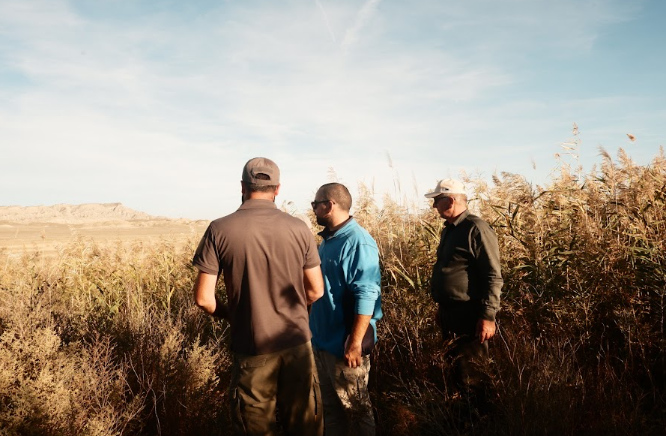
For local farmers, land governance is not an abstract concept – it defines everyday reality.
A shepherd working in the Samukhi area describes the challenges:
“Right now, we are given only one-year leases. One year I take the land, and the next year I don’t know if I will have it again. I might lose it at auction to someone else who can pay more. That means I can’t invest.
If I had a five- or ten-year lease, I would know the land is mine to work on. I would invest in it and take better care of it. But today everything is uncertain – we are left in limbo.”
He adds that formal, long-term agreements would change both economic behaviour and environmental responsibility:
“When we have guarantees, we are more motivated to protect the land. Without that, it’s impossible to think long-term.”

Toward a shared future
Samukhi is emerging as a testing ground for integrated land governance.
Healthy ecosystems preserve soil productivity. Sustainable grazing reduces long-term risk. Transparent governance builds trust.
Yet emerging risks go beyond grazing pressure. According to SABUKO experts, the expansion of plantation agriculture could fundamentally reshape the landscape. If pastoralism declines, monoculture plantations may replace it – bringing habitat fragmentation and limiting wildlife movement.
With irrigation infrastructure already present, such transformation is increasingly feasible.
“The future of Samukhi depends on coordination between institutions and local communities,” Arveladze says. “Protected area status alone cannot guarantee conservation outcomes.”

In this landscape, balance is not automatic. It must be negotiated, restored, and maintained.
Samukhi therefore represents more than a protected area. It offers a model for managing landscapes where biodiversity and livelihoods are inseparable – and where effective governance determines whether that balance can endure.
Photos: SABUKO