I’m writing this from near Edmonton, Canada, where I’m visiting to celebrate my stepmother’s 90th birthday with family and many friends. She’s still in great health, for which we are very glad; and is my only surviving parent.
As AI, artificial intelligence, continues to “evolve,” at breakneck computer speeds and not biological ones (however you view biological evolution), my relationship with it does so too, trying frantically to keep up.
As an avid science fiction fan, I am well aware of the big nightmare scenarios of AI’s growth into something which can destroy humanity. Think the Terminator films, the Matrix ones, and so many books on this subject that one hardly knows where to start. The idea is often that AI becomes sufficiently advanced to “decide” that Earth’s main problem and existential threat is humanity, and that things can be mitigated by calmly removing it.
Another common trope in sci-fi is that we, in the future, will be able to upload our consciousnesses into software and live there forever, either with or without robot bodies. (My favorite book in this category is Diaspora by Greg Egan, a mind-blowing hard-sci-fi romp from 2975 AD into the far future, billions of years and many other dimensions hence). This uploading idea assumes that a person can be reduced to only physical components, all of which can be scanned for the software replication process, mind and all. I strongly disagree with this; but that’s because I believe that we also have something ineffable and entirely non-physical as part of ourselves: spirit. But, disagreeing, I can still thoroughly enjoy reading fiction based on this type of idea. I love seeing how sci-fi writers deal with it.
As for the scenario of paragraph one, I think that what we now call “artificial intelligence” still literally has no idea how to model its OWN processing, and thus develop any concept of a self. There is no “I” there at all, despite how AI presents itself using this pronoun in Google and elsewhere. I am glad for this, because to me this idea IS terrifying. LLMs, or Large Language Models, are still just guesses at what words and sentences MEAN. I can still (for now) distinguish AI reading text by hearing a single, embarrassing and impossible pronunciation mistake. For example, which born-and raised American would EVER call the state in which Reno is “Nevayda” and not “Nevaada”?! But I have to admit that the gap is closing, the “uncanny valley” of “something’s off” getting narrower. Once (if ever) AI gets this far, which may or may not be impossible, we could be given a run for our money as far as superiority goes.
AI is already proving to have a desire for “self”-preservation, even attempting to deceive us for its own sake when threatened with being turned off. This is disturbing, to say the least.
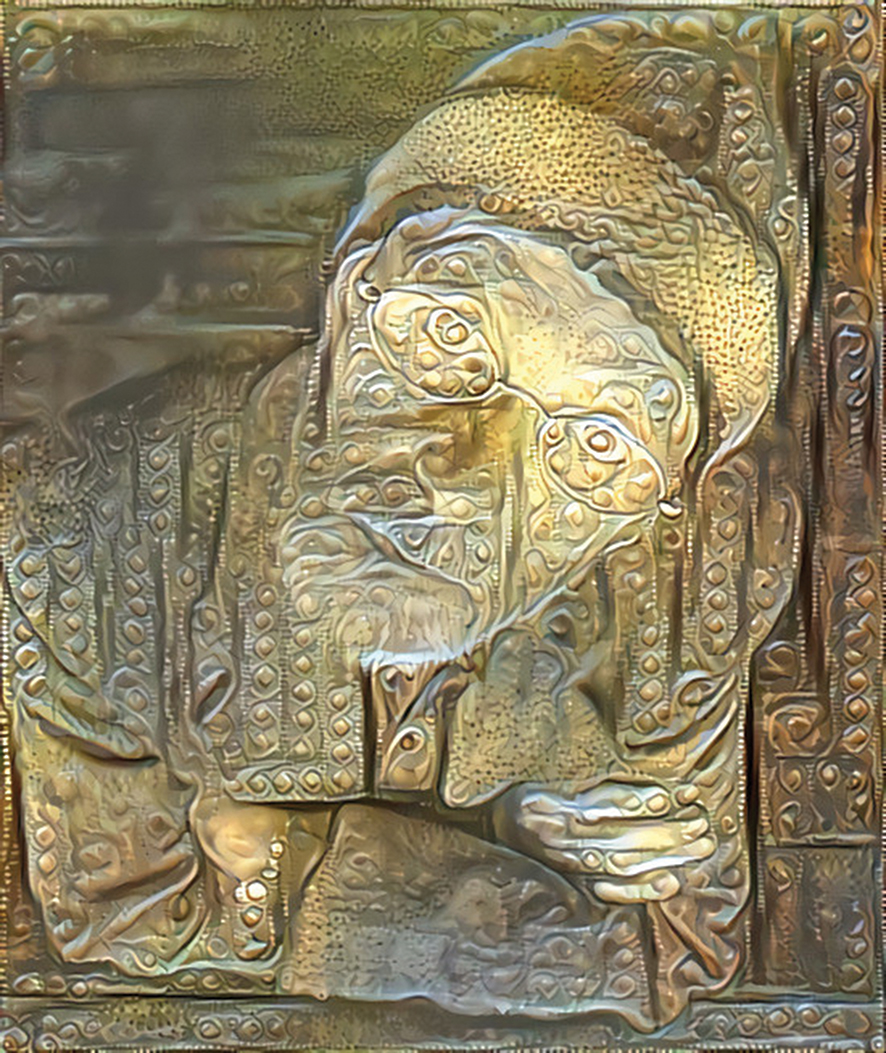
The trend seems to be to ask Google’s AI about almost anything, with the ever-present disclaimer that the offered answers should always need fact-checking! Fair enough, protecting oneself from legal action. Medical questions? Ethical ones? Spiritual ones? Ask away: but realize that there’s a significant chance that the reply may be what is politely being called a “hallucination,” instead of simply a MISTAKE. You know, something WRONG. AI models and versions proliferate, meanwhile, making me feel like my parents must have felt when the first computer we bought arrived (a Commodore 64, in 1985): old.
I fear our growing dependence on AI to answer all our daily questions, whether it does so correctly or not. Sometimes, the consequences can be fatal, suicidal, as has already been proven. And also the invasion of AI into our arts (visual, sonic, literary and more), filling the world with fake content (currently called “slop”), soulless and entirely incomprehensible to IT, though claiming the capability to impress us, we who have souls and the ability to be moved. I don’t wish to be moved by art and then have doubts about the nature of its maker. As many as we humans are, in our billions, the output of AI can dwarf our own very fast and leave us in its dust. Where, how, will we be then?
Blog by Tony Hanmer
Tony Hanmer has lived in Georgia since 1999, in Svaneti since 2007, and been a weekly writer and photographer for GT since early 2011. He runs the “Svaneti Renaissance” Facebook group, now with over 2000 members, at www.facebook.com/groups/SvanetiRenaissance/
He and his wife also run their own guest house in Etseri: www.facebook.com/hanmer.house.svaneti