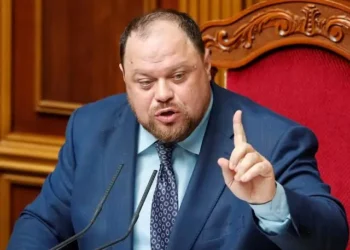
Georgian Prime Minister Irakli Kobakhidze has described the United Kingdom’s decision to sanction television companies Imedi and POSTV as “absolutely absurd,” claiming the move was politically motivated and lacked any factual basis.
Speaking at the Georgian Dream office following a meeting of the party’s political council, Kobakhidze said the sanctions decision reflected broader problems within what he referred to as “European and British bureaucracy.”
“Everyone can see that the accusations were absolutely absurd,” Kobakhidze said. “The fact that the British Ambassador arrived empty-handed at the Foreign Ministry for a meeting with the Minister is further proof that there was no real basis for this decision taken by the British bureaucracy.”
The Prime Minister further alleged that the same forces that “control British bureaucracy” also influence what he described as “local Georgian agents” and the country’s radical opposition.
“It can be said very simply that those who manage British bureaucracy are the same people who manage the local Georgian agency. Therefore, there is simple coordination,” Kobakhidze stated.
He claimed there are “serious problems” within European and British bureaucratic structures and suggested that identical forces operate both in the UK and within Georgia’s opposition landscape.
Kobakhidze referenced former UK Prime Minister Liz Truss, stating that she has spoken about what he described as a so-called “deep state” controlling British bureaucracy. He linked this concept to what the ruling party refers to as a “global war party.”
“This coordination — between local agents and British bureaucracy — is very unfortunate, especially considering the historic traditions of the United Kingdom,” Kobakhidze said.
On February 24, the United Kingdom imposed sanctions on Imedi and POSTV.
The UK government said the two broadcasters were sanctioned for their alleged involvement in the dissemination of Russian disinformation.
The decision has further heightened tensions between Tbilisi and Western partners amid ongoing disputes over democratic standards, media freedom and Georgia’s geopolitical orientation.