I trod the threshold,
His footprint there,
Rustaveli’s path in India,
After seven hundred years,
By me pursued, but never seen,
Not even here, not even here.
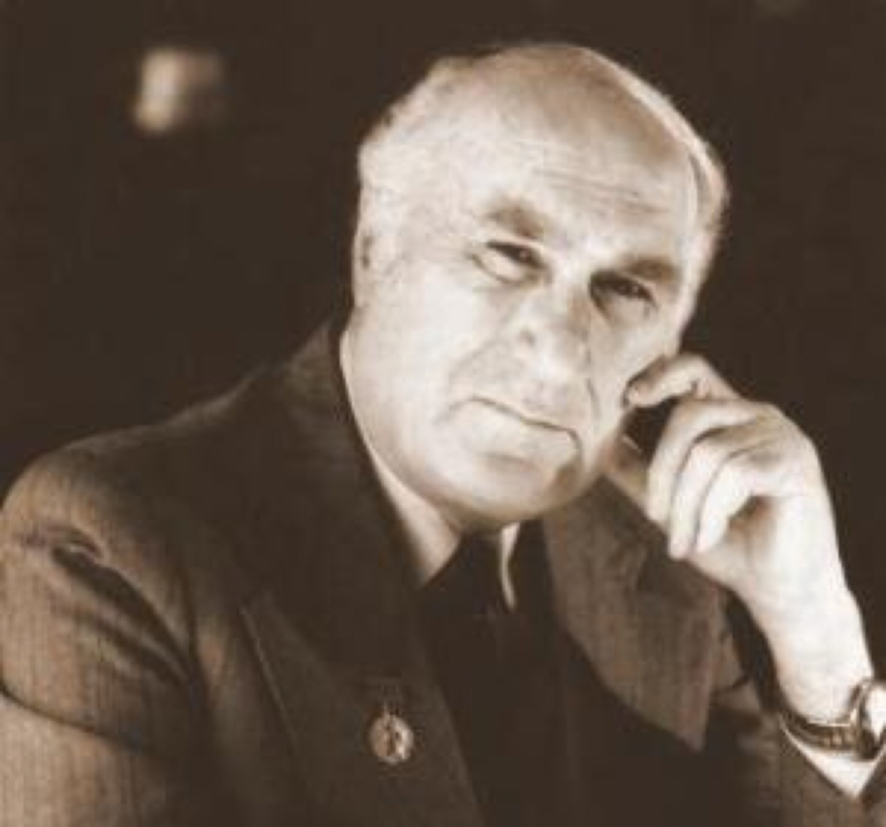
Not in India, but in Palestine, yes! These rhyming words were written in 1960 here in Sakartvelo, and they belong to nobody less than Irakli Abashidze himself, the eminent Georgian poet of the 20th century.
There are stories in our national annals that need to see the light and be known to the rest of the world because knowing our culture better than they actually do is the only righteous way to let them be aware of what this culture is all about.
That year, initiated and headed by Poet-Academician Irakli Abashidze, Georgia’s first-ever delegation of scholars made for Palestine, where, in the ancient Georgian Cross Monastery of Jerusalem, the last shelter, and perceivably, the grave too, of the great Shota Rustaveli was waiting for them to see. The delegation was determined to find the supposedly preserved portrait of that medieval Georgian poet, known as the pre-eminent versifier of the Georgian Golden Age and one of the greatest contributors to Georgian literature, the author of The Knight in the Panther’s Skin, a Georgian national epic poem.
Israel was still a young state at that time, and travelling that far from Georgia, especially in the strained and scary times of the Soviet regime, an expedition of that content and rank was an absolute rarity, which carried a clearly dual context, internal and external. The relations between Israel and the Soviet Union were strained due to the Suez Crisis of 1956, which complicated the fulfilment of the elevated mission of national and, I would say, international caliber.
The world remembers that Nikita Khrushchev threatened Israel with nukes, but the two countries did not go far enough to sever diplomatic relations, that having been a favorable background for putting together the Georgian scientific delegation to embark on the difficult but immensely patriotic mission.
At that time, nothing was easy in the USSR, especially travelling abroad. On top of that, the delegation could not have made the important trip without foreign currency, which was all accumulated only in the deep and roomy Soviet state pocket, and extraction of the funds from those financial depths was almost impossible without a strong political justification for the necessity of that outlandish trip, invented by some Georgian scholars somewhere in faraway Sakartvelo, who wanted to be photographed against the cherished Rustaveli fresco background. Well, the Soviet system was not an easy nut to crack. So, the task was practically unattainable.
After all, Georgia was the motherland of Joseph Stalin, who was cruelly defamed by Khrushchev. Who cared then what national project the mistrusted Georgians wanted to launch, even if it was worthy of attention! It took the fame, reputation, wits, sweat, and trustworthiness of Poet Irakli Abashidze (1909-1992) to persuade the local Georgian and the wider Soviet government that the expedition was vital, useful, and valuable for the entire Soviet country to undertake.
With certain starts and fits, at some point in time, the handsome, eloquent, charming, and intelligent Abashidze found himself in the highest Soviet governmental circles, having received a totally accidental but perfect chance to toast Nikita Khrushchev personally, who had obviously succumbed to Abashidze’s charismatic personality. The story has it that Nikita got curious enough to ask who that toast-maker was. Sounds like a real legend, doesn’t it?
In a word, the end was happy. The formation of the delegation of Georgian scholars for Palestine was permitted and consummated by the Soviet powers that be. It included three biggies of the Georgian National Academy of Sciences: poet Irakli Abashidze, orientalist Giorgi Tsereteli, and philologist Akaki Shanidze.
To make one curious parallel, the Georgian to visit Jerusalem in 1883 with almost the same purpose was Alexander Zagareli, the Georgian linguist, professor at Saint Petersburg State University, and co-founder of Tbilisi State University, who reported to the Russian emperor about his research. After that, there was a long pause for the reason of wars and other unfavorable circumstances.
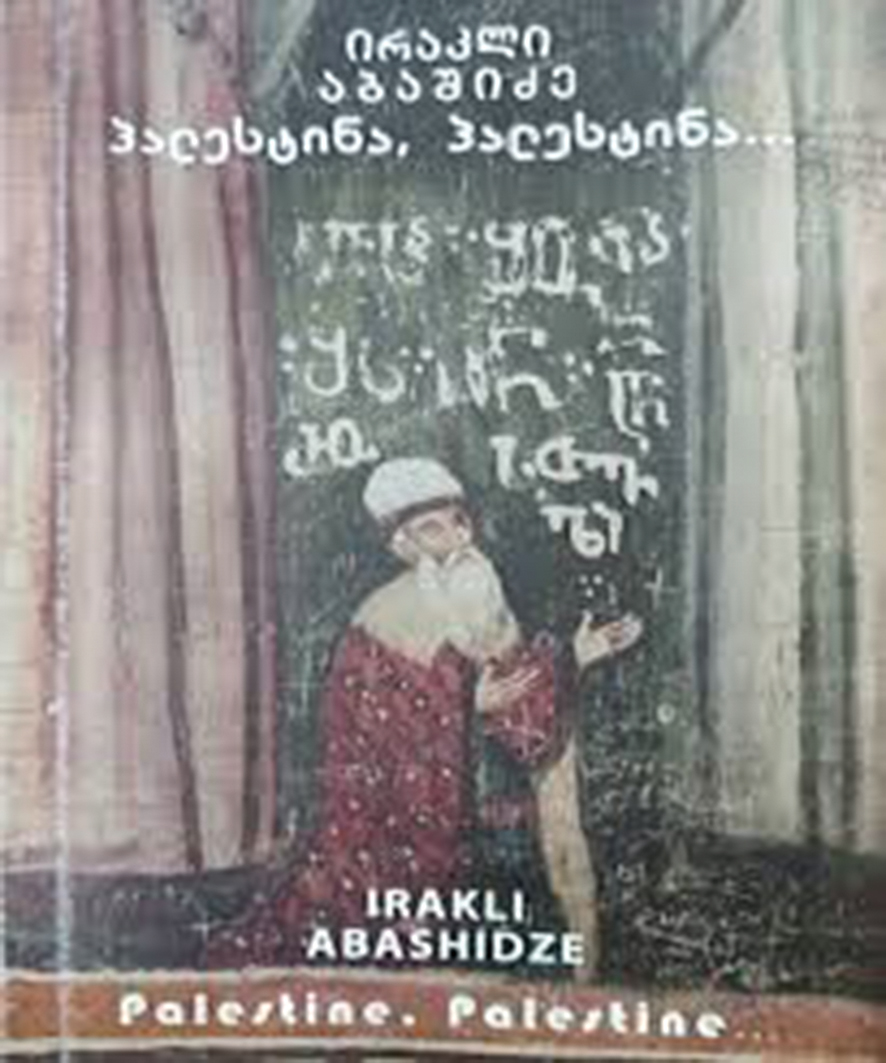
The scientific endeavors of Zagareli and Abashidze, driven not only by plain patriotic intent but by the scientific implication of the research, were dedicated to one immense purpose: seeing and witnessing in person that the presumed fresco on the wall of the Georgian Cross Monastery in Jerusalem was as real and true as the sun rising in the east.
Incidentally, history has preserved information about the Rustaveli fresco from scholars other than Zagareli.
Notably, the contemporary Georgian youth would hardly imagine the fathom and standing of the event, which was the talk of the year, and even after, throughout the entire Soviet Union, not to mention the sense of pride and importance that overwhelmed the exalted Georgian people.
The three famous Georgians, members of the Jerusalem delegation, needed help to get access to the Rustaveli fresco, and they got amazing assistance from the helpful locals. Running out of time during their stay, they personally had to fetch and purchase the chemicals for cleaning and restoring the valuable mural. The telegram was sent to Tbilisi about the developments, which had a bombshell effect.
The whole thing was unimaginably special for the national identity and political cementing of our people. Of course, Rustaveli was no news to us, but acquiring his original fresco image was more than important.
The event carried huge weight right before Shota Rustaveli’s 800-year jubilee, to be celebrated in 1966 by the entire Soviet people. It was meant to let the world see that Georgia was not just the famous dictator’s motherland but a cradle of great civilization, a generator of elevated humanistic ideas. To wit, Georgia was itself a victim of the then-rampant Stalinist regime.
By the way, the 750-year anniversary of Rustaveli took place in 1937, during the Joseph Stalin era, and was granted a very high status. Stalin needed the world to know what kind of civilization he was coming from, all that happening against the background of the Soviet terror of 1937.
The delegation of renowned public figures to Jerusalem, pursuing the great national goal in the footsteps of Rustaveli, was the jeweled crown of all that. Following the jubilation, with the participation of the Western elite, The Knight in the Panther’s Skin was translated into a good number of foreign languages, the honorable Irakli Abashidze personally organizing and executing their presentation to the world community.
Irakli Abashidze kept a diary in the years to come of the entire Jerusalem epopee, which has now become the relic and the symbol of this culture. He created a whole series of poems dedicated to the grand Georgian literary and scientific mission to the Georgian Cross Monastery of Jerusalem.
Professor Zurab Abashidze, the son of the poet, who had happily witnessed the entire development of the story in his childhood, says that, having seen the holy fresco in Jerusalem right behind the door of the Georgian Cross Monastery, the impressive figures of the three Georgian scientific and public giants rose before his eyes.
Irakli Abashidze, Giorgi Tsereteli, and Akaki Shanidze stood there together in Zurab’s imagination like three Atlantes, holding on their powerful shoulders the weight of Sakartvelo’s ancient culture and national identity.
Blog by Nugzar B. Ruhadze