The international human rights organization Human Rights Watch (HRW) has called on the Georgian authorities to repeal what it described as repressive legislation, end politically motivated prosecutions, release those unjustly imprisoned, and ensure independent investigations into police violence.
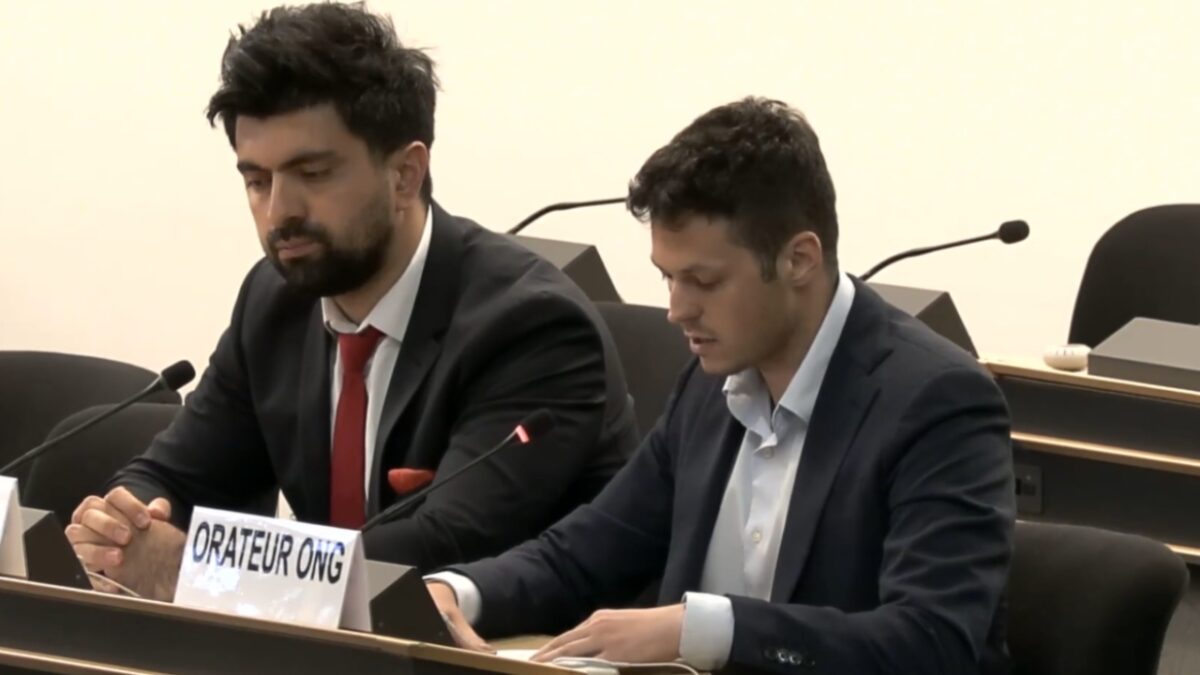
The appeal was made during a discussion on Georgia held on July 1 as part of the 62nd session of the UN Human Rights Council (UNHRC) in Geneva.
HRW representative said Georgia should also restore a safe and enabling environment for civil society organizations and independent media.
“Human Rights Watch welcomes the numerous recommendations addressing the deepening human rights crisis in Georgia. These include calls to repeal laws restricting civil society and independent media, protect peaceful assembly, ensure accountability for police violence, safeguard judicial independence, and create a safe environment for journalists and human rights defenders,” the representative said.
HRW argued that the recommendations respond to what it described as a sharp deterioration of the human rights situation in Georgia since 2024. The organization cited the adoption of the Law on Transparency of Foreign Influence, restrictive amendments to the Law on Grants, and other measures that, in its view, impose stigmatizing labels, excessive state oversight, direct government control over foreign funding, and severe criminal penalties for non-compliance.
HRW says these measures have forced independent organizations to scale back or suspend operations, lay off staff, decline funding, resort to self-censorship, and discontinue essential services. The organization also criticized the authorities’ decision to freeze the bank accounts of 12 civil society organizations as part of a large-scale criminal investigation into alleged sabotage, saying investigators had requested extensive information, including sensitive personal data relating to beneficiaries and third parties.
The HRW representative further alleged that police had repeatedly used excessive force against largely peaceful protesters and journalists, while those responsible had not been held accountable. The statement also claimed that peaceful demonstrators and government critics had faced arbitrary detention, criminal prosecution, heavy fines, unfair trials, and imprisonment.
HRW additionally criticized the Georgian authorities over media freedom and anti-LGBT legislation, expressing concern that Georgia had merely “taken note” of many recommendations addressing what it described as the root causes of the current crisis.
“Georgia should reconsider its position, repeal repressive legislation, end politically motivated investigations and asset freezes, release individuals unjustly imprisoned for exercising their rights, ensure independent investigations into police violence, and restore a safe and enabling environment for civil society and independent media,” the HRW representative said.
Also addressing the session was Marika Mikiashvili, a member of the opposition party Droa, speaking on behalf of Liberal International.
She described Georgia’s human rights situation in 2026 as “nothing short of catastrophic,” arguing that the country now has more political prisoners per capita than Russia. Mikiashvili accused the authorities of suppressing dissent through excessive use of force, restrictive legislation, and financial pressure on critics.
She also referred to allegations of the use of prohibited chemical agents against peaceful protesters, cited the 2026 OSCE Moscow Mechanism report, and criticized what she described as widespread impunity, unlawful detention practices, and a proposed bill that would expand government control over social media and criminalize online dissent.
In addition to the July 1 discussion, the UN Human Rights Council is scheduled to hear the UN High Commissioner for Human Rights’ report on Georgia on July 2.
The report, mandated by a resolution adopted by the Council in October last year, will be presented by Maaret Kohonen Sherif, Director of the Global Operations Division at the Office of the UN High Commissioner for Human Rights (OHCHR).