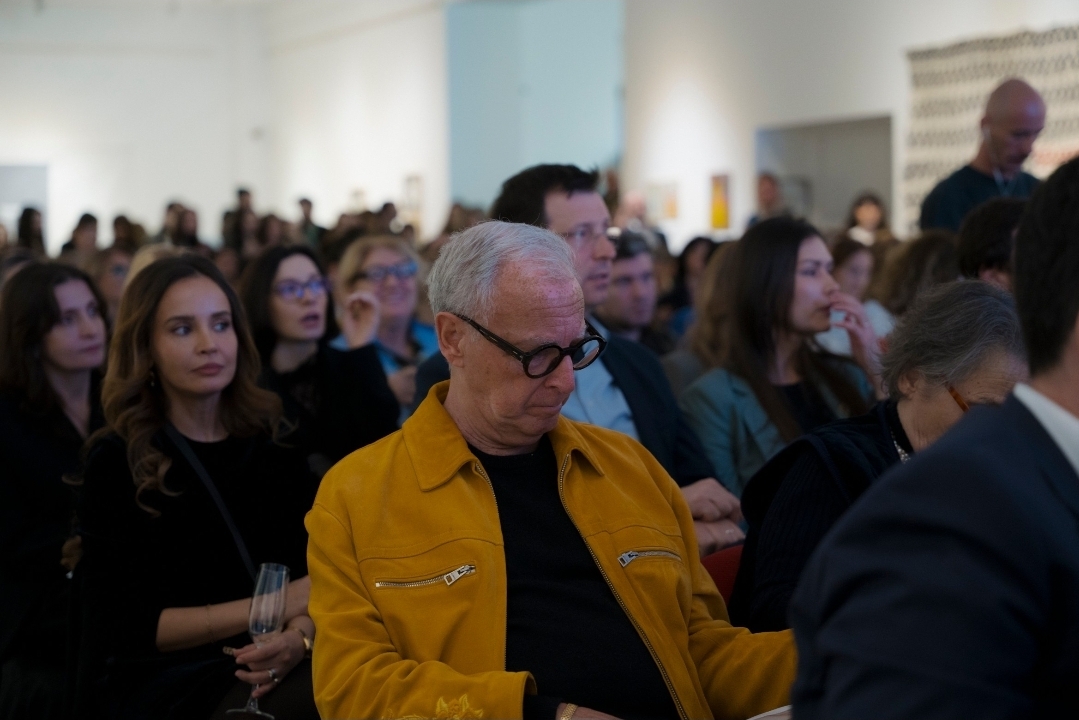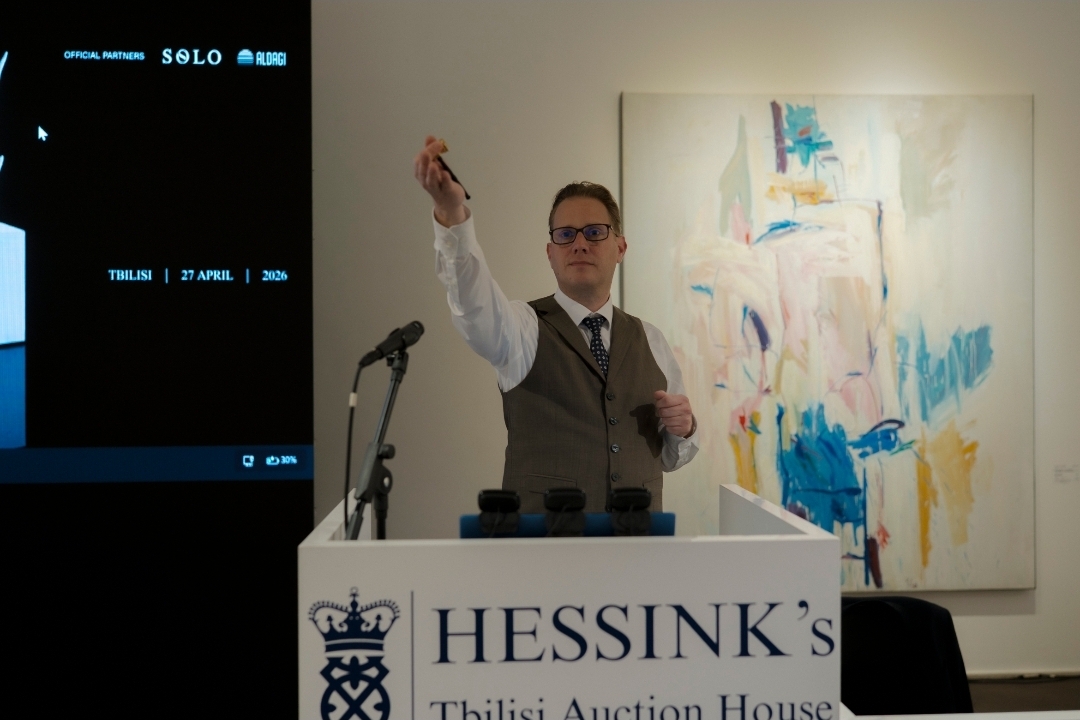
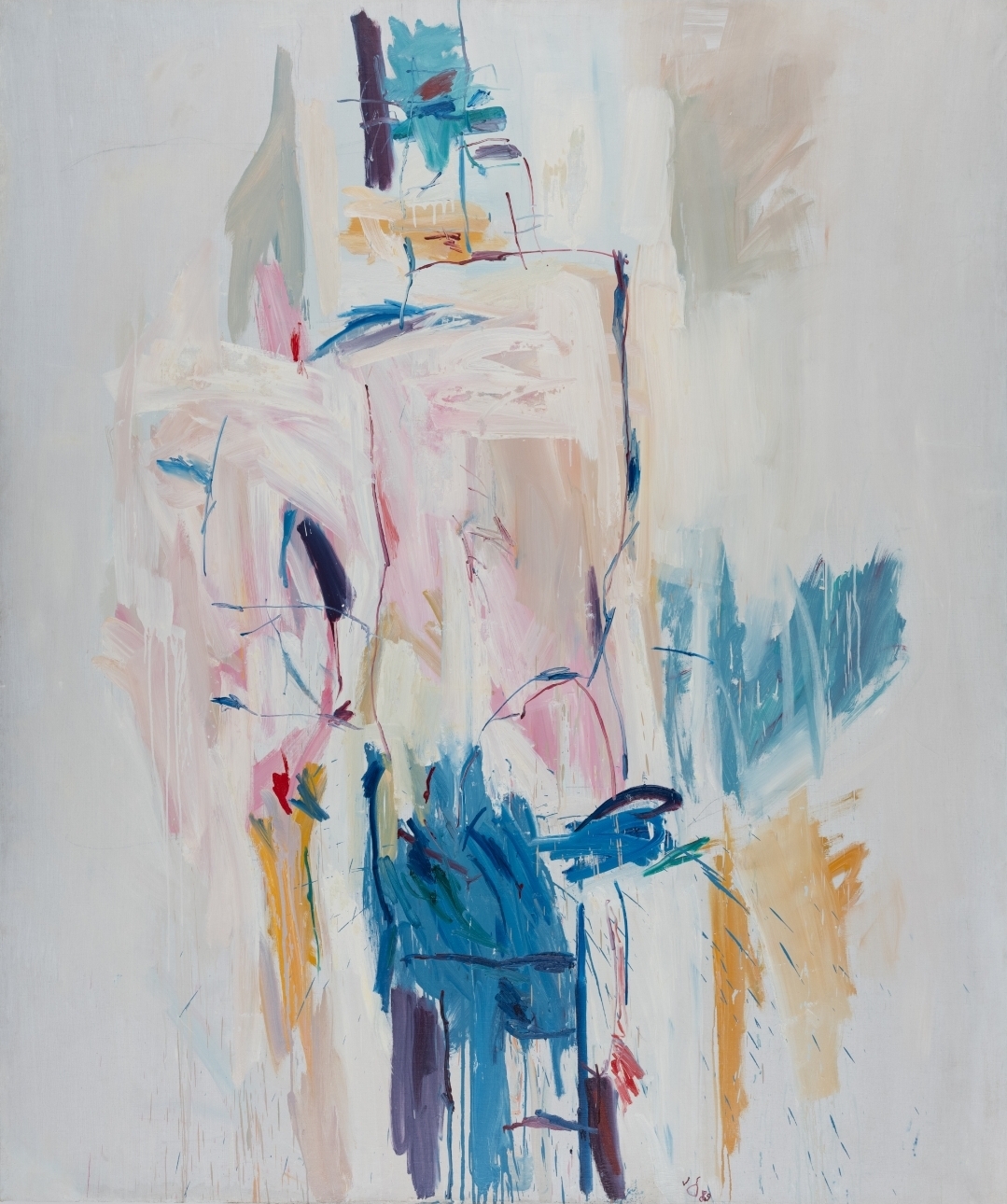
The first international auction dedicated to Georgian art, held by the Dutch auction house Hessink’s on 27 April at the Museum of Modern Art in Tbilisi, achieved a surprising 100% sell-through rate, with all 90 lots finding buyers. The total hammer price reached €1,019,070. The top lot was Alexander (Shura) Bandzeladze’s “Dream of Noah” (1989), which sold for €250,000 against an estimate of €160,000-€200,000.
Sales in which every lot is sold are described in the trade as “white glove.” Sotheby’s and Phillips typically reserve the term for results that reflect both the precision of estimates and the depth of demand. For a debut Georgian art sale, a category that until 2023 did not exist under its own name at the international level, the result is particularly notable.
Bandzeladze leads Hessink’s inaugural Georgian sale at €250,000, 25% above estimate
The auction catalogue “Georgian Modern and Contemporary Art” brought together works spanning late Soviet art of the twentieth century through to contemporary practice. Highlights included later works by the émigré Georgian artist Vera Pagava, whose artistic formation was shaped by the Parisian avant-garde, alongside works by the pioneers of Georgian abstraction, Alexander (Shura) Bandzeladze and Avto Mosiashvili. Other notable artists across different generations included Iliko Zautashvili, Lia Bagrationi, and Mamuka Tsetskhladze, as well as a selection of emerging artists.
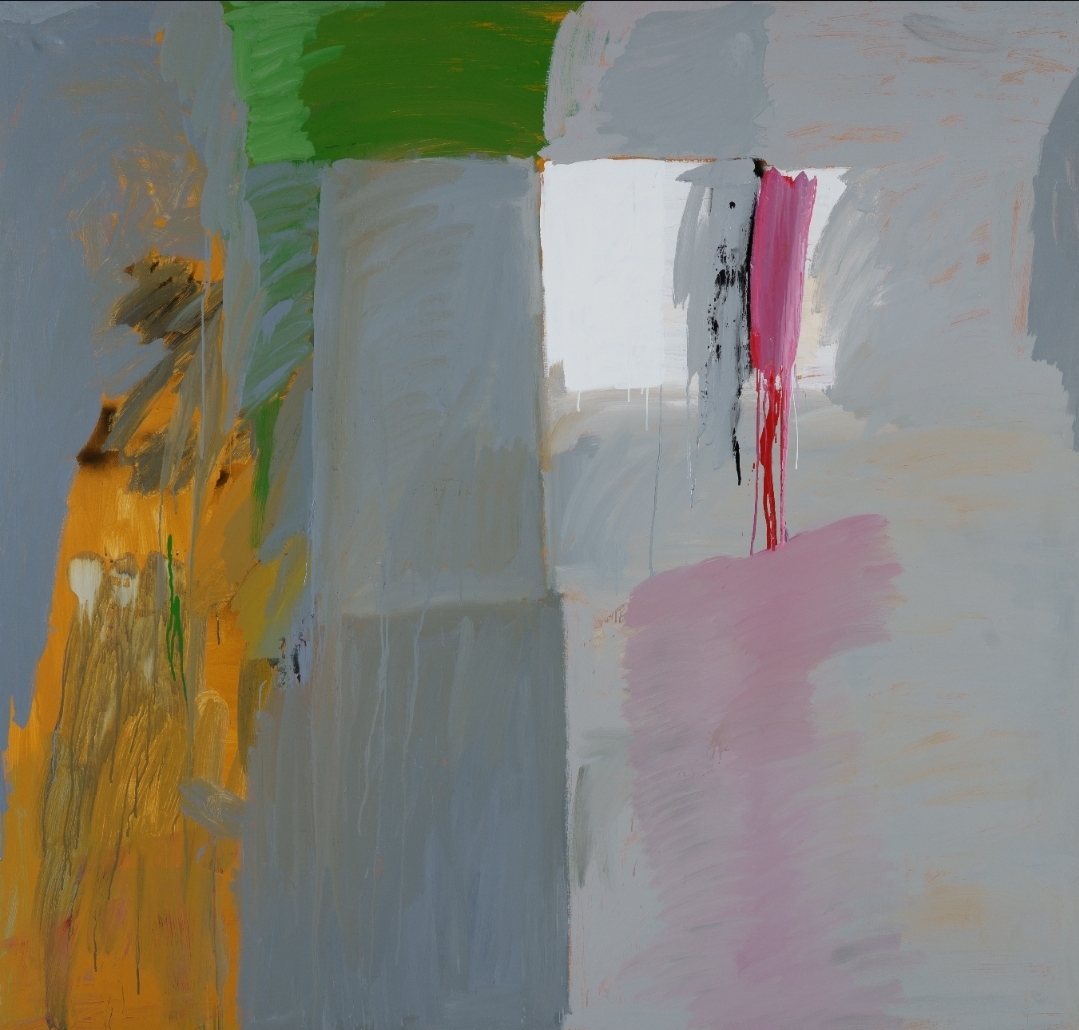
The top result was achieved by Lot 45, Alexander (Shura) Bandzeladze’s “Dream of Noah” (1989), an oil on canvas measuring 236 by 197 cm, which sold for €250,000 against an estimate of €160,000-€200,000, or 25% above the high estimate. A second work by Bandzeladze, an untitled painting offered as Lot 11, sold for €150,000 (estimate €140,000-€180,000). Mamuka Tsetskhladze’s “The Tiger” (Lot 54) realised €130,000, above its €100,000-€120,000 estimate. Iliko Zautashvili’s untitled Lot 44 sold for €65,000 within its estimate range, while Vera Pagava’s “Woman” (Lot 87) achieved €35,000, also within expectations.
Among the highest-selling non-painting lots was Lia Bagrationi’s installation “13 Aquarium and a Fish”, which realised €30,000. Another highlight was Lot 86, Guela Tsouladze’s Armchair, which prompted strong competition between a Swiss collector and a Georgian buyer. Opening at €3,000, it ultimately sold for €13,000.
The sale was conducted in Tbilisi and made available to international bidders, attracting strong global interest. In the lively atmosphere of MoMA Tbilisi, more than 300 guests were present, while thousands of participants engaged in the live-streamed auction from around the world via Hessink’s online platform, as well as Drouot and Invaluable. According to Hessink’s Auction House, bidding activity included 362 participants from the United States, 177 from the Netherlands, 90 from Belgium, 43 from Australia, 24 from Spain, and 20 from Switzerland.
Georgian Art Auctions to Date: Bonhams 64%, Hessink’s 100% Sell-Through
Until recently, Georgian works appearing at international auction were typically classified under broader categories such as Russian art, Post-Soviet, Eastern European, or, in some cases, the Paris School. The shift toward presenting Georgian art as an independent category has developed along a clearly defined timeline.
In 2023, Bonhams in London held its first sale of Georgian and Armenian art in collaboration with Baia Gallery.
In May 2025, Bonhams presented “Georgian Art Now”, developed in collaboration with the Georgian art consultancy Reach Art Visual. The sale marked the first international auction dedicated exclusively to Georgian artists held outside Georgia. It achieved a total of approximately €240,000, with 64% of lots sold.
The Bonhams sale provided an early indication of demand for Georgian art presented as a category in its own right. It also reflected the limits of demand at that moment, in that context, and with that specific catalogue.
Looking Ahead: Market Formation and Future Trajectory
The 27 April sale in Tbilisi reached a notably diverse audience. Bidders in the room and on the telephone included Georgian collectors who had not previously participated in international auctions, alongside international collectors who travelled to Tbilisi or bid online via Drouot and Invaluable.
Although the inaugural Georgian auction attracted a number of prominent business families and collectors in the room, the majority of higher-value works were ultimately acquired via telephone and online bidding, with particularly strong participation from international buyers. The highest price achieved in the room was for Merab Kopaleishvili’s “Deer”, which sold for €10,000.
A notable development was the presence of a younger generation of collectors in the room, who acquired a significant share of lower- and mid-priced works by emerging Georgian artists. This reflects a broader shift among millennial and Gen Z collectors, indicating growing engagement with art collecting and a willingness to support the next generation of Georgian artistic talent.
Hammer prices generated under these conditions now serve as early reference points. They are recorded in leading market databases, consulted by collectors, insurers, and museums, and used in the assessment of comparable works.
The 27 April result represents the strongest single data point to date for Georgian art as an independent auction category. While it does not in itself confirm a sustained market, such confirmation will require further sales, comparable estimates, and evidence of value retention in subsequent offerings.
Hessink’s calendar includes a further sale scheduled for the autumn. Another highly anticipated event in the Georgian art calendar is the Tbilisi Art Fair (TAF), which opens at ExpoGeorgia on 21 May and aims to attract regional and international buyers.
For now, the results are clear: all 90 lots were sold, generating a total hammer price of €1,019,070. Including buyer’s premiums and taxes, total sales exceeded €1.3 million, with strong demand pushing the outcome to 129.6% above the combined low estimate.